







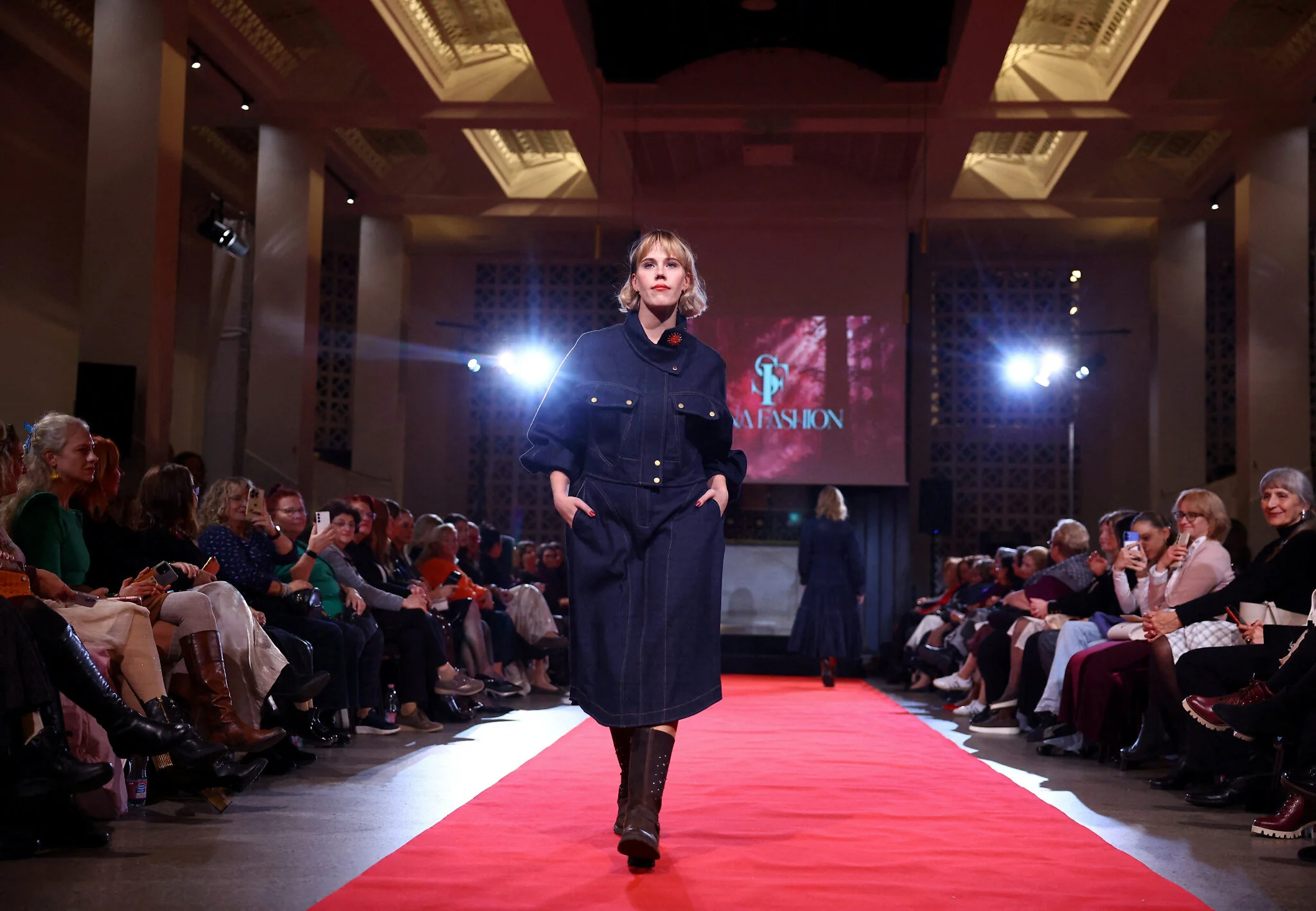
In a powerful celebration of identity, elegance and personal expression, Orthodox Jewish women in Budapest have taken to the fashion runway to challenge long-standing stereotypes and demonstrate that religious modesty and modern style can go hand in hand.
The unusual fashion event, titled “Kosher & Chic”, took place on Sunday, November 8, bringing together members of Budapest’s growing Orthodox Jewish community for a showcase that placed modest fashion in the spotlight. Rather than relying on professional models, the show featured ordinary women from the community, turning the runway into a celebration of individuality, confidence and cultural identity.
Held inside a modern synagogue that also serves as a cultural centre, the event delivered a message extending far beyond clothing. Organisers wanted to challenge the assumption that women who follow traditional religious dress codes must sacrifice fashion, creativity or their personal identities.
Monika Ungar, the event’s organiser, said the show was designed to demonstrate that Orthodox Jewish women can dress beautifully while respecting the rules of their faith. The collections presented different interpretations of modest fashion, allowing participants to express their personalities through colours, designs, fabrics and elegant combinations.
At the heart of the showcase was the Jewish concept of tzniut, a set of religious modesty principles that guide how Orthodox Jewish women dress. These guidelines generally call for covering the collarbone, elbows and knees. Married women often cover their hair with scarves or wigs, incorporating these traditions into their everyday appearance.
While outsiders sometimes interpret these rules as restrictive, many women within the community view them as expressions of faith, personal values and cultural belonging.
Among the participants was Tzivia Myers, the wife of a rabbi, who emphasised that modesty should never be confused with a lack of beauty or individuality. She explained that the fashion show offered women opportunities to discover clothing that reflected their personalities while remaining faithful to their religious commitments.
The event also highlighted the growing revival of Jewish community life in Budapest. Since the fall of communism in 1989, the Hungarian capital has witnessed renewed cultural activity, including new schools, renovated synagogues, festivals and community gatherings.
Beyond its religious significance, the fashion showcase reflects a wider international movement in which modest fashion is gaining visibility. Designers, independent labels and fashion enthusiasts are increasingly exploring clothing that combines elegance, comfort and personal expression without compromising cultural or religious preferences.
For the women walking the Budapest runway, however, the message was deeply personal. They were not simply presenting outfits; they were challenging assumptions about who gets to define beauty, confidence and modern femininity.
The “Kosher & Chic” fashion show demonstrated that tradition does not have to stand in opposition to contemporary fashion. Instead, the two can coexist, creating a distinctive style that celebrates both heritage and individuality.
In a world where fashion is often associated with changing trends and revealing designs, Budapest’s Orthodox Jewish women delivered a different statement: elegance does not require abandoning one’s beliefs, and modesty does not mean giving up the freedom to express who you are.









+ There are no comments
Add yours