






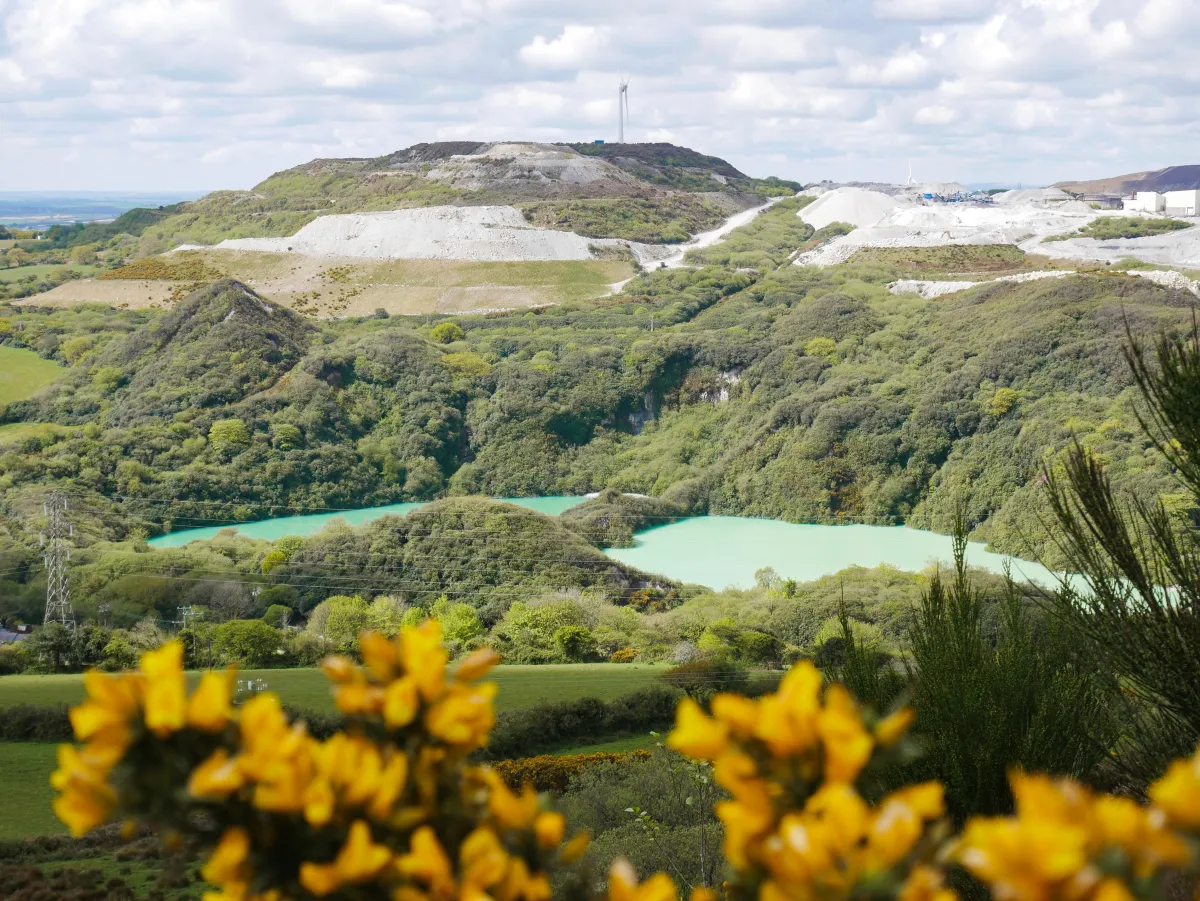
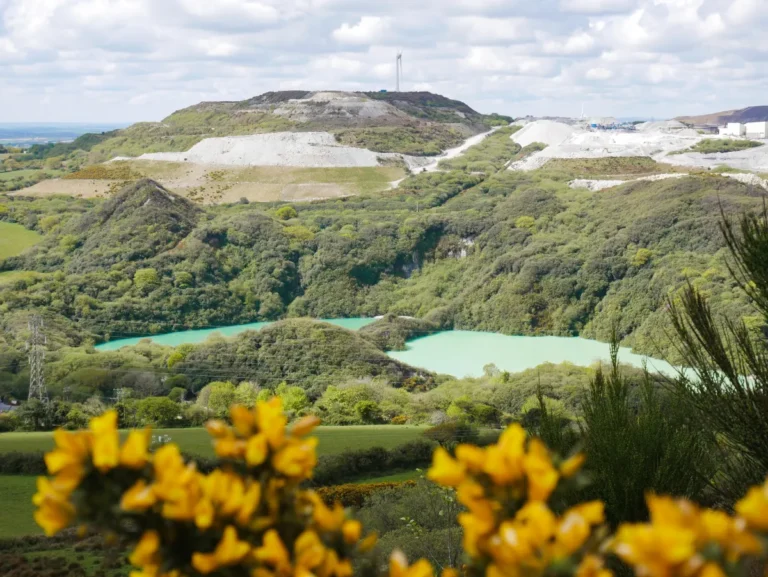
Far from Britain’s familiar sandy beaches and picturesque coastal villages lies a surreal landscape that looks as though it belongs in another country. Known as the Cornish Alps, this extraordinary region in southwest England is a world of towering white peaks, brilliant turquoise lagoons, rugged trails and abandoned mining landscapes that are slowly being reclaimed by nature.
Stretching across approximately 35 square miles around St Austell in Cornwall, this unusual wilderness has been shaped by more than 250 years of china clay mining. What was once a thriving industrial centre has become one of Britain’s most unexpected adventure destinations, offering visitors an opportunity to explore a landscape unlike anything else in the country.
The region’s dramatic appearance is particularly striking. Deep mining pits filled with vivid green and milky blue water sit beneath enormous artificial hills created from mining waste. Some of these peaks resemble miniature Alpine mountains, rising dramatically above the surrounding countryside. The unusual colours and formations create an almost otherworldly atmosphere, making the area a fascinating destination for photographers, hikers and curious explorers.
But the story behind this extraordinary landscape is just as remarkable as its appearance. Cornwall once produced around half of the world’s china clay, a valuable mineral used in products ranging from porcelain and cosmetics to toothpaste. During the industry’s peak, thousands of local families depended on mining for their livelihoods, transforming the region into one of Britain’s most important industrial centres.
Today, as mining activity has declined, nature is gradually taking over. Vegetation is spreading across former waste mountains, wildlife is returning to abandoned industrial areas, and previously inaccessible sections of the landscape are opening to visitors.
Adventure seekers can now explore an expanding network of walking and cycling routes. In 2025, new trails added approximately 21 miles of pathways, bringing the accessible network to around 38 miles. These routes pass through former mining sites, alongside flooded pits and across open countryside, offering spectacular views of Cornwall’s unusual terrain.
One of the most memorable landmarks is Sky Tip, a giant pyramid-shaped mining waste mountain that has become a symbol of local identity. Once threatened with removal, it was saved following strong opposition from residents. Today, it stands as a reminder of Cornwall’s industrial past and the community’s connection to the land.
However, the beautiful turquoise lagoons hide serious dangers. Despite their inviting appearance, the flooded mining pits are extremely deep and swimming is strictly forbidden. Visitors must remain on designated trails and respect safety restrictions around active industrial areas.
The Cornish Alps may not offer traditional mountain climbing or snow-covered slopes, but they deliver something equally fascinating: an opportunity to discover a forgotten industrial wilderness where history, adventure and nature collide.
For travellers searching beyond Britain’s familiar tourist attractions, this remarkable corner of Cornwall offers a powerful reminder that some of the world’s most extraordinary landscapes are created in the most unexpected places.








+ There are no comments
Add yours