







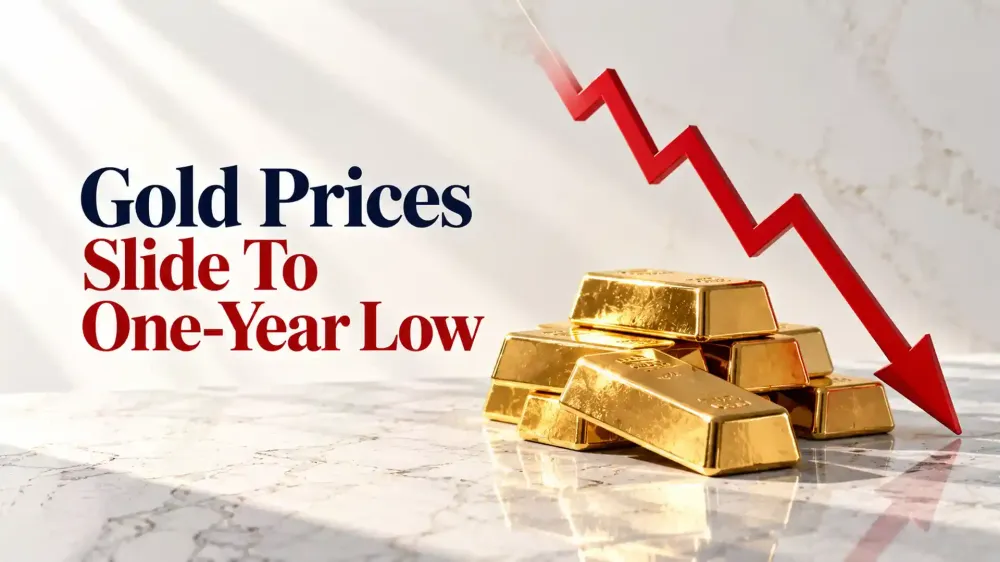
Gold prices are facing renewed pressure across global markets, with the precious metal hovering near a one-year low as inflation concerns, expectations of higher US interest rates and weakening demand from major Asian buyers weigh on investor confidence.
In early Asian trading on Monday, November 2, spot gold edged up around 0.5% to approximately $3,894.89 per ounce. However, the modest recovery offered little reassurance to investors after bullion had fallen below the psychologically important $4,000 mark in the previous trading session, reaching its lowest level since October 2025.
The recent decline has raised fresh questions about gold’s traditional reputation as a safe-haven investment, particularly at a time when global economic uncertainty and geopolitical tensions remain significant concerns.
One of the biggest factors behind the pressure is the changing outlook for US monetary policy. Persistent inflation, supported by rising energy prices, has strengthened expectations that the Federal Reserve could increase interest rates later this year. Higher interest rates generally make gold less attractive because the metal does not generate interest or regular income, unlike certain bonds and other financial assets.
Market attention has also shifted towards developments in the technology sector. A sharp decline in technology stocks triggered financial pressure on some investors, leading to forced selling of assets, including gold, as traders sought cash to meet margin requirements.
Demand from Asia, particularly India and China, has provided another challenge for the market. Both countries are among the world’s largest consumers of gold, but buyers have become increasingly cautious as prices fluctuate. Indian jewellery buyers have reportedly delayed purchases in anticipation of further declines, while physical demand in China has also remained subdued.
The situation is particularly important for jewellery retailers, investors and households across Asia, where gold remains closely associated with weddings, festivals, savings and long-term financial security. A sustained decline could offer consumers an opportunity to purchase jewellery and bullion at lower prices, although local retail rates will also depend on currency movements, import duties, taxes and dealer premiums.
Silver has also experienced considerable pressure, falling below $50 an ounce for the first time since November 2025, highlighting the broader weakness across precious metals.
Despite the recent downturn, analysts are not ruling out a recovery. Central-bank purchases, long-term investment demand and concerns surrounding government debt could continue to provide support for gold in the months ahead.
For now, the precious metal is facing a difficult combination of inflation worries, higher interest-rate expectations and cautious Asian demand. Whether the latest decline develops into a longer correction or creates an opportunity for fresh buying will depend heavily on upcoming economic data and decisions by major central banks.
For millions of gold buyers across Asia, the coming weeks could prove crucial in determining whether this market downturn becomes a rare buying opportunity or the beginning of a deeper decline.








+ There are no comments
Add yours