







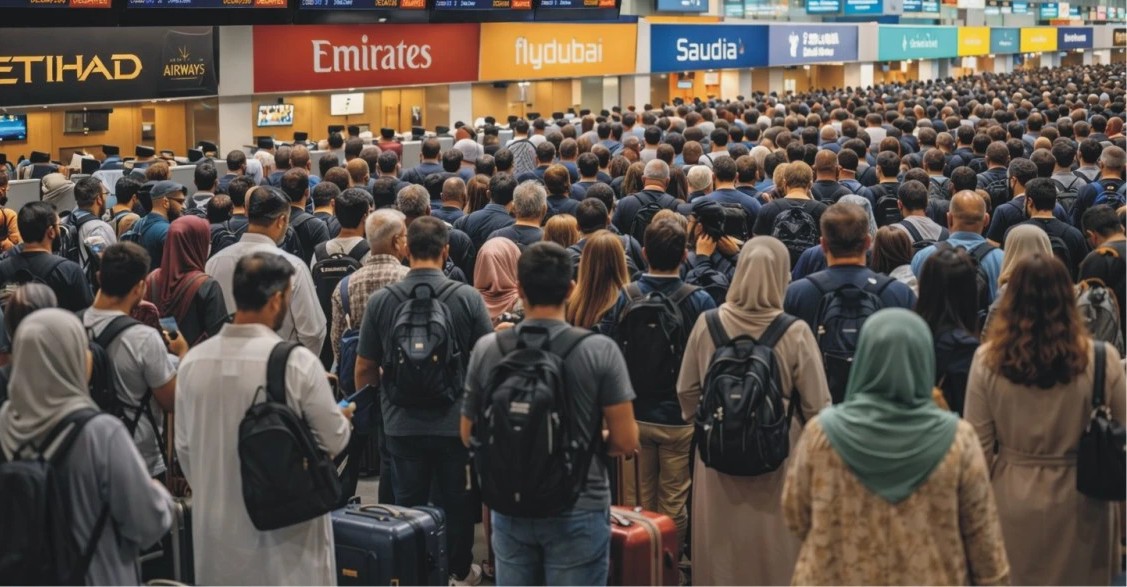
Air travel across the Middle East has been thrown into chaos as widespread cancellations and delays affect thousands of passengers across key airlines. Pegasus, Royal Jordanian, Saudia, and Kenya Airways are among the carriers grappling with significant disruptions, leaving travelers struggling to reach destinations in Dubai, Amman, Riyadh, and other major hubs.
Officials reported that at least 11 flights were canceled and over 216 flights delayed across the region, prompting long lines at check-in counters and customer service desks. Many passengers were forced to rebook flights or find alternative travel arrangements, while airports worked to manage the sudden surge in demand for assistance.
Airline representatives attributed the disruptions to a combination of adverse weather conditions, air traffic congestion, and operational challenges at major airports. Passengers expressed frustration on social media, sharing experiences of long waits, missed connections, and last-minute cancellations.
Authorities said contingency measures were being implemented to minimize inconvenience. Extra staff were deployed at airports, and airlines offered rebooking and accommodation support to affected travelers. Nevertheless, the scale of the disruptions highlighted vulnerabilities in the region’s busy air travel network.
Travel experts noted that the Middle East serves as a key hub connecting Europe, Asia, and Africa, making even short-term disruptions particularly impactful. The current wave of cancellations underscores the need for better coordination between airlines and airport authorities to handle peak travel periods.
Despite the chaos, some passengers praised airport and airline staff for their efforts to manage the situation and assist travelers in navigating unexpected changes. Many travelers continued to wait patiently, hoping for updates and solutions as airlines worked to resume normal operations.
As air travel gradually recovers, officials and industry analysts are calling for improvements in infrastructure and contingency planning to reduce the likelihood of similar disruptions in the future. For now, travelers are advised to check flight statuses regularly and prepare for potential delays while navigating the busy Middle Eastern airspace.









+ There are no comments
Add yours