





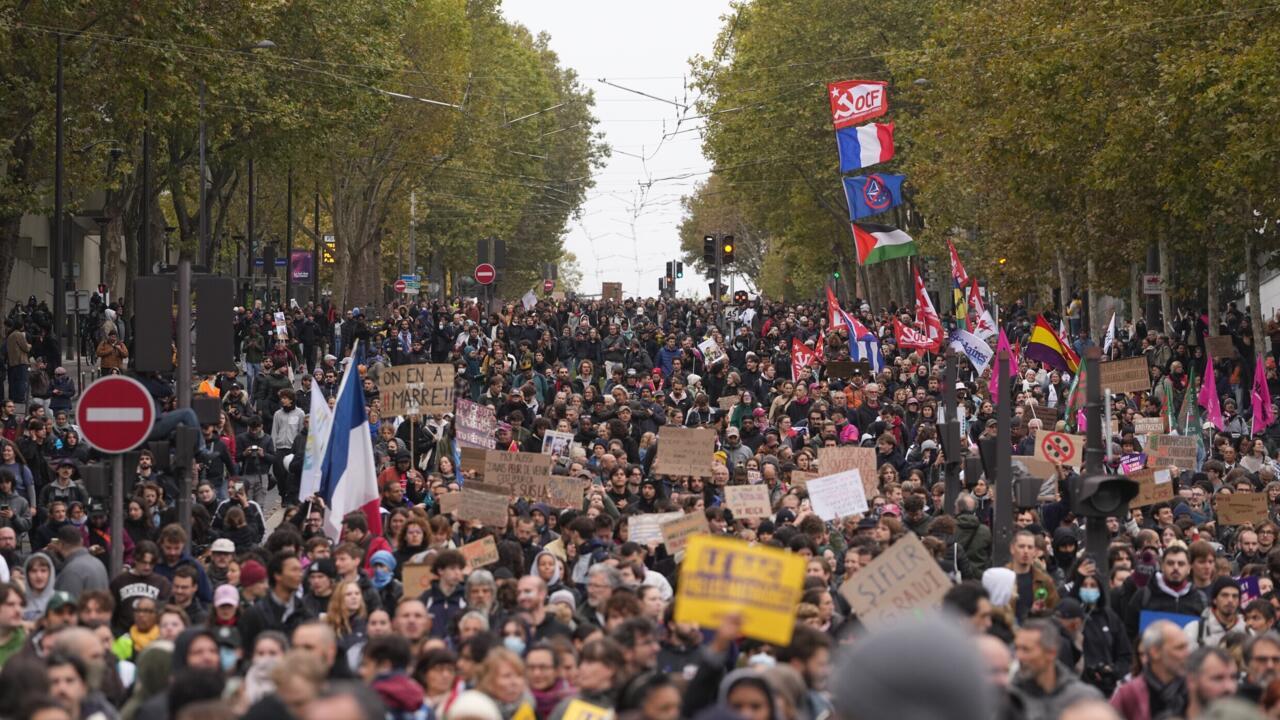
Nearly 1,000 people have been arrested following another day of mass protests across France, as clashes between demonstrators and police expose the growing challenges facing the country’s political leadership. What began as widespread public demonstrations over the cost of living and poor school conditions has become a stark test of the government’s ability to restore public confidence, maintain order and address the grievances driving thousands onto the streets.
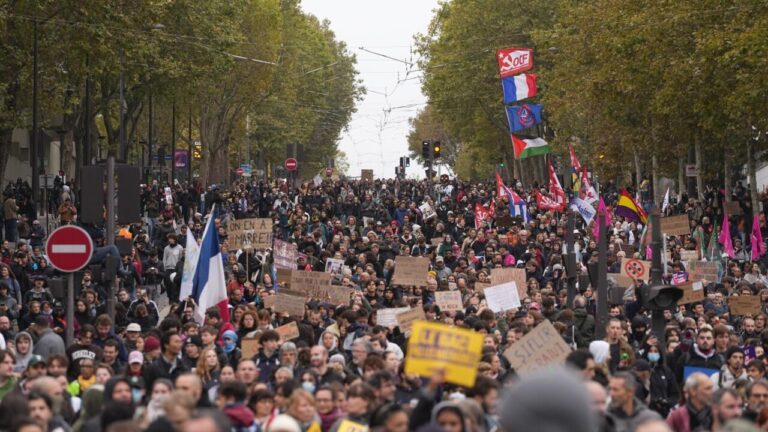
The demonstrations on Saturday drew crowds across the country, with estimates highlighting the scale of public discontent. France’s Interior Ministry put the number of participants at approximately 410,000, while trade unions estimated that around 800,000 people had taken part. Although most demonstrations remained peaceful during the day, tensions escalated in several cities later in the evening, prompting police to deploy tear gas and water cannon to disperse crowds.
In Paris, police confronted protesters during street skirmishes, while reports from Marseille described burning barricades. In Bordeaux, demonstrators tore boards from a shop, adding to concerns about damage to businesses and public property. Authorities said the latest unrest had not reached the same scale as the disorder witnessed the previous weekend, when widespread looting, arson and clashes overwhelmed security forces in several locations.
Yet the immediate question facing France extends beyond the number of arrests or the scale of the damage. It concerns a deeper crisis of leadership: why are so many citizens expressing their frustration through mass demonstrations, and what does the unrest reveal about the relationship between the government and the people it represents?
President Emmanuel Macron’s administration faces mounting pressure to demonstrate that it can respond effectively to public grievances while maintaining public order. The cost of living has placed pressure on household budgets, while concerns about school conditions have added another dimension to the discontent. For many demonstrators, these issues are not abstract policy debates. They affect everyday life, family finances and confidence in public institutions.
When such grievances persist, the government’s response becomes a measure of its political credibility. Strong leadership requires more than deploying security forces or announcing restrictions. It also requires listening to citizens, explaining difficult decisions and demonstrating that public concerns can produce meaningful action. Without that connection, even legitimate efforts to maintain order risk being viewed as detached from the realities facing ordinary people.
The deployment of approximately 70,000 police officers underlines the seriousness with which authorities are treating the unrest. Earlier in the week, Macron announced restrictions intended to permit only demonstrations organised by recognised trade unions. The government has also pursued rapid court proceedings against people accused of vandalism, arson and looting, with hundreds reportedly receiving prison sentences in recent days.
These measures reflect the state’s responsibility to protect people, businesses and public spaces from violence. Peaceful protest is a fundamental democratic right, but arson, looting and attacks on property can endanger communities and undermine the safety of those exercising that right. The challenge for the authorities is to distinguish between peaceful demonstrators expressing legitimate grievances and individuals involved in criminal acts.
However, the ability to control a protest does not necessarily mean the underlying crisis has been resolved. Police can clear streets, disperse crowds and make arrests, but they cannot by themselves restore public trust or resolve the economic and social pressures that brought people out in the first place. If the government’s approach is seen primarily through the lens of enforcement, it risks leaving the central political questions unanswered.
France’s leaders must therefore confront two responsibilities at once: protecting public safety and addressing the causes of public anger. Focusing exclusively on either side would leave the country vulnerable to further confrontation. A security response without credible political engagement may deepen alienation, while ignoring violence and destruction would weaken the state’s responsibility to protect its citizens.
The crisis also presents a difficult test for France’s democratic institutions. Political leadership is often measured during periods of stability, when decisions can be implemented without widespread resistance. Its more demanding test comes when public confidence is shaken, streets fill with demonstrators and competing demands make compromise difficult. At such moments, leaders must show that authority can be exercised with restraint, accountability and a clear plan for resolving the issues at stake.
The contrast between the government’s estimate of 410,000 protesters and the unions’ estimate of 800,000 also demonstrates the scale of the mobilisation, although the figures differ considerably. Regardless of which estimate is closer to the actual turnout, the protests have become a significant political challenge that cannot be dismissed solely as a public-order problem.
For Macron’s administration, the road ahead will require more than a return to calm. It will require credible engagement with unions, meaningful attention to household pressures, practical efforts to improve school conditions and transparent communication about the government’s plans. Such steps would not guarantee an immediate end to the demonstrations, but they could help rebuild confidence in the political process.
The consequences of failure could extend beyond another weekend of clashes. Repeated unrest can damage businesses, disrupt daily life, strain relations between communities and police, and further weaken trust in public institutions. It can also create an environment in which political divisions become harder to bridge and every government decision is met with suspicion.
France is not facing a simple choice between order and protest. It is confronting the more difficult question of how a democratic government can maintain order while convincing dissatisfied citizens that their concerns are being heard. The distinction matters because a peaceful street is not necessarily evidence of public satisfaction, just as a large demonstration does not mean every participant supports violence.
Ultimately, the arrests and clashes are the most visible signs of a wider struggle over confidence, accountability and the responsibilities of political power. The government has a duty to protect the country from disorder, but it also has a responsibility to address the conditions fuelling public frustration.
France’s leadership now faces a defining test: restoring order may calm the streets, but only credible action, public accountability and sustained dialogue can begin to repair the trust that a lasting political settlement requires.

+ There are no comments
Add yours