






Tensions along the India–China border have once again drawn national attention after India’s Indo-Tibetan Border Police (ITBP) chief confirmed that face-offs between Indian and Chinese troops were continuing at multiple locations in Arunachal Pradesh. The development has renewed concerns over border security, military preparedness and the fragile relationship between the two Asian powers.
The announcement came amid reports of increased friction near sensitive border areas, including Taksing in Arunachal Pradesh’s Upper Subansiri district. Although the situation has raised security concerns, officials have not confirmed a new large-scale armed clash.
ITBP Chief Confirms Continuing Face-Offs
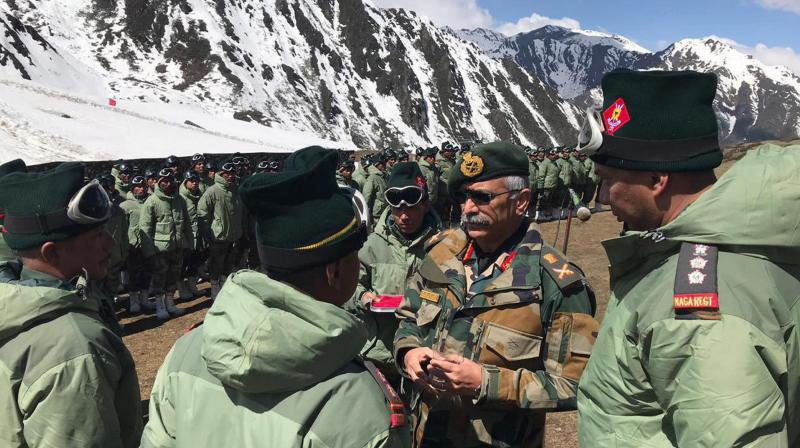
On October 22, ITBP Director General Shatrujeet Singh Kapur told personnel that confrontations involving Indian and Chinese forces had occurred at several locations in Arunachal Pradesh and were continuing.
His remarks, reported publicly on October 23, marked an important official acknowledgement of the ongoing military friction in the region. However, he did not identify every location involved or provide detailed information about the nature of the encounters.
The ITBP is responsible for guarding India’s frontier with China, including challenging stretches of the Himalayan border where difficult terrain and competing territorial claims complicate patrol operations.
Taksing Area Under the Spotlight
The Taksing region of Upper Subansiri district has been a particular source of concern following reports that Indian patrols faced restrictions on accessing certain areas along the Line of Actual Control (LAC).
The LAC is the de facto boundary separating Indian- and Chinese-controlled territories. The two countries have different perceptions of parts of this boundary, creating the possibility of encounters when patrols enter overlapping areas.
Reports of Chinese military activity in the region have prompted questions about India’s access to established patrolling points. The precise circumstances of the latest face-offs, however, have not been fully disclosed by the authorities.
India Emphasises Border Preparedness
During his remarks, the ITBP chief highlighted the role of the force’s specialised Shaurya commando teams, which are trained for operations in demanding high-altitude environments.
He also stressed the growing importance of drones and anti-drone systems in modern border security. The force has been expanding its technological capabilities and specialised training to respond to evolving military challenges.
The emphasis on modernisation reflects the changing nature of security along the Himalayan frontier, where surveillance, rapid communication and the ability to operate in extreme weather can be crucial.
What Has the Indian Government Said?
India’s Ministry of External Affairs addressed the issue on October 23, saying that disturbances along the border can occur when Chinese forces deviate from established patrolling patterns.
The ministry said both countries continued to use existing diplomatic and military mechanisms to resolve outstanding issues and prevent misunderstandings or miscalculations along the LAC.
India has consistently maintained that peace and tranquillity along the border are essential for improving broader bilateral relations with China.
Opposition leaders have also demanded greater clarity from the government regarding the reported face-offs and concerns about access to patrolling areas. Union minister Kiren Rijiju, meanwhile, rejected claims of a new Chinese occupation of Indian territory in Arunachal Pradesh.
A Long-Running Territorial Dispute
India and China share a disputed Himalayan frontier that has remained a major source of tension for decades. The two countries fought a war in 1962, and their relations suffered another severe setback after the deadly Galwan Valley clash in Ladakh in June 2020.
Although diplomatic and military engagement has helped reduce tensions at several locations, the broader boundary dispute remains unresolved.
Arunachal Pradesh is especially sensitive because India administers the state as an integral part of its territory, while China maintains competing territorial claims over the region.
Diplomatic Dialogue Remains Essential
The latest developments underline the importance of maintaining communication between Indian and Chinese military commanders. Even encounters without gunfire can escalate if troops misunderstand each other’s movements or intentions in disputed areas.
Continued military talks, established border-management mechanisms and diplomatic engagement will be critical to preventing local confrontations from developing into a wider crisis.
For India, the immediate priority remains protecting its border interests while ensuring that its troops are prepared for difficult conditions. For both countries, avoiding escalation is essential to preserving stability across the Himalayan region.
Conclusion
The continuing face-offs in Arunachal Pradesh have placed India–China border security back in the spotlight. While the latest reports confirm military friction at multiple locations, they do not establish that a new large-scale battle has taken place.
The coming days will be important in determining whether the situation remains manageable through existing communication channels. With two major powers facing each other across a disputed frontier, restraint, transparency and sustained diplomatic engagement remain essential to preventing a local confrontation from becoming a broader regional crisis.








+ There are no comments
Add yours