






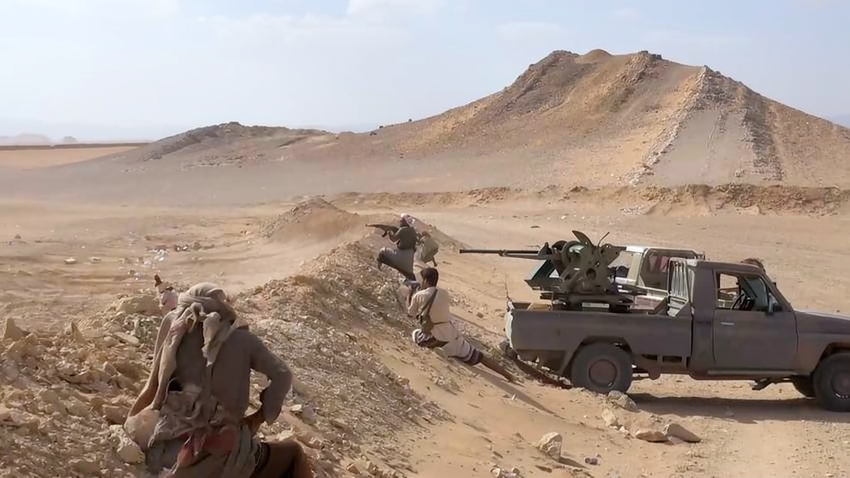
Saudi-backed Yemeni government forces have launched a rapid counteroffensive along the Red Sea coast, pushing Iran-aligned Houthi fighters away from key positions near the strategically vital Bab el-Mandeb Strait and advancing toward the port city of Mocha.
The government said its forces recaptured much of the Dhubab district and reached the outskirts of Mocha on Monday, reversing gains made by the Houthis during their advance last month. The operation was supported by heavy Saudi airstrikes, with government forces seeking to consolidate control over the coastline and approaches to the strait.
The Bab el-Mandeb is one of the world’s most important maritime passages, linking the Red Sea with the Gulf of Aden and providing a crucial route for global energy and commercial shipping. Any prolonged disruption in the area could add further pressure to already unsettled energy markets.
Four Yemeni government sources said Houthi fighters were retreating toward the highlands as government forces advanced. Yemen’s Defence Ministry said Mocha had fallen, although Houthi-linked sources disputed claims that the city had been captured, leaving some battlefield developments difficult to independently verify.
The Houthis responded by claiming attacks on several strategic locations in Saudi Arabia, including an airport in Riyadh, an Aramco refinery and other military sites. Those claims could not immediately be independently verified.
The fighting is unfolding as Yemen’s long-running civil war enters another dangerous phase. Government forces have also been battling the Houthis around Taiz, where the group has made gains along important mountain routes and threatened government positions.
The renewed fighting has also raised concerns about Yemen’s worsening humanitarian crisis. The United Nations migration agency said more than 184,000 people had been displaced since the latest escalation began.
The struggle for the Bab el-Mandeb is likely to remain closely watched by global markets and shipping companies. Control of the waterway gives either side significant strategic leverage, while continued fighting risks adding another threat to trade and energy supplies across the wider Middle East.








+ There are no comments
Add yours