






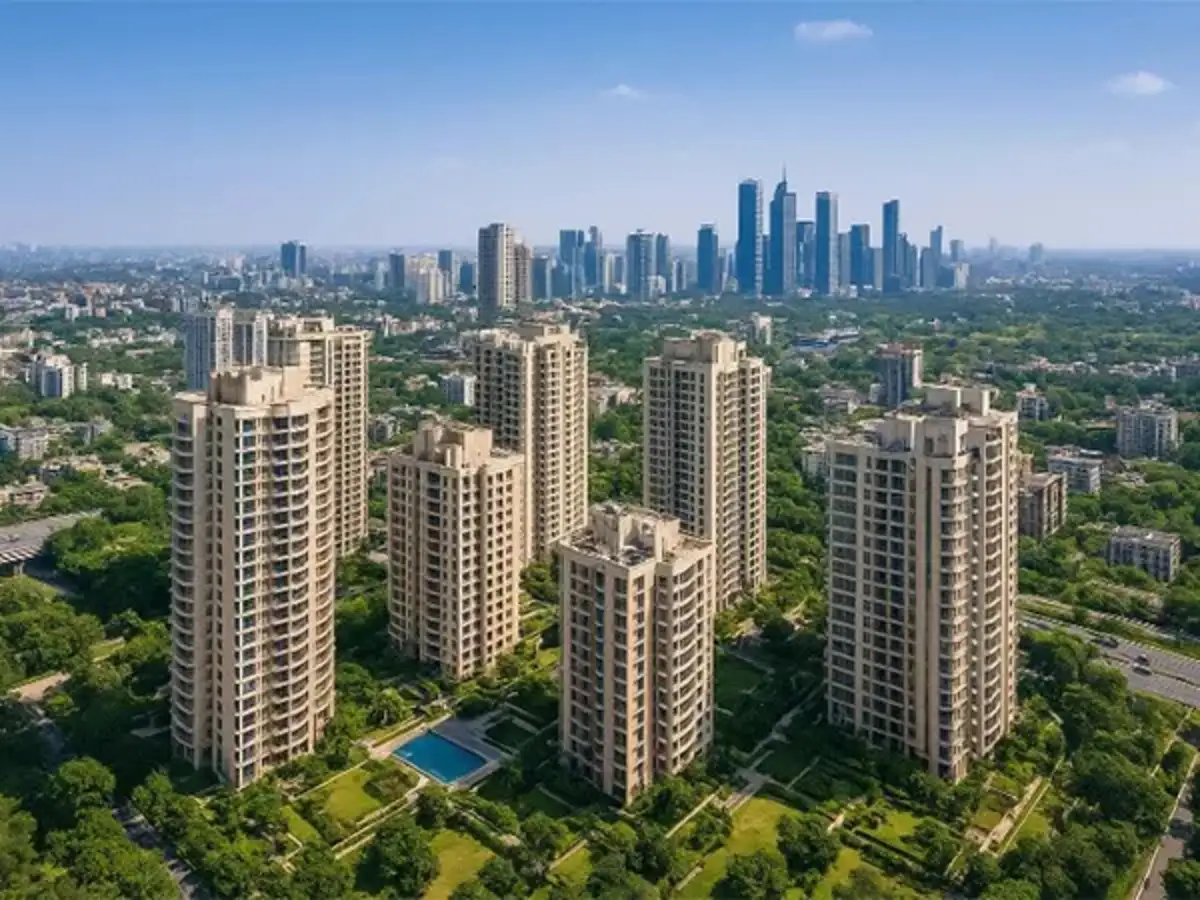
Delhi-NCR’s housing market is getting more expensive at a pace that is beginning to raise a bigger question than simply how strong property demand remains: who can still afford to buy? Average residential prices across the region climbed 12% year-on-year to ₹9,980 per square foot in the third quarter of 2026, according to ANAROCK data. The sharp increase has made Delhi-NCR the fastest-growing major housing market in India in terms of average residential prices.
But behind the headline growth is a more complicated story. Housing demand has remained relatively resilient even as prices have climbed, while an increasing share of new projects is aimed at wealthy buyers. That raises concerns that the region’s property boom could be making homeownership increasingly difficult for middle-income households.
Delhi-NCR recorded 13,765 housing sales during July-September, compared with 13,920 units during the same period last year. That represents a modest 1% decline in annual sales.
At the same time, more than 34% of new housing supply launched during the quarter was priced above ₹2.5 crore.
The numbers point to a significant change in the character of the market. Developers are increasingly concentrating on premium and luxury homes, while the supply of comparatively affordable housing is becoming less prominent.
For wealthy buyers, the trend may reflect strong demand for larger homes, better amenities and properties in well-connected locations. For middle-class households, however, rapidly rising prices can translate into larger down payments, bigger mortgages and longer repayment periods.
At an average price of ₹9,980 per square foot, even a relatively modest 1,000-square-foot home would carry a headline price of nearly ₹1 crore before taxes, registration costs, financing expenses and other charges. Larger family homes in premium locations can cost considerably more.
That calculation illustrates the affordability challenge facing many prospective buyers. A household may have a stable income and still find it increasingly difficult to purchase a home in the neighbourhood it wants.
The pressure is particularly significant for first-time buyers. As property prices rise faster than household purchasing power, buyers may have to compromise on size, location or quality. Some may choose smaller apartments, move farther from employment centres or postpone buying altogether.
Developers, meanwhile, face their own cost pressures.
Land prices, construction expenses and infrastructure-related costs have increased in several parts of the NCR. Higher development costs give builders an incentive to focus on projects where buyers can absorb higher prices.
This creates a difficult cycle: expensive land encourages expensive housing, while expensive housing makes affordable development harder to achieve.
Gurugram, Noida and Greater Noida have become major centres of residential development, supported by infrastructure improvements, expanding business districts and improved connectivity. These factors have helped sustain demand, but they have also contributed to rising land values in several locations.
Delhi-NCR’s price growth is particularly striking when compared with other major Indian markets. Average residential prices across seven major cities rose about 7% annually in the third quarter, meaning the NCR’s 12% increase was substantially higher.
The question now is whether rising prices can continue without eventually weakening demand.
So far, buyers have continued to enter the market despite higher prices. But a market dominated increasingly by high-value properties may not tell the full story of housing demand. Strong luxury sales can support average prices even while affordability deteriorates for the broader population.
That distinction will become increasingly important for policymakers and developers.
A healthy housing market is not only one in which property values rise. It is also one in which working households can realistically access homes near jobs, schools and transport.
For Delhi-NCR, the latest figures reveal both sides of the market. On one side is a confident premium segment, supported by wealthy buyers and continued investment. On the other is a growing affordability problem that could push ordinary households further away from homeownership.
As the region moves into the final quarter of 2026, the central question may therefore be changing.
It is no longer simply whether Delhi-NCR property prices will keep rising.
It is whether they can keep rising at this pace without putting homeownership beyond the reach of an increasingly large share of the people who live and work there.








+ There are no comments
Add yours