






Brazilian voters head to the polls on Sunday in a closely watched presidential election pitting incumbent Luiz Inácio Lula da Silva against Senator Flávio Bolsonaro, the son of former President Jair Bolsonaro, in a contest that could reshape Brazil’s domestic politics and its relationships with major global powers.
More than 158 million Brazilians are eligible to vote in the first round of the election, choosing not only a president but also governors, senators and lawmakers. Voting is taking place on October 4, with a second round scheduled for October 25 if no presidential candidate secures more than 50% of valid votes.
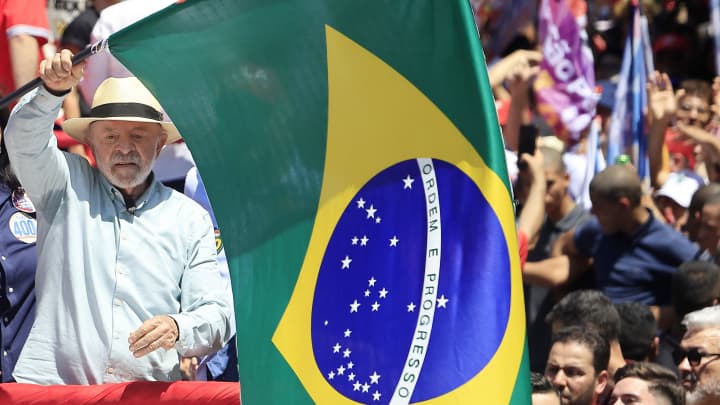
Lula, 80, is seeking a fourth non-consecutive presidential term and has spent decades as one of Brazil’s most influential political figures. His campaign has focused heavily on social programmes, economic conditions and defending Brazil’s democratic institutions. In his final campaign rally in São Paulo on Saturday, Lula described the election as a choice between “democracy and barbarism,” while his Workers’ Party pointed to the size of the crowd as evidence of strong support.
Flávio Bolsonaro, 45, is campaigning as a right-wing alternative and has sought to build on the political movement created by his father. Jair Bolsonaro, who remains a powerful figure among Brazil’s conservative electorate, is serving a 27-year prison sentence following his conviction over an attempt to overturn the 2022 election result. Flávio has made his father’s political legacy a central part of his campaign and has pledged to seek his release.
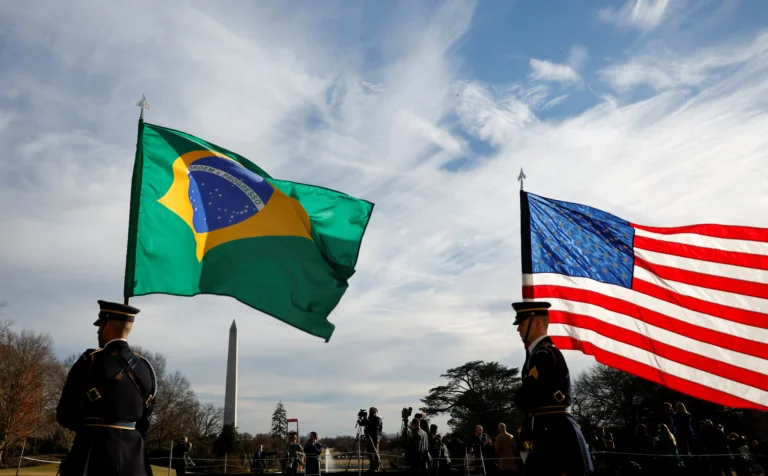
The race has also become a significant international story. Lula has strengthened Brazil’s relationships with China and other emerging economies and has promoted a more independent foreign policy. Flávio Bolsonaro, meanwhile, is closely aligned with U.S. President Donald Trump and has campaigned for stronger relations with Washington, including improved trade arrangements.
The economic situation is another major concern for voters. Affordability, living costs, employment and perceptions of government performance have become important themes in the campaign, while corruption scandals and political polarization have further complicated the choices facing the electorate.
The final opinion polls underline how competitive the election has become. Reuters reported on Saturday that several surveys showed Lula with a narrow lead over Flávio Bolsonaro, while some runoff scenarios were within the surveys’ margins of error. The polling therefore points to a highly uncertain contest rather than a settled outcome.
Brazil’s election carries significance well beyond its borders. As Latin America’s largest economy and one of the world’s most influential emerging powers, Brazil plays an important role in global trade, climate diplomacy, the BRICS grouping and relations between the Global South, China, Europe and the United States.
The election also comes at a sensitive moment for Brazilian democracy. The political divisions surrounding the 2022 election and Jair Bolsonaro’s subsequent conviction have left the country deeply polarized, making the conduct and acceptance of the 2026 vote closely watched both domestically and internationally.
By Sunday evening, Brazil could know whether it has chosen its next president or whether voters will return to the polls on October 25. Whatever the outcome, the election represents a major moment for a country whose political direction will have consequences far beyond South America’s borders.





+ There are no comments
Add yours