







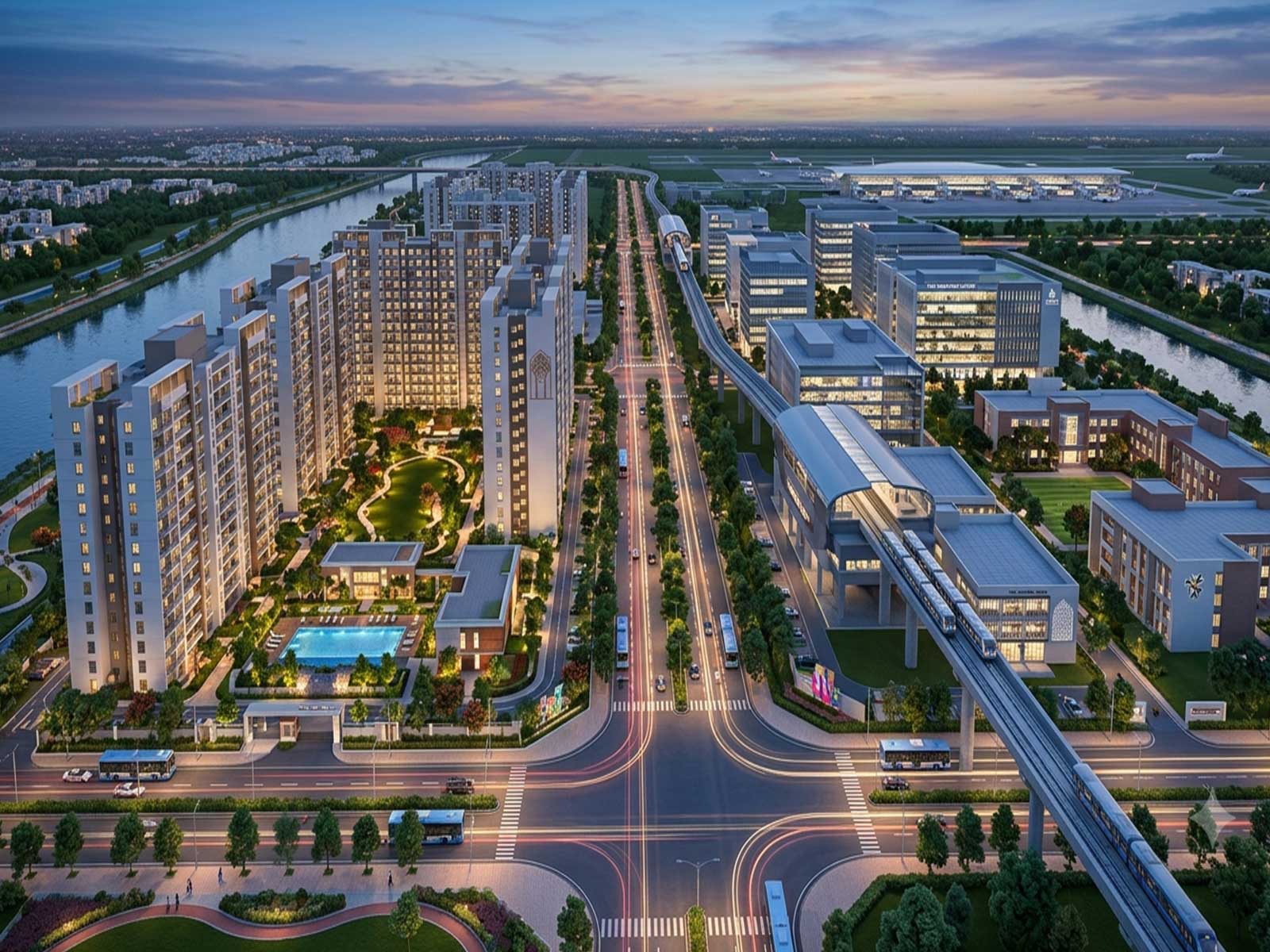
Investors are returning to Asia-Pacific real estate, but the next property cycle is being shaped by selectivity, technology and changing demand.
Asia’s real-estate market is entering a new chapter.
After years of uncertainty surrounding interest rates, financing costs and property-sector weakness in parts of the region, investors are once again deploying capital across Asia-Pacific. But this is not a return to the broad-based property boom of previous cycles.
Instead, investors are becoming increasingly selective, looking for cities, sectors and individual properties that can withstand a more complicated economic environment.
Cross-border real-estate investment volumes across Asia-Pacific have risen about 30% so far this year, according to Savills, signalling renewed interest in the region even as uncertainty over global interest rates remains.
The latest investment figures highlight the scale of the shift. Mainland China recorded around $13 billion in real-estate investment during the second quarter, up 154% from a year earlier, according to MSCI data cited by the South China Morning Post. Japan followed with approximately $9.7 billion, while Australia recorded about $8 billion.
The figures point to an increasingly diverse investment landscape. Rather than treating Asia as one unified property market, investors are weighing individual economies, cities and property types according to their expected income potential and supply conditions.
One of the most striking developments is the renewed interest in high-quality office buildings. After years of uncertainty surrounding workplace trends and office demand, prime properties in major business districts are attracting fresh attention. CBRE’s 2026 Asia-Pacific investor survey found offices had become the region’s most preferred property sector for the first time in six years.
Tokyo is one of the markets attracting particular attention. Limited availability and strong demand for new office space are supporting rental growth, while Hong Kong has also recorded renewed demand from financial institutions.
The change underscores an important distinction emerging across the region: investors are increasingly separating high-quality, well-located buildings from weaker properties rather than treating the office market as a single category.
Technology is also becoming a major force in Asian real estate. The rapid expansion of artificial intelligence and digital services is increasing demand for data centres and other specialised infrastructure. Data centres are now among the sectors attracting significant investor interest across Asia-Pacific.
Meanwhile, logistics, residential and other living-sector assets are gaining attention as demographic and consumption patterns evolve. These trends are changing what investors mean when they talk about real estate. Property is no longer limited to offices, shopping centres and traditional residential developments. Increasingly, it includes the physical infrastructure supporting the digital economy.
The recovery, however, is far from uniform. Tokyo, Singapore, Sydney, Seoul and Hong Kong are attracting substantial investor attention, but other markets continue to face challenges from excess supply, high vacancies or expensive financing. Mainland China’s office sector, for example, continues to experience elevated vacancy in several major cities.
That divergence is becoming one of the defining characteristics of the current cycle. For investors, the question is increasingly not simply where to invest in Asia, but which assets can continue generating demand as economic and demographic conditions change.
Asia-Pacific’s real-estate market is therefore being reshaped around several powerful forces: capital flows, technology, demographics, limited prime supply and changing financing conditions.
The result is a property market that looks increasingly selective. Some cities are benefiting from strong demand and constrained supply. Some sectors are being transformed by technological change. Others are still working through the legacy of oversupply and higher borrowing costs.
For Asia’s property industry, the next chapter may not be defined by one sweeping boom. It may instead be defined by a new geography of opportunity where the right city, the right asset and the strength of underlying demand matter more than ever.







+ There are no comments
Add yours