






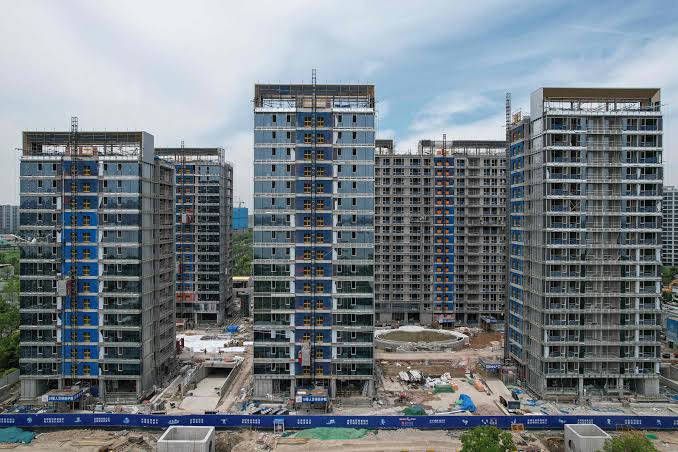
China is stepping up efforts to prevent a deeper crisis at property developer China Vanke, with financial regulators asking some banks to delay repayments and avoid classifying overdue Vanke loans as non-performing, according to people familiar with the matter.
The reported intervention is one of Beijing’s latest efforts to prevent a potential default by the state-backed developer, which has been under mounting financial pressure during China’s prolonged property downturn. Regulators have also asked some lenders to hold off on collecting interest payments owed by Vanke, Reuters reported.
The guidance was reportedly aimed mainly at larger banks and was delivered informally. The exact number of banks involved and how long the loans could remain outside non-performing status was not immediately clear. According to one source, the timeline would depend on conditions in the property market and further discussions with Vanke.
Chinese financial regulators and Vanke did not immediately respond to Reuters’ requests for comment.
The pressure on Vanke reflects the wider difficulties facing China’s property sector, which has struggled with weak housing demand, falling sales and high levels of developer debt for several years. Vanke has been among the major developers that have avoided an official default despite growing financial stress.
The company reported a record 88.6 billion yuan loss in 2025, as weak property sales reduced its cash position. Its total assets are close to 1 trillion yuan, while its financial position has continued to come under pressure.
Vanke’s difficulties have become particularly significant because of its links to the state. Shenzhen Metro, a government-owned company, is its major shareholder and has provided financing support as Vanke negotiates with creditors. Earlier this year, lenders agreed to defer some interest payments, giving the developer additional time to manage its obligations.
The latest regulatory guidance is significant because classifying loans as non-performing can increase pressure on a troubled borrower. Banks may step up collection efforts or demand additional collateral, potentially making an already difficult liquidity situation even more severe. Reuters reported that Chinese authorities are seeking to avoid such a chain reaction at Vanke.
Vanke’s latest financial disclosure illustrates the scale of the challenge. The company reported 70.17 billion yuan in revenue for the first half of 2026 and a net loss attributable to shareholders of 14.95 billion yuan. It also warned that liquidity remained under pressure, with short-term borrowings, shareholder loans and other interest-bearing liabilities due within a year substantially exceeding its cash and cash-equivalent holdings.
The developments have also been closely watched by investors. Vanke’s Hong Kong-listed shares and Shenzhen-listed shares rose after reports of regulatory intervention, while other Chinese property stocks also gained as markets interpreted the move as evidence of stronger government support for the struggling sector.
But the reported support does not remove Vanke’s underlying financial problems. The developer still faces weak property sales and a large debt burden, while China’s broader housing market has yet to achieve a sustained recovery.
The importance of Vanke extends beyond one company. The developer is deeply connected to China’s banking and property systems, meaning a disorderly default could put additional pressure on lenders, suppliers, homebuyers and other developers already dealing with a prolonged downturn.
Beijing’s latest intervention therefore signals the growing importance of preventing financial stress at major property companies from spreading more widely. For Vanke, the immediate objective appears to be buying time, giving the developer and its creditors more room to negotiate while authorities try to contain the risks surrounding China’s property market.
For investors, however, the central question remains whether additional time can translate into a lasting financial recovery. Regulatory support may ease immediate liquidity pressure, but Vanke still needs stronger sales, improved cash flow and a sustainable solution to its debt burden.
The latest move underscores a broader reality facing China’s property industry: the crisis is no longer simply about developers building fewer homes. It is increasingly about how banks, regulators and the state manage the enormous debts left behind by the country’s property boom.








+ There are no comments
Add yours