






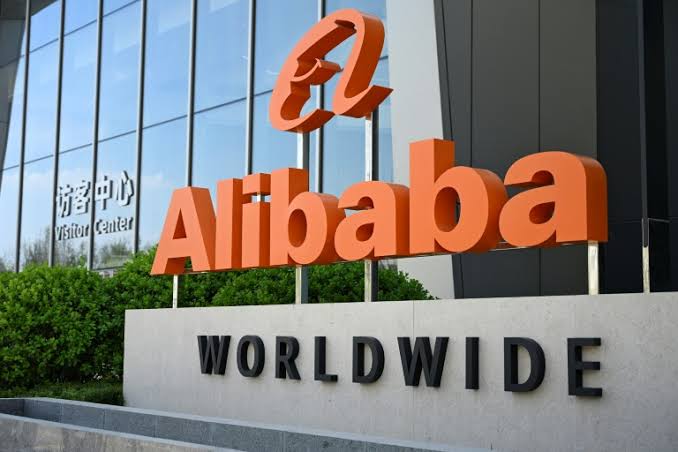
Alibaba is dramatically expanding its artificial intelligence ambitions, announcing plans for a new AI model that could reach between 5 trillion and 10 trillion parameters while unveiling a next-generation chip designed to power increasingly demanding AI systems.
The announcements, made Tuesday at Alibaba Cloud’s annual Apsara Conference in Hangzhou, mark a major expansion of the Chinese technology giant’s strategy across AI models, semiconductors and data-centre infrastructure. Alibaba’s Hong Kong-listed shares rose 5.1% following the news, reaching their highest level in a month.
Alibaba Chief Executive Eddie Wu said the company’s Qwen team is working toward models capable of handling more complex and longer-horizon tasks. The planned 5 trillion-to-10 trillion-parameter systems would be substantially larger than Alibaba’s current flagship Qwen 3.8 Max, which has 2.4 trillion parameters.
Alibaba said its next-generation Qwen 4 model is already in training, while future Qwen 4.5 and Qwen 5 models are expected to scale toward the 5 trillion-to-10 trillion-parameter range. The company is also researching ways for AI systems to identify weaknesses, conduct experiments and generate training data with less human involvement.
Alongside the model roadmap, Alibaba unveiled the Zhenwu V900, a new AI chip developed by its T-Head semiconductor division. Wu said the processor delivers three times the performance of its predecessor, the M890, and described it as China’s most powerful AI chip.
The V900 is expected to enter mass production and commercial release in the first quarter of 2027. Alibaba said the chips can be connected in clusters of up to 500,000 units, providing the computing infrastructure needed to train and operate some of the world’s largest AI models.
The move comes as Chinese technology companies accelerate efforts to develop domestic alternatives to advanced processors supplied by global chipmakers. US restrictions on the export of sophisticated AI processors to China have added pressure on Chinese firms to strengthen their own semiconductor capabilities.
Alibaba is simultaneously expanding the infrastructure needed to support the AI race. The company aims to increase Alibaba Cloud’s global data-centre capacity to more than 20 gigawatts by 2032, reflecting expectations that demand for computing power will continue to grow as AI models become larger and more widely used.
The strategy effectively places Alibaba across the entire AI supply chain from chips and cloud computing to foundation models and AI applications. It also puts the company into closer competition with both Chinese technology rivals and major global AI and semiconductor companies.
For Alibaba, the scale of the investment highlights how quickly artificial intelligence is becoming central to the technology industry’s next phase of growth. The company’s latest announcements suggest that the competition is no longer simply about building better AI models, but about controlling the computing infrastructure, chips and cloud systems required to run them.
As China pushes to strengthen its domestic technology ecosystem, Alibaba’s latest AI offensive could become an important test of how far the country’s technology giants can build a full-stack alternative in an increasingly competitive global AI market.







+ There are no comments
Add yours