







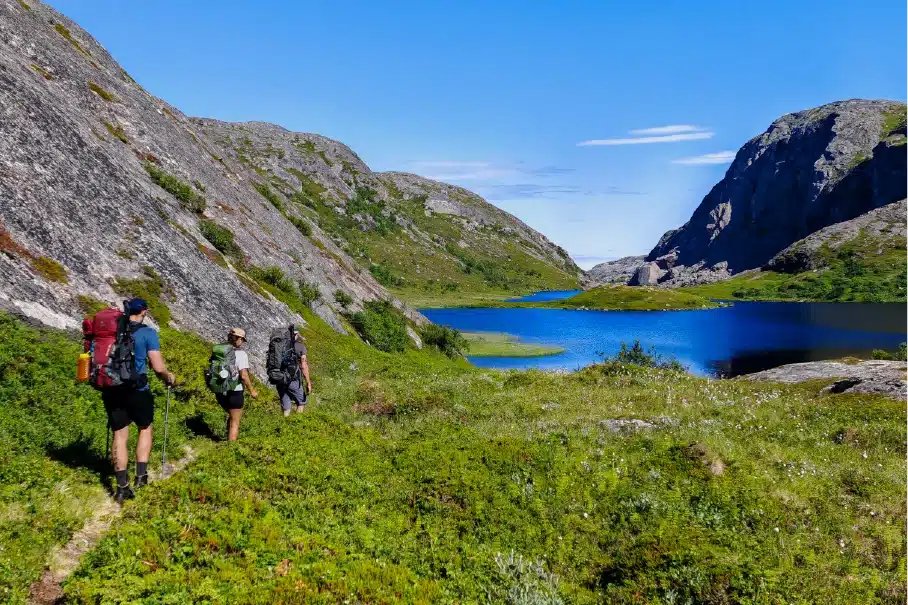
Far in northeastern Norway, where rugged tundra, forests and Arctic waters meet, a network of scenic hiking trails offers travellers an unusual way to experience one of Europe’s most closely monitored borders.
Near the remote town of Kirkenes, the Norwegian-Russian border stretches for 198km through a landscape of birch forests, rocky terrain and open tundra. The area is increasingly attracting adventurous travellers who want to explore the Arctic wilderness while experiencing a place shaped by its proximity to Russia.
Kirkenes is best known as a northern destination for Arctic cruises, but local tour operators are increasingly offering guided hikes along sections of the border. The trails provide spectacular views of the Pasvik River and surrounding wilderness, where the landscape can appear peaceful and untouched despite the heightened security presence.
Hikers, however, quickly discover that this is not an ordinary wilderness trek. Watchtowers, surveillance cameras and other security measures are visible along parts of the route. Some cameras are discreetly positioned among the trees, while military and border installations remind visitors that they are travelling beside a strategically important frontier.
The border itself is largely unfenced in many areas, but visitors are expected to follow strict rules and remain on permitted routes. Crossing into Russia is prohibited except through designated border-control points, and travellers are advised to follow the instructions of Norwegian authorities and their guides.
The surrounding region offers a striking combination of natural beauty and geopolitical significance. In summer, long Arctic daylight illuminates the forests and tundra, while the Pasvik River winds through the landscape. Wildlife, including birds and other Arctic species, can also be spotted along the trails.
For visitors arriving in Kirkenes by cruise or travelling independently through northern Norway, these hikes provide an opportunity to see a lesser-known side of the country. Rather than simply observing the Arctic from a ship or viewpoint, travellers can walk through its remote landscape while learning about the history, geography and security concerns that define this unusual frontier.
The experience is a reminder that some of Europe’s most extraordinary travel destinations are also places where nature and international politics exist remarkably close together.






+ There are no comments
Add yours