






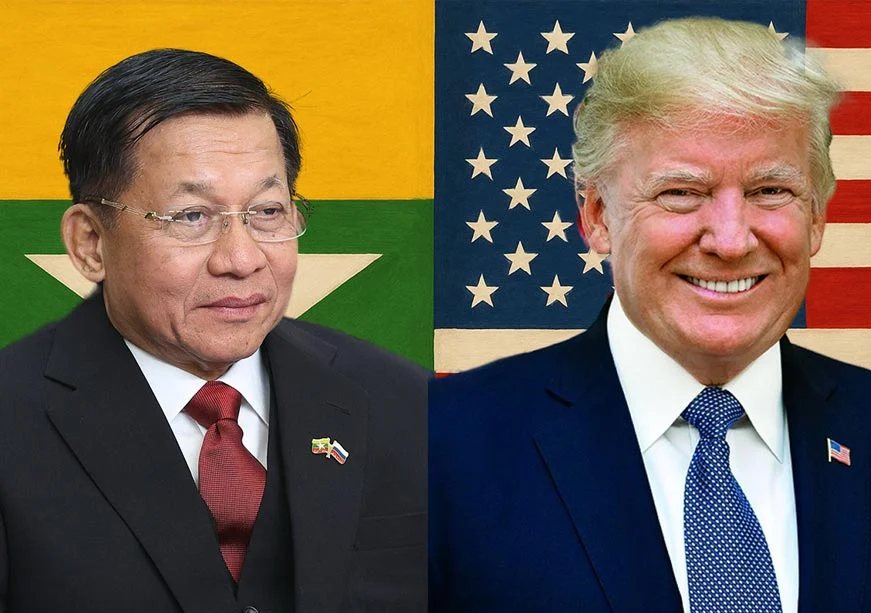
The United States has opened direct talks with Myanmar’s military-led government, marking a significant shift from Washington’s efforts to isolate the country’s generals following the 2021 military coup.
U.S. officials said the outreach has focused initially on shutting down scam centres operating in Myanmar that have defrauded Americans of billions of dollars, but discussions have also opened the door to broader cooperation, including possible access to Myanmar’s deposits of rare-earth minerals.
Michael Vance, the U.S. assistant secretary of state for intelligence and research, met Myanmar’s military leader-turned-president Min Aung Hlaing in Naypyitaw on Sept. 15 and 16, according to officials familiar with the talks. It was the highest-level known U.S. contact with Myanmar’s military leadership since the coup.
The meeting was partly aimed at securing the release of American businessman Adam Castillo, who had been detained by Myanmar authorities. His release subsequently created an opening for wider engagement between Washington and the military-backed government.
The talks represent a notable departure from the policy pursued after the 2021 coup, when the United States imposed sanctions on senior military figures and military-linked businesses and backed non-lethal assistance for opposition forces.
Myanmar has remained embroiled in armed conflict since the coup, with the military fighting opposition groups and ethnic armed organisations across large parts of the country. Min Aung Hlaing remains under U.S. sanctions over alleged human rights abuses, including Washington’s designation of the military’s 2016-17 campaign against the Rohingya as genocide.
The U.S. administration has defended its engagement, saying problems are better addressed through direct contact. State Department spokesperson Tommy Pigott said Washington continues to engage with groups across Myanmar and is pressing for an end to violence and the release of political prisoners.
Rare-earth minerals have emerged as another potential area of strategic cooperation. Myanmar holds significant deposits of heavy rare earths used in electric vehicles, wind turbines and other technologies. But much of the relevant territory is controlled by ethnic armed groups fighting the military, while China remains the dominant buyer, creating significant obstacles for any expanded U.S. role.
The shift has drawn criticism from some U.S. lawmakers and human-rights advocates, who argue that engagement could give Myanmar’s military government greater international legitimacy.
For Washington, however, the talks reflect a broader effort to pursue immediate security and economic interests through direct diplomacy.
The engagement does not signal that U.S. sanctions or concerns over Myanmar’s human-rights record have disappeared. But after years of isolation, Washington is now testing whether direct engagement can deliver results in a country where diplomatic pressure alone has failed to end the conflict.






+ There are no comments
Add yours