







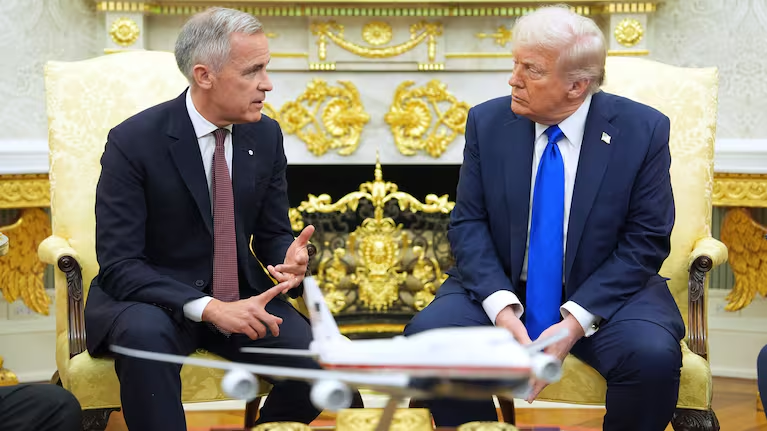
The United States has imposed 50% tariffs on about $20 billion worth of Canadian goods after last-minute trade negotiations between the two longtime allies failed to produce an agreement, escalating tensions across North America. The new duties took effect early Saturday, August 22, affecting roughly 5% of Canada’s exports to the United States.
The tariffs cover a range of products, including items such as hockey sticks, cement, alcoholic beverages and other Canadian goods. Some major Canadian exports, including energy and products already subject to separate US tariff measures, are excluded from the new duties.
The breakdown followed several days of intense negotiations in Washington. The talks had raised hopes that the two countries could reach a broader trade arrangement before the tariff deadline. US President Donald Trump had temporarily delayed the tariffs to give negotiators additional time, but the extension ultimately failed to produce a final deal.
Washington and Ottawa have offered sharply different accounts of why the negotiations collapsed. US Trade Representative Jamieson Greer said Canada declined to finalize the proposed agreement, while Canadian Prime Minister Mark Carney said last-minute changes by the United States were unacceptable and did not adequately protect Canadian interests.
Carney has responded by suspending the trade negotiations and promising that Canada will retaliate with tariffs on a dollar-for-dollar basis. Ottawa has also indicated that it will introduce measures aimed at protecting Canadian workers and businesses affected by the dispute.
The latest escalation threatens to deepen uncertainty for companies operating across the US-Canada border and could put further pressure on industries already dealing with higher trade costs. It also complicates negotiations over the future of the United States-Mexico-Canada Agreement, the trade framework that underpins much of North America’s integrated economy.
For two countries whose economies have long been closely connected, the new tariffs mark another significant setback in a relationship increasingly shaped by trade disputes and competing economic priorities.










+ There are no comments
Add yours