







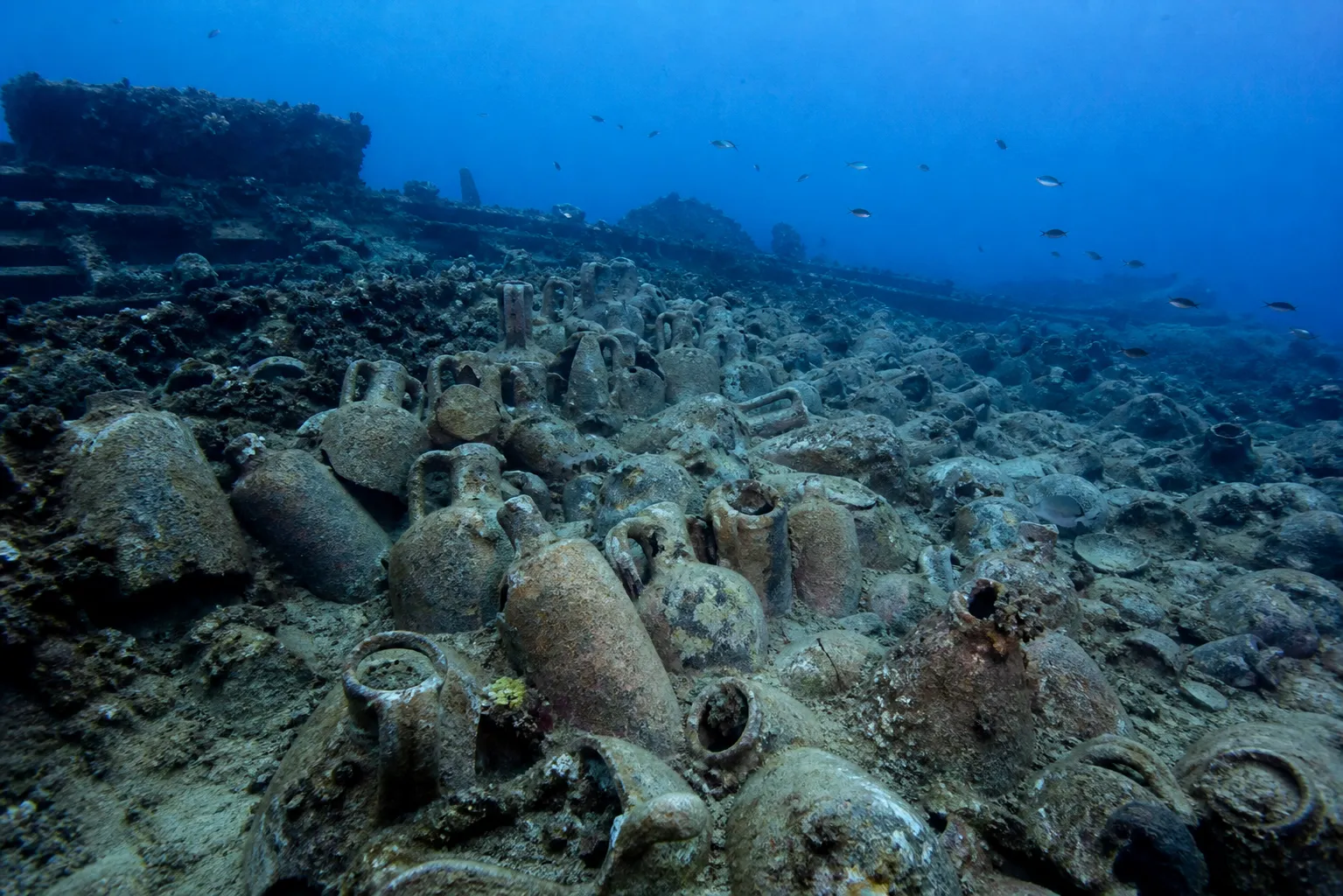
Italian divers have discovered a remarkable ancient Roman shipwreck lying deep beneath the Mediterranean waters near Sicily, offering archaeologists a rare glimpse into the region’s maritime trade more than 2,000 years ago.
The 21-metre-long vessel was found approximately 46 metres below the surface during an underwater exploration off the coast of the Italian island, which lies south of mainland Italy. The wreck is believed to date back to the Roman era and is remarkably well preserved, including much of the cargo it was carrying when it sank.
Among the most significant discoveries are hundreds of amphorae, large ceramic vessels widely used in the ancient Mediterranean to transport and store commodities. Archaeologists say the jars may provide important clues about the types of goods being transported and the commercial routes used by Roman-era merchants. Amphorae were commonly used to carry products such as wine, olive oil and grain, making their presence particularly valuable for researchers studying ancient economic activity.
The discovery highlights the importance of the Mediterranean as a major centre of trade during antiquity. Ships regularly travelled between ports across southern Europe, North Africa and the wider Mediterranean, carrying agricultural products, manufactured goods and other commodities. Many vessels, however, were lost because of storms, navigation difficulties or other hazards, leaving their cargo preserved underwater for centuries.
Archaeologists and marine researchers are now carefully examining the wreck and its contents. The condition of the amphorae could help specialists determine where the goods originated, where the ship may have been heading and how commercial networks operated during the Roman period.
The discovery also presents challenges for conservation. Underwater archaeological sites can be extremely fragile, and researchers must document and study the wreck without damaging its structure or artefacts. Advanced diving and imaging technologies are expected to play an important role in recording the site and preserving information for future research.
The newly discovered vessel could ultimately provide valuable evidence about ancient seafaring, trade and daily life in the Mediterranean. As archaeologists continue their investigation, the shipwreck may reveal further details about the people, goods and commercial connections that shaped the Roman world more than two millennia ago.











+ There are no comments
Add yours