






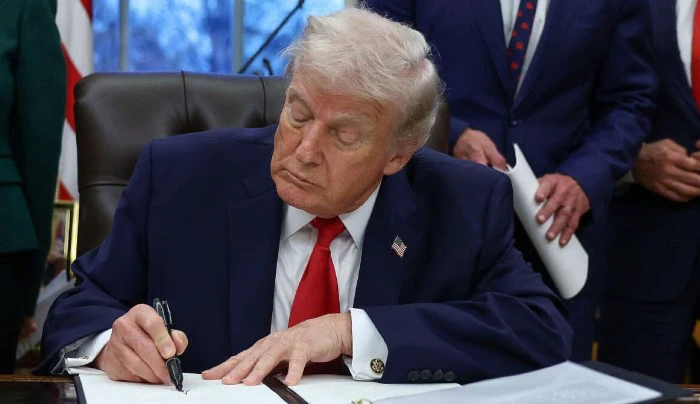
Global crude oil prices edged lower following an announcement by US President Donald Trump that ships stranded in the Strait of Hormuz would be allowed safe passage, easing immediate fears over supply disruptions in one of the world’s most critical energy chokepoints.
The statement helped calm markets that had been on edge amid heightened tensions in the region, where concerns over shipping security have recently contributed to volatility in energy prices. Traders reacted quickly to the news, with crude benchmarks slipping slightly in early trading as the perceived risk of supply interruptions eased.
The Strait of Hormuz, a narrow but strategically vital waterway linking the Persian Gulf to the Arabian Sea, is responsible for a significant portion of global oil shipments. Any disruption in the passage has historically triggered sharp price movements, given the potential impact on global supply chains.
President Trump’s announcement that stranded vessels would be granted safe passage was interpreted by markets as a sign of de-escalation, at least in the immediate term. While details of the arrangement remain limited, the move appears aimed at preventing further disruption to commercial shipping and stabilising energy flows.
Oil markets had recently been buoyed by fears of sustained instability in the region, with prices rising on concerns that escalating tensions could restrict exports from major producers. The latest development, however, introduced a degree of relief, prompting a modest correction in prices as traders reassessed near-term risk levels.
Despite the decline, analysts caution that volatility is likely to persist. The broader geopolitical situation remains unresolved, and energy markets continue to be highly sensitive to any developments affecting shipping routes or production infrastructure in the region. Even temporary disruptions have the potential to trigger sharp price swings due to the tight balance between global supply and demand.
Energy analysts also note that while the immediate announcement may reduce pressure on prices, structural concerns remain. Global oil demand remains strong, and any renewed escalation in the Strait of Hormuz or surrounding waters could quickly reverse recent gains in supply confidence.
Financial markets are also watching closely for responses from key oil-producing nations, many of which rely heavily on uninterrupted exports through the waterway. Any shift in policy or security posture could have significant implications for global energy pricing in the weeks ahead.
For now, the announcement has provided a short-term stabilising effect, offering temporary relief to markets that have been grappling with uncertainty. However, traders remain cautious, with many viewing the situation as fluid and highly dependent on further diplomatic and security developments.
As one of the world’s most important energy corridors, the Strait of Hormuz continues to sit at the centre of global market sensitivity—where even brief changes in perceived risk can ripple quickly through oil prices and broader financial systems.






+ There are no comments
Add yours