







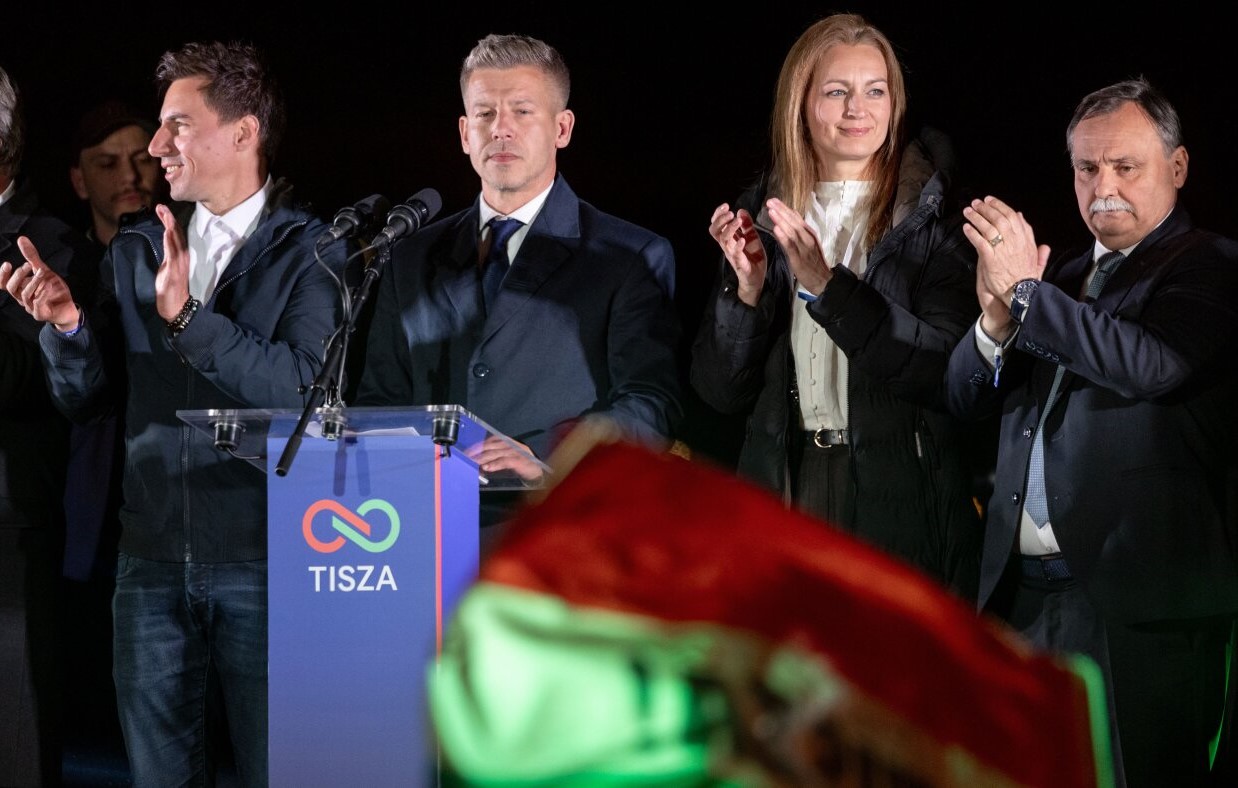
Hungary’s opposition has won a decisive victory in parliamentary elections, ending the long rule of Prime Minister Viktor Orbán and marking one of the most significant political shifts in the country’s modern history.
Preliminary results show the Tisza Party, led by Péter Magyar, securing a clear majority in parliament, paving the way for a change of government after more than a decade of Fidesz leadership.
Orbán, who has dominated Hungarian politics for 16 years, conceded defeat following the vote, acknowledging the outcome and signalling an orderly transition of power.
The result represents a dramatic realignment in Hungarian politics and is expected to reshape the country’s domestic and foreign policy direction, particularly its relationship with the European Union.
Celebrations broke out in parts of Budapest overnight as supporters of the opposition gathered to mark what many described as a “historic turning point” for the nation.
The election campaign had been closely watched across Europe, with debates focused on governance, democratic institutions, and Hungary’s role within the EU. Turnout was high, reflecting strong public engagement in what many voters saw as a defining election.
European leaders are expected to respond formally in the coming days, but early reactions from diplomatic circles suggest relief and cautious optimism about a renewed alignment between Budapest and Brussels.
Analysts say the result could have wide-ranging implications, including potential changes in policy direction on judicial reform, media regulation, and international cooperation.
While the full composition of the new government is yet to be confirmed, the scale of the opposition’s win leaves little doubt that a new political era has begun in Hungary.
The transition of power is expected to begin in the coming weeks as official results are certified and the new administration is formed.









+ There are no comments
Add yours