







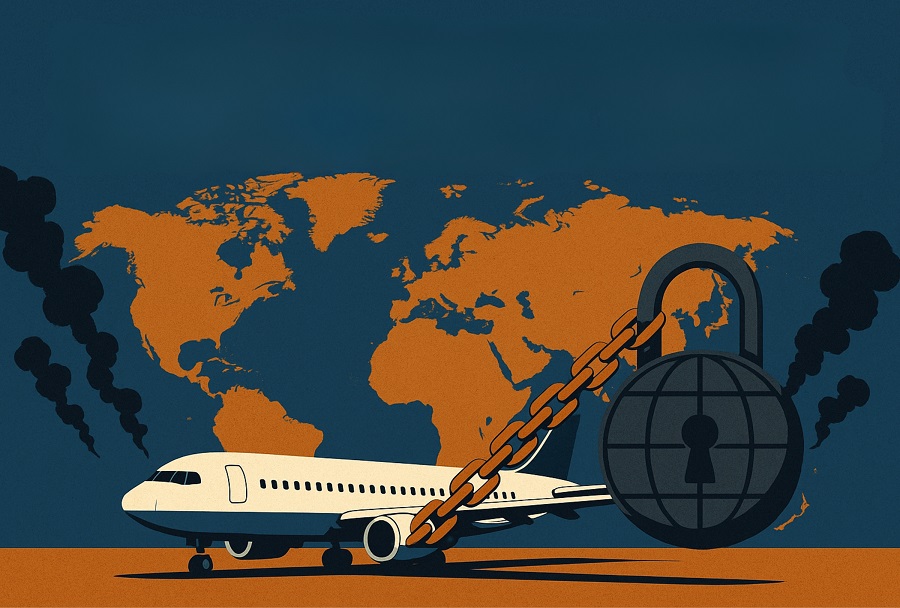
Transatlantic travel demand is weakening ahead of the crucial summer season, with new data showing a notable drop in bookings between the United States and Europe as global tensions intensify.
Recent figures indicate that bookings from Europe to the United States for July 2026 have fallen by 15.34 percent compared to the same period last year. Travel in the opposite direction is also down, with U.S. to Europe bookings declining by 11.19 percent. The slowdown reflects growing caution among travelers amid escalating conflicts involving the United States, Israel, and Iran.
Industry analysts say geopolitical uncertainty is playing a central role in the decline. Rising security concerns, evolving travel advisories, and fears of further escalation are prompting many travelers to delay or reconsider long-haul trips. The transatlantic corridor, one of the busiest and most lucrative in global aviation, is particularly sensitive to such disruptions.
Major European travel hubs, including Frankfurt, Amsterdam, and Paris, are experiencing reduced demand for U.S.-bound travel, while American tourists are also showing less enthusiasm for European destinations. The drop on both sides of the Atlantic highlights a broader cooling in international travel sentiment.
Economic pressures are adding to the downturn. Higher airfares driven by rising fuel costs, along with persistent inflation, are making international travel less accessible for many consumers. For airlines and tourism operators, even a modest percentage decline can translate into significant revenue losses due to the high volume of transatlantic passengers.
Despite the current trend, experts note that travel patterns have evolved, with more passengers booking closer to departure dates. This could lead to a partial recovery in demand if geopolitical conditions stabilize. Airlines may also introduce discounts and adjust capacity in an effort to stimulate bookings.
For now, however, the decline in early reservations points to a challenging summer for the travel industry. With uncertainty dominating the global landscape, both airlines and travelers are navigating an increasingly fragile and unpredictable environment.









+ There are no comments
Add yours