






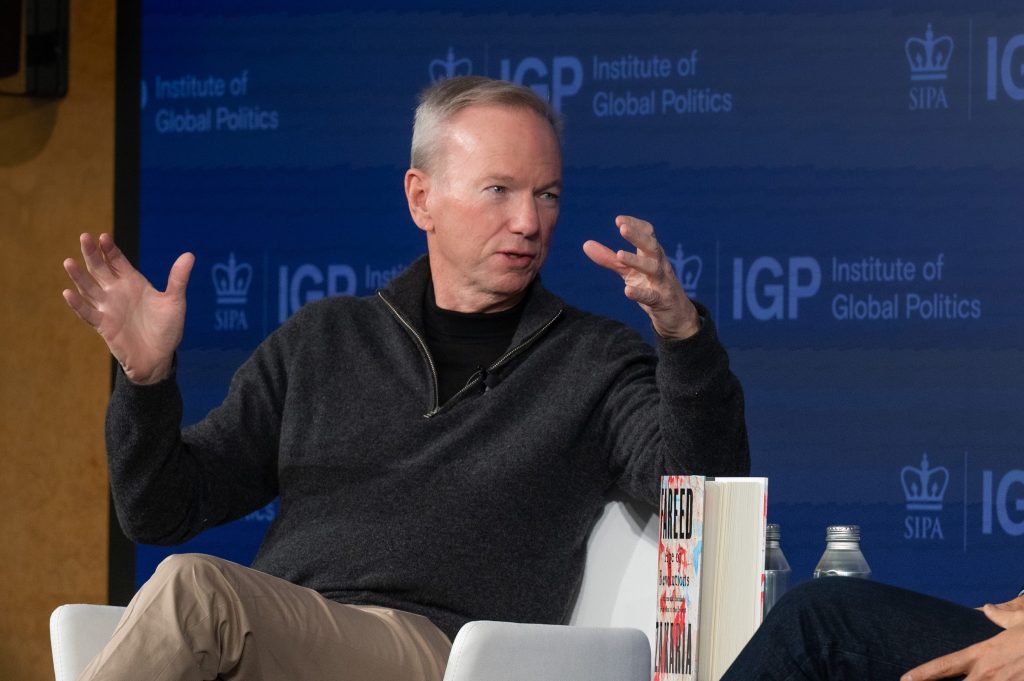
At an age when many executives slow down or step away from public life, former Google CEO Eric Schmidt continues to work, write, advise governments, and shape conversations around artificial intelligence and global technology policy. Now in his seventies, Schmidt shows no sign of retreat. The source of this sustained drive, he has often suggested, can be traced to an unlikely influence: Henry Kissinger.
Kissinger, the former U.S. Secretary of State and one of the most influential geopolitical thinkers of the 20th century, remained intellectually active well into his late 90s. For Schmidt, Kissinger’s longevity and continued relevance serve as a powerful example of how curiosity, responsibility, and purpose can outlast age.
A Model of Lifelong Relevance
Henry Kissinger was not merely present in public life late into old age—he was productive. He wrote books, advised world leaders, spoke on global order, and engaged with emerging technologies long after most of his contemporaries had retired.
Eric Schmidt has openly admired this ability to stay relevant. For him, Kissinger represents the idea that mental engagement and contribution need not decline with age. Instead, experience can compound, making later decades uniquely valuable.
Schmidt has echoed this belief in his own life, choosing not to retire in the conventional sense after stepping down from Google’s day-to-day leadership.
Why Eric Schmidt Refuses a Traditional Retirement
After serving as Google’s CEO during its transformation into a global technology powerhouse, Schmidt could have easily stepped away. Financial independence and legacy were already secured. Yet he chose continued engagement.
His post-Google career includes:
Advising governments on artificial intelligence and national security
Writing and co-authoring books on technology, geopolitics, and AI
Leading research initiatives focused on emerging technologies
Participating in policy discussions shaping the future of innovation
This mirrors Kissinger’s post-office life, where influence came not from formal authority, but from accumulated wisdom and strategic insight.
The Kissinger Effect: Purpose Over Comfort
What motivates Schmidt is not ambition in the traditional corporate sense, but purpose. Kissinger’s life demonstrated that meaningful work can serve as a stabilizing force, giving structure and urgency to later years.
Schmidt has often emphasized that the problems facing the world—artificial intelligence governance, cybersecurity, global competition, and technological ethics—are too significant to ignore. For him, stepping away would mean abandoning responsibility.
This mindset aligns closely with Kissinger’s worldview: that those who understand power, systems, and history have a duty to remain engaged.
Age as an Advantage, Not a Limitation
In technology, youth is often celebrated as the primary driver of innovation. Yet Schmidt offers a counterpoint. He believes that older leaders bring historical context, ethical perspective, and long-term thinking—qualities increasingly necessary in an AI-driven world.
Kissinger’s influence reinforced this belief. Even in his later years, Kissinger applied decades of geopolitical experience to new domains like artificial intelligence and global order, proving that wisdom evolves rather than expires.
Schmidt has adopted this philosophy, positioning himself as a bridge between fast-moving technological innovation and slow-moving global institutions.
Staying Curious as a Survival Strategy
One of the strongest lessons Schmidt draws from Kissinger is intellectual curiosity. Kissinger never stopped reading, writing, or questioning. That curiosity became a form of longevity.
Schmidt follows a similar pattern:
Constant learning about AI and emerging science
Engaging with younger technologists and researchers
Challenging his own assumptions about power and progress
This curiosity fuels motivation. It transforms work from obligation into exploration.
The Deeper Motivation: Responsibility to the Future
For Eric Schmidt, working past 70 is not about personal relevance—it is about stewardship. As technology reshapes societies, he believes experienced leaders must help guide its trajectory.
Kissinger’s life reinforced the idea that influence carries responsibility, especially in times of rapid change. Schmidt sees himself not as an executive clinging to relevance, but as a custodian of knowledge, helping future generations avoid repeating historical mistakes.
A Broader Message for Leaders and Professionals
Schmidt’s motivation offers a broader lesson for professionals across industries:
Retirement does not have to mean disengagement
Experience gains value when shared, not shelved
Purpose can be a stronger motivator than ambition
Lifelong contribution creates lasting fulfillment
In a world obsessed with early success and rapid exits, Schmidt’s path challenges conventional timelines.
Why This Story Resonates Today
As life expectancy increases and careers stretch longer, the question is no longer when to stop working, but why to continue. Eric Schmidt’s admiration for Henry Kissinger provides a compelling answer: meaningful work sustains relevance, identity, and impact.
Working past 70, for Schmidt, is not about defying age. It is about honoring responsibility, staying curious, and contributing where experience matters most.
And in that sense, Kissinger’s legacy is not just historical—it is motivational.














+ There are no comments
Add yours