







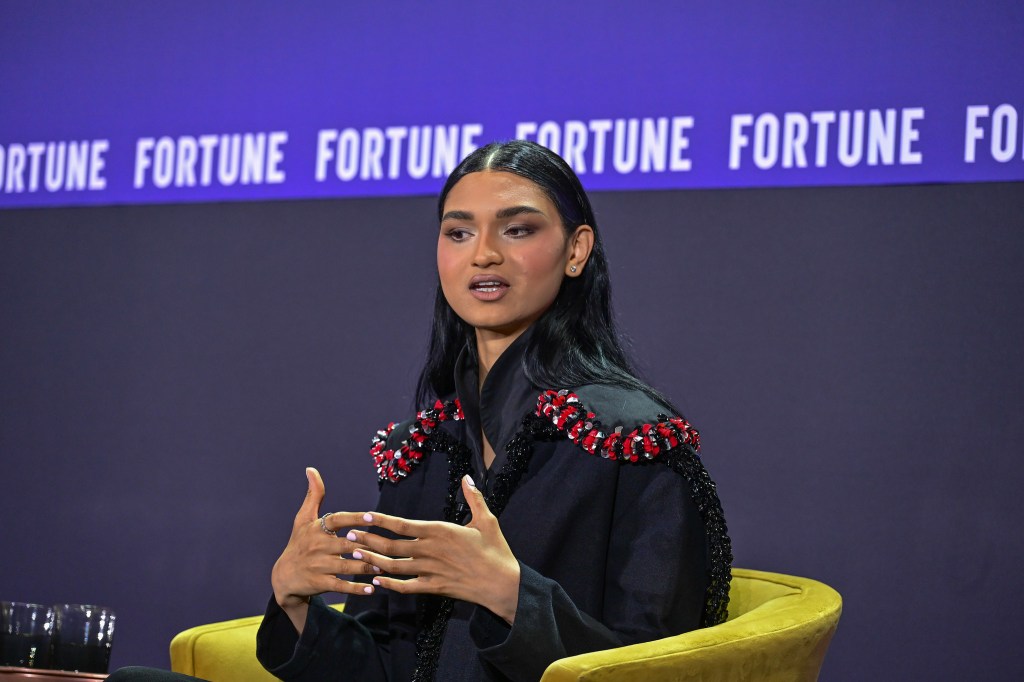
The idea that Gen Z is collectively anxious, overwhelmed by artificial intelligence, and paralyzed by fear has become a convenient narrative in boardrooms, headlines, and panel discussions. But according to a Gen Z founder building a company in the age of rapid automation, this framing misses the mark—and may actually be more harmful than helpful.
For many young founders, the real struggle isn’t artificial intelligence replacing jobs. It’s being constantly boxed into a generational stereotype that ignores nuance, ambition, and adaptability. The biggest misconception about Gen Z, this founder argues, is that they are defined more by fear than by action.
‘AI Anxiety’ Is an Oversimplified Story
Yes, Gen Z talks openly about anxiety. Yes, they question the pace of technological change. But equating that awareness with fear is a mistake. This generation grew up alongside algorithms, recommendation engines, and digital platforms. AI is not an alien force to them—it’s infrastructure.
Rather than being anxious about AI, many Gen Z founders see it as a baseline tool, similar to how earlier generations viewed the internet or smartphones. The concern isn’t “Will AI exist?” but “How do we use it responsibly, creatively, and strategically?”
Labeling this critical thinking as anxiety dilutes a much more important reality: Gen Z is pragmatic. They understand that AI will reshape work, and instead of resisting it, they are actively redesigning roles, workflows, and business models around it.
The Problem With Generation Shortcuts
Reducing Gen Z to a single emotional trait—whether it’s anxiety, sensitivity, or impatience—creates a shortcut that feels neat but is fundamentally inaccurate. Founders in their early 20s are running startups, raising capital, managing teams, and competing globally. These responsibilities require resilience, risk tolerance, and long-term thinking.
The frustration many Gen Z leaders feel is not about being misunderstood occasionally, but about being consistently underestimated. When investors, employers, or media approach them with preconceived ideas, it shapes expectations in subtle but damaging ways.
Being young already comes with credibility hurdles. Adding a generational stereotype on top of that compounds the challenge.
Gen Z’s Relationship With AI Is Different—Not Fearful
What distinguishes Gen Z founders is not fear of AI, but fluency with uncertainty. They entered adulthood during economic instability, a pandemic, climate anxiety, and constant technological disruption. AI is just one more variable in an already complex system.
Instead of asking whether AI will “take jobs,” many Gen Z entrepreneurs are asking:
Which human skills become more valuable as AI scales?
How do we build products that complement, not compete with, automation?
Where does trust, creativity, and human judgment fit in an AI-first world?
This mindset reflects strategic realism, not panic.
Transparency Over Toxic Optimism
Another misconception is that Gen Z’s openness about mental health signals fragility. In reality, it often reflects a rejection of toxic optimism—the idea that leaders must always appear confident, unbothered, and certain.
Gen Z founders are more likely to admit what they don’t know, seek feedback early, and iterate fast. That honesty can look like anxiety to older generations accustomed to masking uncertainty. But in startup culture, self-awareness is often a strength, not a weakness.
Building Despite the Noise
Despite constant commentary about their supposed fears, Gen Z founders are building companies in fintech, climate tech, creator economy platforms, education, and AI itself. They are experimenting faster, launching earlier, and learning in public.
The real tension isn’t between Gen Z and AI. It’s between outdated narratives and a generation that doesn’t fit neatly into them.
Rethinking How We Talk About Gen Z
If there’s one takeaway from this founder’s perspective, it’s this: stop using generation labels as personality types. Gen Z is not a monolith, and neither is their relationship with technology.
They are not uniquely anxious—they are uniquely honest.
They are not afraid of AI—they are adapting to it.
And they are not defined by their generation—but by what they build.
As AI reshapes the future of work, the conversation needs to mature. Less shorthand. More substance. Because the next wave of founders isn’t waiting for permission—or reassurance—to move forward.











+ There are no comments
Add yours