






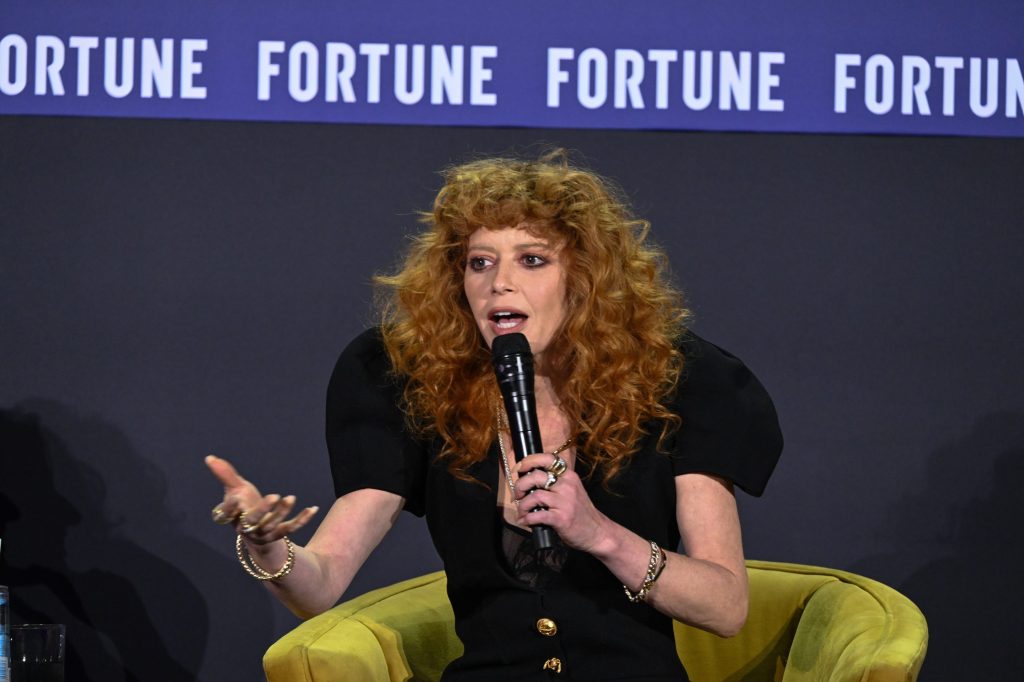
Actor, director, and creator Natasha Lyonne has never been one to offer safe, polished opinions—and her recent critique of artificial intelligence is no exception. In a blunt and culturally resonant statement, Lyonne argued that AI development currently suffers from a deep ethics problem, saying it has become “super kosher copacetic to rob freely under the auspices of acceleration.”
Her words cut directly to one of the most controversial issues surrounding modern AI: who pays the price for rapid innovation—and who profits from it.
What Natasha Lyonne Means by “Robbing Freely”
Lyonne’s criticism is not about AI as a concept, but about how AI is being built, trained, and deployed.
At the core of her argument is the idea that:
AI systems are trained on massive amounts of human-created work
Writers, artists, journalists, musicians, and filmmakers often did not consent
Their work is absorbed into datasets under the justification of “progress” or “innovation”
The benefits flow upward to tech companies, while creators are left uncompensated
By calling this process “robbery,” Lyonne challenges the sanitized language of the tech industry—terms like disruption, scaling, and acceleration—that often mask real human costs.
The “Acceleration at All Costs” Mentality
The phrase “under the auspices of acceleration” highlights a powerful trend in Silicon Valley and AI research culture: move fast, break things, ask permission later—if at all.
In this environment:
Speed is treated as moral justification
Ethical concerns are framed as obstacles
Regulation is portrayed as backward or anti-innovation
Human labor is abstracted into “data”
Lyonne’s warning suggests that ethical shortcuts are being normalized, not because they are right, but because they allow companies to win the race.
Why Artists Are Speaking Out Now
Lyonne joins a growing list of actors, writers, and creatives who are increasingly vocal about AI’s impact on their industries.
The fear isn’t just job loss—it’s erasure:
AI models trained on decades of creative work without credit
Synthetic voices and faces mimicking real people
Algorithms replacing entry-level creative roles, shutting future talent out
For many creators, this feels less like innovation and more like extraction—a system that consumes culture without sustaining the people who make it.
AI’s Legal Gray Zone Becomes a Moral One
Much of AI training currently exists in legal gray areas, especially around fair use and copyright. But Lyonne’s point goes beyond legality.
Her argument is fundamentally moral:
Just because something is legal doesn’t mean it’s ethical
Just because technology allows it doesn’t mean society should accept it
Progress without consent is not progress—it’s exploitation
By using the phrase “super kosher,” she also critiques how AI practices are being socially normalized, framed as inevitable or even virtuous.
A Cultural Reckoning, Not a Tech Panic
Importantly, Lyonne is not anti-technology. Her career has embraced experimentation, new formats, and creative risk. What she’s pushing back against is unchecked power.
Her comments reflect a broader cultural reckoning:
Who owns creativity in the age of machines?
Who decides how culture is used?
Who gets paid—and who gets erased?
These questions are no longer theoretical. They are reshaping labor laws, union contracts, copyright battles, and public trust in technology.
Why This Conversation Matters Now
AI is moving faster than public understanding, regulation, or ethical consensus. Voices like Lyonne’s matter because they:
Translate abstract tech issues into human terms
Challenge dominant narratives of inevitability
Force accountability beyond technical performance
Her warning suggests that the biggest risk of AI isn’t intelligence—it’s indifference.
The Takeaway
Natasha Lyonne’s statement captures a growing unease: AI is being built in a way that treats human creativity as raw material rather than lived experience. When acceleration becomes the excuse for everything, ethics become optional—and that’s where trust collapses.
The future of AI won’t be decided only by engineers and investors. It will be shaped by artists, workers, and voices willing to say that progress without principles isn’t progress at all.










+ There are no comments
Add yours