







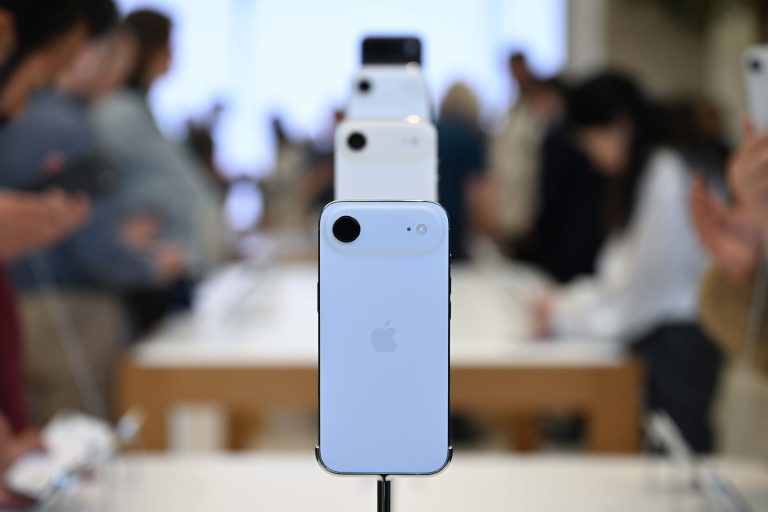
Apple’s ambitious dream of redefining the smartphone category with the ultrathin iPhone Air is facing yet another blow. After months of mixed reviews, production challenges, and disappointing demand, the struggling device has now lost one of its most influential champions: a lead designer who played a central role in shaping the iPhone Air’s hardware identity.
The designer’s departure — reportedly to join a fast-rising AI startup — marks a critical moment for Apple and raises sharp questions about the future of the iPhone Air, a product that was supposed to represent Apple’s next iconic hardware evolution.
A Departure That Sends Shockwaves Through Apple’s Design Team
While Apple is no stranger to high-profile exits, this one stands out.
The designer was deeply involved in the iPhone Air’s:
ultrathin chassis engineering,
thermal distribution architecture,
internal component reorganization, and
structural durability testing.
In short, this individual helped build the foundation of Apple’s boldest phone redesign in years.
According to industry insiders, this was not a routine exit. The designer was reportedly courted by an AI startup working on advanced hardware-software integration, promising a level of creative freedom and frontier innovation that big-tech structures often restrict.
For Apple, the timing couldn’t be worse.
The iPhone Air: A Brilliant Idea That Struggled to Deliver
When Apple unveiled the iPhone Air, the world expected a revolution — and on the surface, it looked like one.
At just millimeters thin, the phone redefined industrial minimalism.
It was Apple’s answer to an increasingly AI-driven smartphone market: a device that prioritized elegance, portability, and futuristic design.
But real-world performance told a different story.
1. Heat Management Issues
The ultrathin body left almost no room for aggressive thermal solutions. Under heavy camera or AI workloads, users reported noticeable heating.
2. Battery Life Compromises
Slimmer design meant smaller batteries, and smaller batteries meant shorter endurance — a trade-off many consumers rejected.
3. Fragility Concerns
Despite Apple’s efforts, durability tests showed higher susceptibility to bending and micro-fractures.
4. AI Competition Outpaced It
While rivals like Google and Samsung leaned heavily into AI-first features, Apple marketed the Air primarily on aesthetics — not intelligence.
5. High Pricing Compared to Performance
Many reviewers argued that the iPhone Air felt like a luxury accessory, not an all-purpose flagship.
The Market Response: Underwhelming, and Apple Knows It
Sales data and retail channel feedback indicate that the iPhone Air has not performed anywhere near expectations. Enthusiasts praised the design, but mainstream consumers avoided the trade-offs.
Apple’s internal teams reportedly attempted multiple late-release software optimizations to improve thermal efficiency and battery stability, but these fixes could not overcome hardware limitations baked into the device’s DNA.
In this context, losing a principal designer becomes more than a staffing issue — it is a symbol of the iPhone Air’s rocky journey.
Why AI Startups Are Poaching Apple Talent
Apple engineers and designers are increasingly attractive to AI firms for several reasons:
✔ They understand hardware-software cohesion
✔ They have experience scaling technology globally
✔ They know how to merge design minimalism with performance
✔ They can build premium devices that consumers trust
As AI companies rush to create next-generation devices — AI companions, wearables, pocket assistants, and multimodal gadgets — Apple’s internal talent is becoming the most valuable target in Silicon Valley.
The exit of this key designer signals that AI hardware is becoming the new frontier, pulling talent away from the iPhone era.
What This Means for the Future of the iPhone Air
Apple now has three major challenges:
1. Rebuilding the design leadership behind the product
Losing the architect of the ultrathin structure forces the team to rewrite parts of its long-term roadmap.
2. Deciding whether to continue the iPhone Air as a product line
There are already whispers within supply chains that Apple may:
rework the Air’s form factor,
reposition it in the lineup, or
quietly phase it out in future cycles.
3. Rebalancing the product’s priorities
Apple must choose which matters more going forward:
extreme thinness, or
real-world performance and battery power.
Apple’s Silence Speaks Volumes
Apple has not publicly commented on the resignation — a familiar move for the famously private company — but industry observers see the silence as telling.
Apple does not want negative attention at a time when its competitors are pushing bold AI-first hardware, and the iPhone Air’s struggles could undermine the company’s tech leadership narrative.
Insiders suggest that internal reviews of the iPhone Air strategy are already underway.
The Bigger Picture: A Shift in Tech Power Dynamics
This departure and the iPhone Air’s struggles reflect a bigger industry shift:
AI hardware is becoming the new smartphone.
The next wave of innovation is not just about slimmer screens — it’s about:
AI agents
multimodal processors
wearable-first ecosystems
brain-like neural engines
companion devices that think, plan, and respond
The designer’s decision to jump to an AI startup is a sign that creatives want to work on the next revolution, not the last one.
Final Take: The iPhone Air Is at a Crossroads
Apple’s ultrathin experiment has beauty, ambition, and technical artistry — but also structural weaknesses that have prevented it from becoming the next big thing.
Losing a key architect at this stage deepens the uncertainty and fuels the narrative that the iPhone Air may be one of Apple’s boldest yet least practical devices.
As the future of tech shifts rapidly toward AI-centered hardware, Apple must now decide:
Will the iPhone Air evolve into something better — or become a cautionary tale of design pushed too far?
The next move may determine not just the fate of the device, but Apple’s position in the AI hardware wars.












+ There are no comments
Add yours