







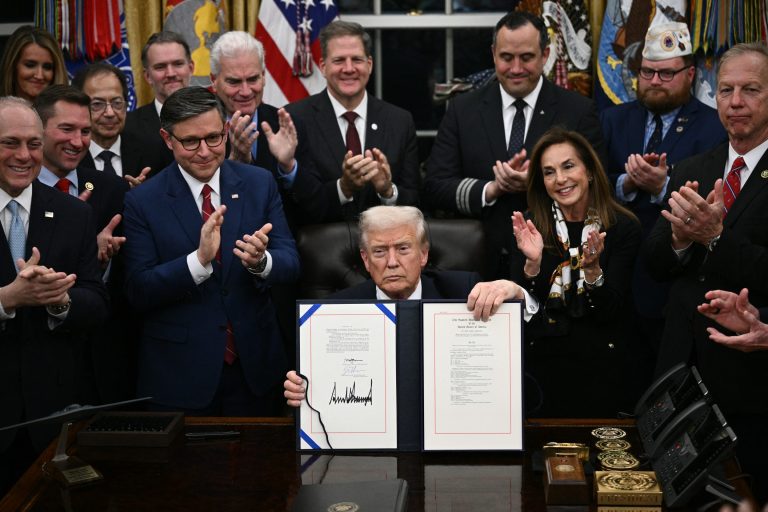
After weeks of political stalemate, the longest U.S. government shutdown in modern history has finally come to an end. Federal workers are returning to their offices, national parks are reopening, and key agencies are slowly beginning the process of resetting operations. But despite the sigh of relief in Washington, Wall Street isn’t celebrating just yet.
Why?
Because the temporary funding agreement that ended the shutdown offers only 10 weeks of stability—after which the U.S. could face another shutdown all over again.
For investors, businesses, and global markets already shaken by months of volatility, this short window provides certainty, but only in the most fragile sense. Many analysts warn that unless Congress reaches a durable funding agreement, the U.S. could face renewed economic risk, market instability, and weakened global confidence.
A Shutdown That Shook the Economy
The recent shutdown didn’t just inconvenience federal workers—it affected nearly every sector of the U.S. economy. Critical data releases were delayed, regulatory approvals stalled, and billions of dollars in spending froze, causing disruptions that will take weeks to repair.
Economists estimate:
Billions in lost output from unpaid federal labor
Delayed consumer spending among furloughed workers
Halted business contracts and federal projects
Backlogs in immigration, aviation, and trade services
While the shutdown has officially ended, the economic scars will continue to show through Q1 performance indicators.
Wall Street Breathes—But Carefully
The stock market often reacts to political clarity, and the reopening of the government brought a short-lived rally. But market strategists caution that this relief could fade quickly as investors confront the reality of the 10-week deadline.
What markets are watching now:
Risk of another funding standoff
Impact on consumer confidence
Delayed economic data that will now come in clusters
Potential downgrades in U.S. fiscal credibility
Volatile Treasury yields due to political uncertainty
The prospect of yet another shutdown threatens to overshadow earnings season and overshadow otherwise strong fundamentals in tech, retail, and energy.
10 Weeks: A Tight Timeline With High Stakes
The short-term spending bill buys time—but not much. Congress must now negotiate and finalize a long-term budget before the deadline hits again, creating a narrow window for bipartisan agreement in a deeply divided political climate.
Why this matters:
Federal agencies must operate cautiously
Businesses dependent on government contracts face uncertainty
Investors will factor political risk into Q1 and Q2 strategies
Credit agencies may weigh the instability in future ratings
If lawmakers fail again, the U.S. could re-enter a shutdown cycle that erodes economic momentum at a delicate time.
Government Agencies Are Scrambling Back to Life
After weeks of paralysis, agencies like the IRS, FAA, SEC, EPA, and DHS are racing to reopen and clear backlogs. But restoring operations isn’t as simple as flipping a switch.
The shutdown left behind:
Millions of unread emails
Paused audits, inspections, and safety reviews
Delayed IPO approvals and market oversight
Backlogged airport security staffing
Frozen development work for critical public services
For Wall Street, the biggest concern is the SEC backlog, which has delayed initial public offerings, mergers, financial disclosures, and regulatory reviews.
Investors Fear ‘Shutdown Whiplash’
Market analysts are now warning of a new phenomenon: shutdown whiplash—a cycle where short-term fixes create long-term uncertainty.
This whiplash affects:
Consumer sentiment: Americans spend less when political instability rises
Corporate planning: Companies delay hiring and capital expenditure
Investor behavior: Funds diversify away from political risk areas
Global confidence: Foreign investors begin pricing in instability
With only 10 weeks before the next possible shutdown, businesses may hesitate to commit to growth plans until a more stable agreement emerges.
A Threat to U.S. Global Standing
The U.S. has long been viewed as the world’s most reliable economic anchor. But repeated shutdowns and near-shutdowns threaten that reputation.
Financial experts warn that political dysfunction:
Weakens U.S. soft power
Increases borrowing costs
Hurts the dollar’s stability
Risks future credit downgrades
Undermines global trust in U.S. governance
In a world already coping with geopolitical tensions, wars, and supply chain challenges, the U.S. cannot afford self-inflicted wounds.
What Happens If There’s Another Shutdown?
If Congress fails to reach a deal before the next deadline, the consequences could be even more severe:
Markets could enter a sharper correction
Federal services could halt again
Consumer confidence could drop significantly
Interest rates could face new volatility
The Fed’s 2026 strategy could be disrupted
Economists say another shutdown so soon after the last could be enough to drag U.S. GDP growth lower for the year.
Relief Today, Uncertainty Tomorrow
The record U.S. shutdown may be over, but its shadow remains. Wall Street has just 10 weeks to enjoy relative calm before the threat of another political standoff returns.
The message from analysts is clear:
The real test isn’t ending the shutdown—it’s preventing the next one.
Unless lawmakers negotiate a stable long-term solution, markets, businesses, and global investors will continue navigating an unpredictable environment where political risk becomes a central economic factor.
I













+ There are no comments
Add yours