







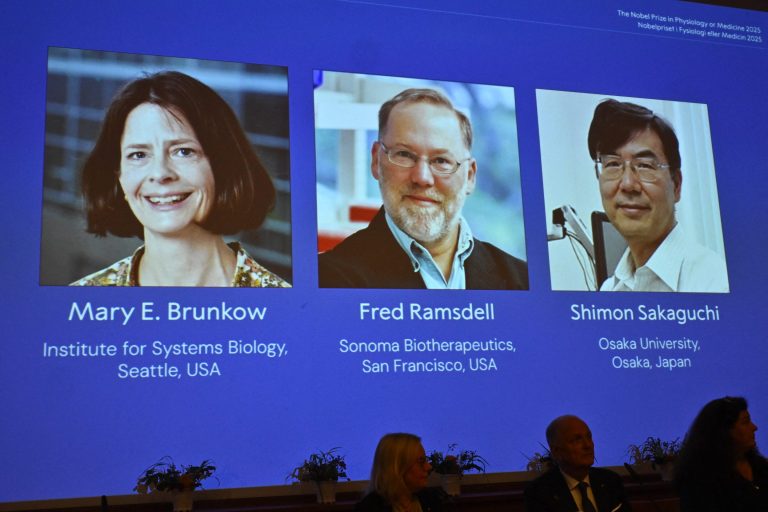
When many picture a Nobel Prize winner, they imagine someone perpetually glued to data, research papers, and late-night experiments. But this year’s Nobel laureate has shown the world a very different picture of success — one that includes hiking boots, mountain air, and a phone set permanently to airplane mode.
The Nobel Prize winner, whose groundbreaking work has reshaped his field, recently shared that he was hiking in Yellowstone National Park when the Nobel Committee tried to reach him with the life-changing news. His phone was on airplane mode — a deliberate choice, not a mistake. He later laughed about it, saying it was symbolic of his philosophy toward work-life balance.
“I turn off my phone when I hike,” he said. “It’s my time to recharge, think clearly, and stay connected with what’s real.”
A Modern Lesson in Disconnecting to Reconnect
In a world that celebrates being online 24/7, his story struck a chord. Many professionals today struggle to separate their personal and professional lives, especially as remote work blurs boundaries. But for this Nobel laureate, success doesn’t come from constant availability — it comes from mindful detachment.
Experts say his approach aligns with research showing that mental breaks and outdoor activities can dramatically boost creativity, focus, and emotional well-being. Stepping away from screens and daily pressures allows the brain’s “default mode network” to activate — the same network linked to deep thinking and innovation.
Yellowstone: A Symbol of Perspective
Hiking through Yellowstone’s vast wilderness, with its geysers, forests, and open skies, the Nobel winner was unknowingly embodying the very principles that make creative breakthroughs possible. Nature, after all, has long been the backdrop for reflection and discovery — from Einstein’s long walks to Steve Jobs’s quiet retreats.
By keeping his phone on airplane mode, he wasn’t escaping responsibility — he was preserving clarity. “When I come back,” he explained, “I work better. My mind is sharper. The balance helps the science.”
The Broader Message
His story has become a powerful metaphor in an era of burnout and digital overload. It reminds us that even the most brilliant minds need stillness. True productivity isn’t about being plugged in all the time; it’s about knowing when to disconnect.
For many, the image of a Nobel Prize winner wandering through Yellowstone, blissfully unaware of his global recognition, is more than poetic — it’s aspirational. It challenges our notions of success and urges us to find balance amid chaos.
As he put it simply: “Sometimes, the best ideas come when you stop trying to have them.”
In that sense, perhaps the real prize isn’t just in the Nobel medal.











+ There are no comments
Add yours