






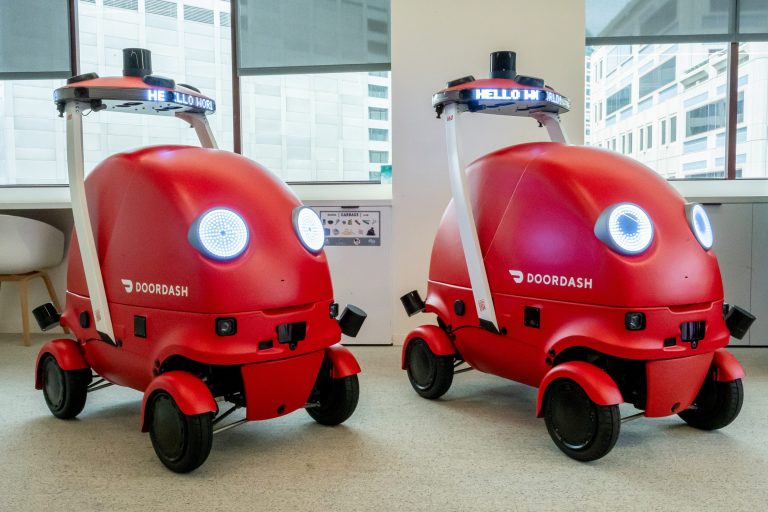
The future of food delivery just got a major upgrade. DoorDash has officially introduced Dot, a five-foot-tall, 350-pound robotic delivery driver capable of reaching speeds of up to 20 miles per hour. With the launch of Dot, DoorDash is signaling its commitment to redefining last-mile delivery through automation and robotics—an innovation that could reshape how millions of people receive their food and groceries.
What Is Dot?
Dot isn’t your average delivery robot. Unlike smaller sidewalk bots that crawl along at walking speed, DoorDash’s Dot is built for efficiency, speed, and safety in urban environments. Standing five feet tall and weighing in at 350 pounds, this futuristic courier is designed to handle real-world conditions, including rough terrain and unpredictable city streets.
Key features include:
Speed: Up to 20 mph, making it one of the fastest delivery robots currently in operation.
Safety Systems: Equipped with advanced sensors, cameras, and AI-driven navigation to avoid collisions.
Capacity: Large enough to carry multiple food orders, groceries, or packages.
Durability: Built to withstand weather conditions like rain, wind, and heat.
Why DoorDash Is Betting on Robotics
The introduction of Dot highlights a broader trend: the rise of automation in the gig economy. DoorDash, like other delivery giants, faces challenges such as:
Labor shortages in major cities.
High operational costs linked to paying drivers.
Customer demand for faster and more reliable deliveries.
By deploying autonomous robots, DoorDash aims to lower costs, increase delivery speed, and maintain its competitive edge in a crowded market.
How Dot Works
Dot operates using a combination of AI, machine learning, and real-time mapping technology. Here’s how a typical delivery works:
A customer places an order on the DoorDash app.
Instead of a human driver, Dot is assigned the task.
Using GPS and mapping software, Dot navigates city streets at speeds far faster than traditional sidewalk robots.
Upon arrival, customers receive a notification and can retrieve their order from Dot’s secure compartment.
This system is designed to provide both speed and reliability, ensuring that hot food stays hot and groceries stay fresh.
The Competitive Landscape
DoorDash is not alone in testing robotic delivery systems. Companies like Uber Eats, Grubhub, and Amazon have experimented with drones and smaller delivery bots. However, Dot represents a leap forward in scale and capability.
Amazon has focused on drones but faced regulatory hurdles.
Uber Eats has tested smaller sidewalk robots in limited cities.
Grubhub has piloted campus delivery bots for college students.
What sets Dot apart is its combination of size, durability, and speed, making it more practical for large-scale, real-world deployment.
Potential Benefits of Dot
Faster Deliveries: At 20 mph, Dot is significantly quicker than sidewalk bots.
Cost Savings: Reduced dependence on human drivers may lower delivery fees over time.
Sustainability: Designed to be electric, Dot could reduce emissions compared to gas-powered vehicles.
Consistency: Robots don’t get sick, tired, or delayed by human error.
Challenges Ahead
While Dot is impressive, challenges remain before widespread adoption:
Regulatory Approval: Cities will need to approve robots traveling at 20 mph on public roads.
Public Safety: Ensuring pedestrians, cyclists, and cars can coexist with robotic couriers.
Public Perception: Some consumers may prefer human interaction over robotic delivery.
Job Concerns: Questions about how automation could impact gig workers who rely on delivery jobs.
The Future of Delivery
Dot represents more than just a robot—it’s a glimpse into the future of urban logistics. As cities grow more congested and demand for convenience skyrockets, companies like DoorDash are turning to robotics as a solution.
If Dot succeeds, it could mark the beginning of a new era where autonomous vehicles handle a significant share of food and package deliveries. This would not only reshape the gig economy but could also influence everything from traffic patterns to consumer expectations.
Final Thoughts
With Dot, DoorDash is pushing the boundaries of what’s possible in last-mile delivery. At five feet tall, weighing 350 pounds, and hitting speeds of 20 mph, this robot isn’t just a novelty—it’s a bold experiment in the future of automation.
Whether Dot becomes a common sight on city streets or remains an ambitious pilot program, one thing is clear: the future of delivery is changing fast, and DoorDash wants to be at the forefront of it.














+ There are no comments
Add yours