







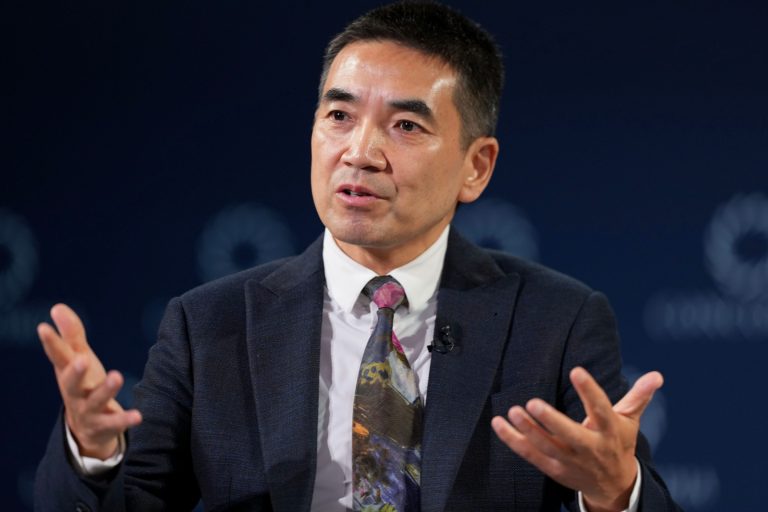
The five-day workweek has defined modern employment for over a century, but a growing number of influential leaders now argue that artificial intelligence could shrink it dramatically. Zoom’s CEO Eric Yuan recently echoed the views of Bill Gates, Nvidia’s Jensen Huang, and JPMorgan Chase’s Jamie Dimon by suggesting that a three-day workweek could be on the horizon as AI reshapes how work gets done.
Why Eric Yuan Believes the Workweek Will Shrink
Yuan’s argument rests on the productivity gains made possible by AI. With digital agents handling repetitive tasks like scheduling, note-taking, customer queries, and data entry, the average worker may no longer need forty hours a week to achieve the same output. He envisions a future where people focus more on creativity, strategy, and collaboration while leaving routine responsibilities to AI systems.
Yuan also pointed out that AI has the potential to improve everyone’s quality of life. If machines can cover much of the heavy lifting, he asked, why do we still need to work five days a week?
A Chorus of Agreement from Business Titans
Bill Gates has long suggested that AI could free people from large portions of work, raising the question of whether society will redefine “full-time” employment.
Jensen Huang, whose company Nvidia powers much of today’s AI revolution, has described a world where technology could unlock productivity levels that make shorter workweeks both practical and profitable.
Jamie Dimon, a veteran of the financial industry, has acknowledged that AI could transform job roles so significantly that fewer working days might become standard.
Together, these voices carry weight across technology, finance, and global business strategy.
What Needs to Change Before a 3-Day Workweek Becomes Reality
The idea sounds appealing, but major shifts must occur first:
Massive productivity gains — AI must reliably automate tasks across industries, not just in tech.
Cultural trust — companies must believe that fewer days will not equal less output.
Redesigned roles — employees will need to adapt to jobs that involve managing, training, and auditing AI tools.
Legal and compensation updates — governments and HR systems must define what “full-time” means in a three-day world.
Pilot programs — organizations will need to experiment and prove that shorter weeks can succeed without sacrificing performance.
Benefits of a Shorter Workweek
If AI truly delivers, the benefits could be significant:
Better work-life balance and mental health.
Stronger employee attraction and retention.
Elimination of wasted time in unnecessary meetings or low-value tasks.
A potential rise in job satisfaction and innovation.
Risks That Could Hold It Back
However, the transition would not be smooth. AI threatens to displace entry-level jobs, and industries like manufacturing or healthcare may not easily compress hours. There’s also a risk that a shorter week simply means longer, more intense workdays, creating burnout instead of relief. If only white-collar professionals benefit, the divide between tech-enabled workers and everyone else could widen.
The Bigger Picture
The possibility of a three-day workweek isn’t just about technology—it’s about how society chooses to use productivity gains. Leaders like Yuan, Gates, Huang, and Dimon are signaling that the age of AI could be used to create a new balance between work and life. Whether companies and governments embrace that opportunity will determine if the prediction becomes reality or remains a tech-utopian dream.












+ There are no comments
Add yours