







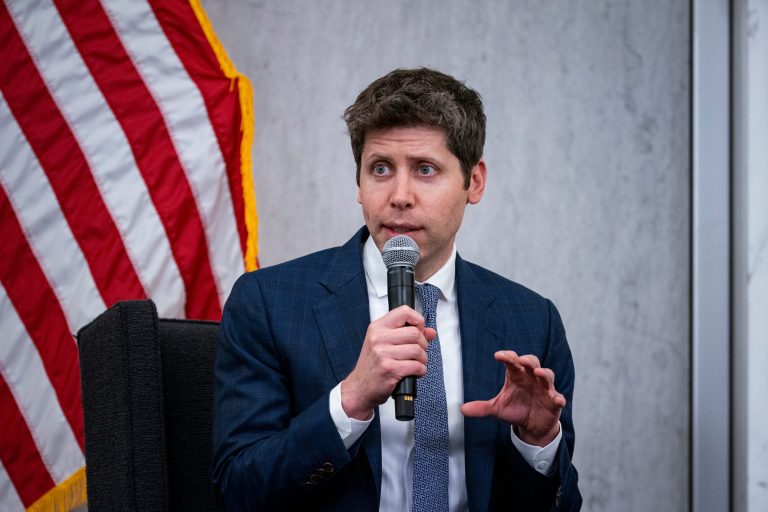
As artificial intelligence continues to reshape industries worldwide, questions about the future of human employment are intensifying. From finance to law to creative services, AI tools are automating tasks once considered untouchable. Yet, according to OpenAI CEO Sam Altman, healthcare may be the only profession that remains resilient—and possibly immune—to large-scale disruption from AI.
AI’s Expanding Reach Across Industries
Over the past few years, AI has rapidly infiltrated nearly every sector. In business and finance, algorithms are handling data analysis, fraud detection, and even investment strategies. In law, AI-driven platforms draft contracts, review case files, and streamline compliance work. Even in creative industries like advertising and media, generative AI is producing content at scale.
This widespread adoption has sparked concerns about the future of jobs. The narrative is clear: automation will continue to reduce the need for human workers in many professions. But Altman suggests that healthcare stands apart for reasons that go beyond technical capabilities.
Why Healthcare Stands Out
Altman’s view is rooted in the unique human qualities required in healthcare—qualities that AI cannot replicate. While AI can analyze medical data, assist in diagnostics, or even power robotic surgical tools, healthcare remains fundamentally human-centric.
Here are three key reasons healthcare may remain immune to full AI replacement:
Human Touch and Empathy
Healing is not only about technical expertise but also about emotional connection. Patients require reassurance, compassion, and empathy that only humans can provide. AI may assist doctors, but it cannot replace the bond between a caregiver and a patient.
Complex, Nuanced Decision-Making
Healthcare decisions often involve uncertainties, ethical considerations, and contextual judgment. Doctors and nurses weigh not just data but also patient histories, social circumstances, and personal preferences—factors AI cannot fully grasp.
Trust and Accountability
Patients want to know a responsible human is behind their care. Even if AI contributes to diagnosis or treatment planning, ultimate accountability lies with human professionals. The stakes in healthcare are too high to delegate fully to machines.
AI in Healthcare: A Partner, Not a Replacement
It’s important to note that Altman does not dismiss AI’s role in healthcare. On the contrary, he highlights how AI can be a powerful partner to medical professionals. Current applications include:
Medical imaging analysis to detect conditions faster and more accurately.
Predictive analytics to anticipate patient risks and improve preventive care.
Administrative automation to reduce paperwork and allow healthcare workers to focus on patient care.
Drug discovery and genomics to accelerate treatments for complex diseases.
The key distinction is that AI will assist rather than replace. Instead of eliminating jobs, AI could empower healthcare workers to perform better and devote more time to human-centered tasks.
The Growing Demand for Healthcare Workers
Altman’s perspective also aligns with real-world trends. Healthcare is one of the few professions experiencing consistent growth worldwide. Aging populations, chronic illnesses, and global health challenges such as pandemics are driving up demand for medical services.
According to labor market projections, healthcare jobs—including nurses, physicians, caregivers, and allied health workers—will grow faster than average in the coming decades. This growth reinforces the idea that healthcare is not just resistant to AI but also increasingly essential in a tech-driven world.
A Rare Safe Haven in the Age of AI
Altman’s remarks carry weight because OpenAI is at the forefront of AI innovation. If the leader of one of the most advanced AI companies in the world believes healthcare is immune, it underscores just how vital and uniquely human this profession is.
In a future where automation disrupts countless industries, healthcare could stand as a rare safe haven. The integration of AI will likely make the field more efficient, but the heart of healthcare—its humanity—remains irreplaceable.
The Takeaway
Sam Altman’s insight offers both reassurance and a challenge. While many jobs face uncertainty in the age of AI, healthcare professionals can expect strong demand and stability. At the same time, it’s a reminder of how essential human qualities—empathy, trust, and ethical judgment—remain in a world increasingly shaped by machines.
The future of work may be AI-driven, but the future of healthcare will always be human.












+ There are no comments
Add yours