






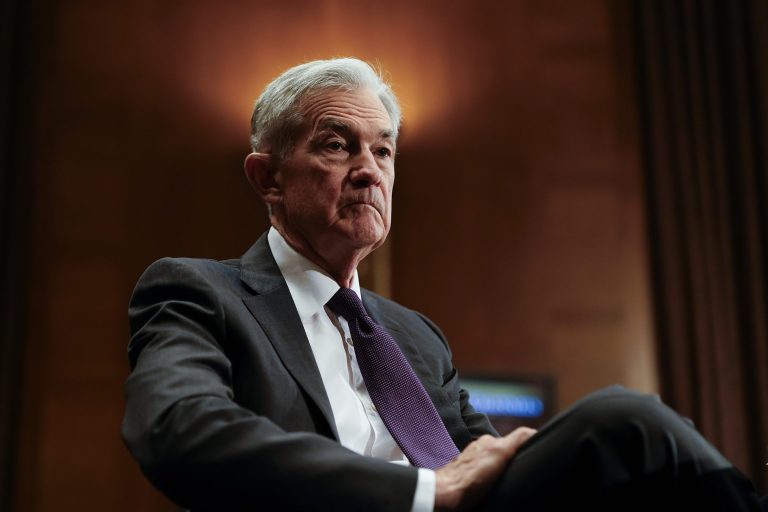
In a striking warning that has sent tremors through financial circles, a senior strategist at Deutsche Bank has suggested that markets are significantly underestimating the risk of a dramatic shift at the top of the U.S. Federal Reserve. The strategist argues that the probability of Fed Chair Jerome Powell being ousted—or pressured to resign—should be taken more seriously, especially as the 2024 U.S. election fallout continues to reshape the political and economic landscape.
This concern is gaining traction as political tensions around interest rates, inflation management, and the independence of the Federal Reserve escalate—making Powell’s future anything but guaranteed.
Powell’s Position Under Political Pressure
Jerome Powell, originally appointed by former President Donald Trump in 2018 and reappointed by President Joe Biden in 2022, has tried to walk a fine line between political neutrality and aggressive monetary tightening. However, both sides of the aisle have expressed frustration in recent years.
Progressives argue that Powell’s rate hikes have disproportionately hurt working-class Americans.
Conservatives, especially Trump-aligned Republicans, claim Powell has mismanaged inflation and slowed the economy.
According to Deutsche Bank strategist George Saravelos, markets have become complacent in assuming Powell will serve his full term through 2026. “The risk of political interference in the Federal Reserve has increased materially,” he warned in a recent note. “Investors may be underpricing a regime shift at the Fed that could change its entire policy trajectory.”
Historical Precedent and Legal Limitations
Removing a Federal Reserve Chair is extremely rare—and legally difficult. The Fed was designed as an independent central bank, shielded from direct political influence. The Chair serves a fixed term and cannot be dismissed without cause.
However, pressure campaigns—both public and private—are not out of the question. Analysts point to past examples of Presidents criticizing or undermining Fed Chairs, including Trump’s repeated jabs at Powell during his presidency.
If Trump were to return to the White House in 2025, speculation is growing that he might attempt to replace Powell with someone more aligned with “America First” economics, especially if inflation ticks upward or economic growth falters.
Market Implications of a Powell Exit
A sudden departure—or forced resignation—of Powell would likely rattle financial markets, for several reasons:
Uncertainty over Fed policy: Markets rely on the Fed’s predictability and stability. A leadership change could cause volatility in bond yields, equities, and currency markets.
Risk of political interference: Investors fear a scenario where Fed independence is compromised, potentially leading to looser monetary policy in the face of rising inflation.
Confidence crisis: Powell, despite criticism, is seen as a steady hand. A new appointee—especially a politically motivated one—could spark concerns over the Fed’s credibility.
The U.S. dollar could weaken amid such instability, while Treasury yields could spike due to expectations of increased inflation or policy confusion.
Election Fallout and the Fed’s Future
The 2024 election was one of the most polarizing in modern U.S. history, and its consequences are still unfolding. If Donald Trump regains power—or if a similarly hawkish administration takes over—many of Powell’s monetary decisions could come under renewed scrutiny.
At the same time, if the economic data fails to align with market expectations, and the Fed maintains high rates into 2026, public frustration may mount—fueling political will to seek leadership change.
Saravelos emphasized that this is not a prediction but a tail risk that investors need to be aware of. “Markets are pricing a smooth Fed trajectory, but in this volatile environment, leadership risk must be factored in.”
Wall Street’s Mixed Reaction
Wall Street remains divided on the matter:
Some investors believe Powell is safe due to the institutional protections around the Fed and his broad support in financial circles.
Others believe the winds of populism and growing dissatisfaction with economic conditions make Powell a likely political scapegoat.
Either way, the debate has reintroduced a layer of uncertainty into the macroeconomic narrative for 2025 and beyond.
What Comes Next?
For now, Jerome Powell continues to lead the Fed’s cautious policy path, balancing between controlling inflation and avoiding a sharp recession. But as election-related policy shifts begin to emerge, so too does the risk of a changing of the guard.
The real question is: Will Powell finish his term—or become the latest casualty in a rapidly politicizing central banking landscape?
Investors, strategists, and policy watchers would be wise to keep one eye on economic indicators—and the other on Washington.














+ There are no comments
Add yours