






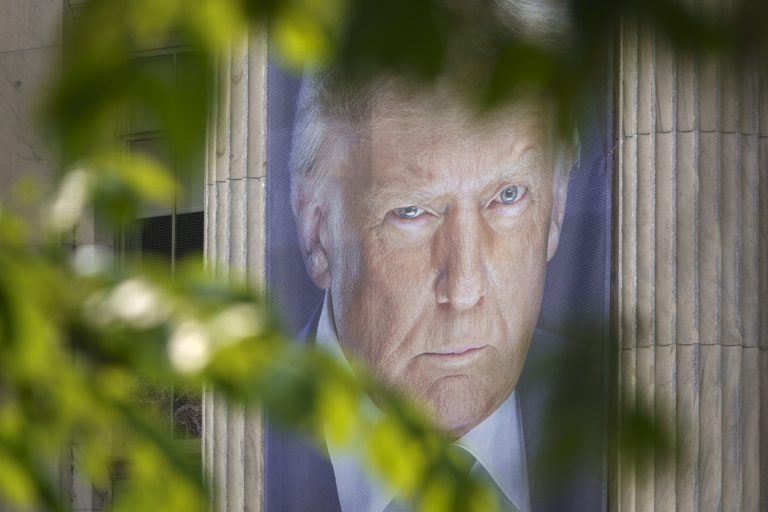
In a move that’s sending fresh shockwaves through global markets, former U.S. President Donald Trump has reaffirmed his August 1 deadline to impose sweeping tariffs on key trading partners, sparking renewed fears of a trade war resurgence just as investors were hoping for economic stabilization.
The announcement, delivered during a fiery campaign-style rally and later confirmed in a press release from the Trump political team, has already begun to impact investor sentiment. As of this week, major indices like the Dow Jones Industrial Average, S&P 500, and NASDAQ have dipped, driven by uncertainty, volatility, and fears of a global trade fallout.
Markets Slide as Tariff Fears Roil Investor Confidence
Since Trump’s renewed tariff threats became public, markets have experienced:
A 2.4% drop in the Dow Jones over three trading sessions
A 1.8% decline in the S&P 500, with tech and consumer goods sectors hardest hit
A sharp sell-off in multinational manufacturing and logistics companies
Increased volatility in emerging markets exposed to U.S. trade policy shifts
Analysts say investors are reacting not only to the tariffs themselves, but to the uncertainty surrounding their implementation, scope, and global retaliation. The fear? A repeat of the 2018-2019 U.S.-China trade war, which rattled economies, stalled exports, and drove up consumer prices.
What the Tariffs Would Do: A Breakdown of Trump’s Plan
Trump’s proposed plan includes:
10% to 60% tariffs on imports from key countries including China, Mexico, and Vietnam
A “universal baseline tariff” to discourage foreign manufacturing
Higher duties on automobiles, electronics, steel, and pharmaceutical ingredients
Potential retaliatory moves from impacted nations, escalating into a full-blown trade conflict
Trump has repeatedly claimed these tariffs will bring back American jobs and reduce dependency on foreign suppliers. However, economists warn that such measures could hurt U.S. consumers, increase inflation, and damage diplomatic relationships just as global trade tries to rebound post-pandemic.
Corporate America Raises Red Flags
Many large companies and trade groups are sounding the alarm, warning that re-imposing or increasing tariffs would:
Drive up manufacturing costs
Disrupt supply chains already under strain from geopolitical conflicts
Hurt small businesses that rely on imported raw materials or products
Potentially reduce employment in trade-sensitive sectors
The U.S. Chamber of Commerce, National Retail Federation, and several Wall Street CEOs have publicly urged caution, noting that the last round of tariffs cost American businesses over $80 billion and did little to change China’s trade behavior.
Geopolitical Ripples: China and Allies Preparing to Retaliate
Unsurprisingly, global trading partners have taken note. Chinese state media have begun warning of “forceful countermeasures,” while EU officials have hinted at WTO complaints and tariff reciprocity if Trump’s plan goes through.
Economists fear that retaliatory tariffs could:
Slow down global GDP growth
Raise food and consumer goods prices
Create diplomatic fractures between the U.S. and its allies
Weaken multinational agreements and shift alliances toward China or BRICS nations
The Political Play: Tariffs as a 2024 Election Strategy
Political analysts say Trump’s tariff rhetoric is not just economic policy—it’s also strategic election messaging. By doubling down on protectionism, he aims to:
Reignite his “America First” economic agenda
Appeal to Rust Belt voters hit hard by outsourcing
Position himself as the only candidate tough on China and foreign trade abuse
With the 2024 U.S. presidential election looming, the tariff deadline may become a central flashpoint in both domestic and global debates on economic direction.
What’s Next: August 1 Looms Large for Wall Street and Washington
As the clock ticks toward the August 1 deadline, expect:
Increased market volatility
Rising pressure on the current administration to intervene or respond
Corporate lobbying to intensify behind closed doors
Investors and trade partners to brace for policy swings and retaliatory action
Whether this is a negotiation tactic, a real policy threat, or both, one thing is clear: global markets are already reacting—and not favorably.
Final Word: Uncertainty Is the New Normal
Trump’s aggressive tariff rhetoric has added yet another layer of economic uncertainty at a time when markets are already coping with high interest rates, inflation fears, political instability, and global conflict.
With investor sentiment fragile, and economic recovery still uneven across sectors, any sharp protectionist move could be the tipping point for a broader market correction.
As August 1 approaches, the financial world will be watching closely—because this isn’t just a trade policy deadline. It’s a test of how much disruption global markets can endure.













+ There are no comments
Add yours