






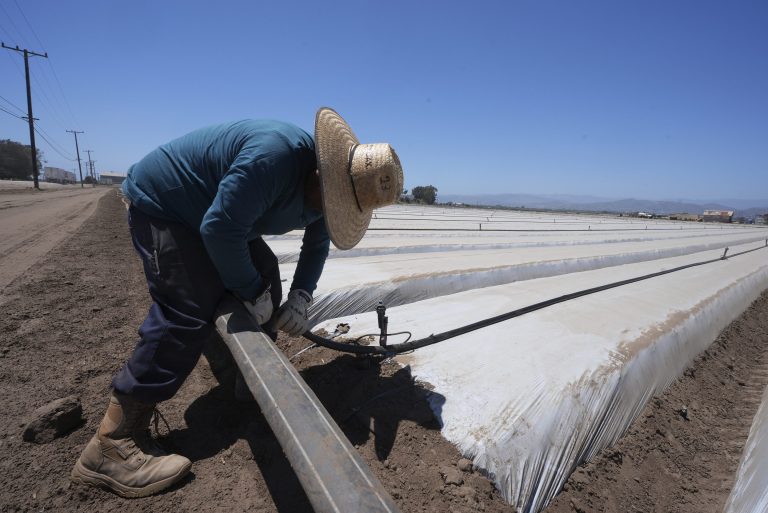
Farmers in California’s Central Valley, ranchers in Texas, and hospitality business owners across Florida and Nevada are once again finding themselves in a state of unease as former President Donald Trump sends mixed signals on immigration enforcement ahead of the 2024 election fallout and amid a highly polarized national debate.
Just weeks after Trump publicly stated he would temporarily ease Immigration and Customs Enforcement (ICE) raids to support the U.S. economy and labor markets, his campaign walked back the statement with a hardline pledge to resume “full-scale enforcement” if elected again. The abrupt reversal has reignited fears among industries that rely heavily on immigrant labor—documented and undocumented alike.
Mixed Messaging, Real-World Consequences
On May 30, during a televised interview, Trump had taken a surprisingly moderate tone, stating:
“Right now, the economy needs workers. We’re going to focus on deporting criminals, not hard-working people helping our farms and businesses.”
The statement was met with cautious optimism by growers, ranchers, and business owners who have long struggled to fill positions amid a nationwide labor shortage. But the relief was short-lived. Within ten days, at a rally in Arizona, Trump reversed course, saying:
“The raids are coming back. Day one. We’re going to clean up Biden’s border mess and restore law and order.”
The inconsistency has left employers and immigrant workers in a cloud of uncertainty. “There’s fear and worry once more,” says Emilio Torres, a second-generation almond farmer in Fresno County. “One day we’re told not to worry about our workers, and the next, we’re preparing for raids again.”
Economic Dependence Meets Political Volatility
According to the American Farm Bureau Federation, more than 50% of agricultural workers in the U.S. are believed to be undocumented. A similar reliance exists in hospitality, where immigrants make up 30% of the workforce.
“These industries don’t function without immigrant labor,” says Maria Castillo, a labor economist at UCLA. “The legal system is too backlogged, the H-2A and H-2B visa programs are insufficient, and domestic workers simply aren’t applying for these jobs.”
The prospect of a return to aggressive enforcement tactics is stirring memories of 2019 and early 2020, when sudden ICE raids resulted in workforce depletion and panic in farming towns and hotel corridors alike.
“We had to throw away hundreds of pounds of produce because we didn’t have hands to harvest it,” recalls Texas vineyard owner John Berenson. “You can’t plan crops or tours if you’re scared half your staff could disappear.”
Workers on Edge
The emotional toll on immigrant workers—many of whom have lived in the U.S. for over a decade—is significant. Some are skipping work, avoiding public places, or even considering relocation to sanctuary states.
“I’ve worked in this country for 17 years,” says Rosa Mendoza, a housekeeper at a Florida resort. “I pay taxes. I raised my children here. But one political speech and it all feels fragile again.”
Advocacy groups report an uptick in calls to immigration hotlines and legal aid centers since Trump’s policy reversal. “People are bracing for another crackdown,” says Malik Rivera of the National Immigration Justice Alliance. “And businesses are calling us too, asking what they should prepare for legally.”
Business Leaders Push Back
Business owners across political lines are expressing frustration at the instability caused by Trump’s shifting stance. The U.S. Chamber of Commerce issued a statement urging “predictable, humane, and economically sound immigration enforcement practices,” emphasizing that sudden enforcement surges risk damaging entire sectors.
Hospitality executives, in particular, have become more vocal. “We need long-term reform, not political whiplash,” said Lina Chen, COO of a mid-size hotel chain operating across the Southwest. “Uncertainty hurts our bottom line and the people who make our industry run.”
What’s Next?
Immigration remains a flashpoint issue heading into the 2026 midterms. Trump’s messaging, while designed to mobilize his base, is revealing the tightrope he walks between economic pragmatism and populist rhetoric.
Analysts believe more policy flip-flops could follow, depending on the political winds. But for the labor-reliant sectors of the American economy, the damage of this ambiguity is already being felt.
“Even if there’s no immediate crackdown, the fear is real,” says Castillo. “When policy is used as a campaign lever, stability goes out the window.”
For now, farmers are stalling on planting plans, ranchers are reconsidering livestock expansions, and hotel managers are delaying summer hires. The common thread: everyone is waiting to see which Trump shows up next.











+ There are no comments
Add yours