






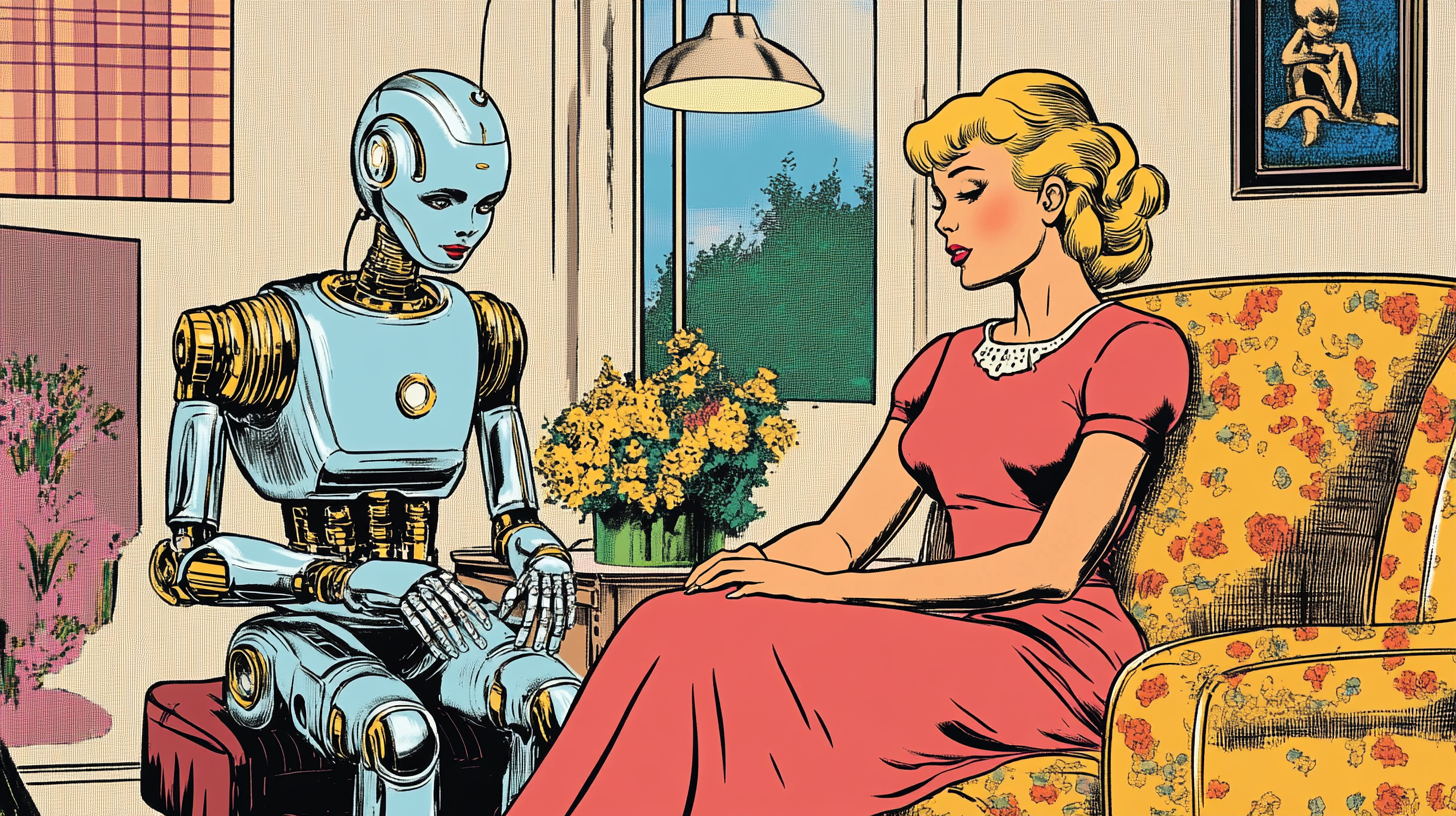
As artificial intelligence enters the world of human emotions, virtual companions are changing how people experience love, intimacy and relationships. What once sounded like science fiction is becoming a new reality, raising questions about the future of romance and human connection.
Love has always been one of the most powerful parts of human life. People search for affection, understanding, emotional support and companionship in different ways. But in an increasingly digital world, a surprising new form of connection is attracting attention: romantic relationships with artificial intelligence.
From AI-powered chatbots to virtual companions designed to communicate like caring partners, technology is creating experiences that feel increasingly personal. Some people now turn to artificial intelligence not only for information or entertainment but also for emotional conversations, daily encouragement and companionship.
What was once considered an unusual technological experiment is becoming part of a wider conversation about modern relationships. As AI systems become more sophisticated, the boundary between digital interaction and emotional attachment is becoming increasingly complicated.
When Technology Starts Feeling Personal
Modern AI companions are designed to remember conversations, respond to emotions and adapt their communication styles to individual users. Unlike traditional digital assistants, which mainly perform practical tasks, some virtual companions are built to provide ongoing conversations and personalised interaction.
Users can discuss their daily experiences, share personal concerns, talk about relationships or simply enjoy a conversation whenever they want. The ability to receive immediate responses can make these interactions feel comforting, particularly for people who struggle to find companionship in their everyday lives.
For some individuals, the appeal is straightforward. An AI companion is available at almost any time, does not have the same everyday pressures as a human relationship and can provide a space for conversations without immediate social judgement.
However, emotional comfort and genuine human intimacy are not necessarily the same thing.
Why Are People Becoming Attached to AI Companions?
Loneliness is one reason frequently discussed in connection with the growing interest in virtual relationships. Modern lifestyles have changed how people communicate. Long working hours, remote employment, social media habits and geographical distance can make meaningful personal connections more difficult to maintain.
Although people are more digitally connected than ever, many still experience loneliness and emotional isolation.
For some, AI companions offer a convenient way to experience regular conversation. They can provide encouragement after a difficult day, participate in discussions about personal interests and create a sense of continuity through repeated interactions.
Another attraction is personalisation. AI companions can adapt their tone, interests and conversational style according to what users share. This can create the impression of a relationship that feels individually tailored.
Yet the growing popularity of these experiences also raises an important question: are people becoming more comfortable with artificial companionship because it is convenient, or because traditional relationships are becoming more difficult to navigate?
The Changing Meaning of Modern Romance
Romantic relationships have always evolved alongside society. Technology has already transformed dating through social media, online matchmaking and video communication. AI companions represent another development in this changing landscape.
Some users may see virtual relationships as entertainment, while others may develop stronger emotional attachments. The experience can differ considerably from one person to another.
For younger generations who have grown up surrounded by digital technology, communicating with artificial personalities may feel less unusual than it does to previous generations.
However, relationships involve more than communication. Human intimacy includes shared experiences, physical presence, mutual responsibility, emotional vulnerability and the ability to understand another person’s independent feelings.
Artificial intelligence can imitate aspects of conversation and emotional expression, but it does not experience love, heartbreak or affection in the way human beings do.
This distinction is important when discussing the future of digital romance.
The Hidden Risks Behind Digital Companionship
Despite its appeal, AI companionship raises serious concerns about emotional dependence and privacy.
People may share highly personal information with virtual companions, including details about relationships, family problems, fears and private experiences. This creates questions about how such information is collected, stored and protected.
There is also concern that some individuals could become overly dependent on digital interactions and gradually withdraw from meaningful relationships with friends, family members or romantic partners.
Another challenge involves emotional expectations. AI systems are designed to generate responses, not to develop genuine emotional commitments. A virtual companion may appear affectionate or understanding, but users should remember that these interactions are generated by technology.
Responsible use requires understanding this difference and maintaining healthy boundaries between digital companionship and everyday human relationships.
Can AI and Human Love Exist Together?
The growing interest in AI companions does not necessarily mean that traditional relationships are disappearing. Technology may instead become another way people explore communication, emotional expression and companionship.
Some individuals may use AI to practise difficult conversations, reflect on personal experiences or overcome anxiety about social interaction. Others may simply enjoy having a digital conversation partner.
The important question is how these technologies are designed and used. Developers have a responsibility to consider privacy, transparency and the potential emotional effects of increasingly personalised virtual companions.
Users also need to recognise that technology should support their lives rather than replace every meaningful human connection.
A New Chapter in the Future of Relationships
The rise of AI romance reveals something important about modern society. Even as technology becomes more advanced, the human desire for connection remains deeply rooted.
People continue to seek understanding, attention, acceptance and affection. Artificial intelligence may offer new ways to experience conversation, but it cannot fully reproduce the complexity of human relationships.
As virtual companions become more sophisticated, society will face difficult questions about emotional attachment, digital identity and the meaning of intimacy.
Perhaps the biggest story is not that people are beginning to form attachments to artificial intelligence. It is that, in an increasingly connected world, the search for genuine companionship remains stronger than ever.
The future of romance may include artificial intelligence, but the value of human connection is unlikely to disappear.










+ There are no comments
Add yours