





In one of its strongest warnings yet, the world’s leading industrial democracies have accused China of threatening regional stability through increasingly assertive maritime activities near Taiwan, raising fresh fears of a potential confrontation that could shake international trade, security and the balance of power in the Indo-Pacific.
A growing confrontation over Taiwan has taken centre stage in international diplomacy after foreign ministers from the Group of Seven (G7) issued a powerful warning against China’s increasingly assertive activities in the waters east of the island, declaring that the actions threaten regional stability, freedom of navigation and the safety of international shipping.
The warning, delivered in a joint declaration following a meeting in Paris, represents a significant show of unity among some of the world’s most influential democracies at a time when tensions across the Indo-Pacific are becoming increasingly difficult to ignore.
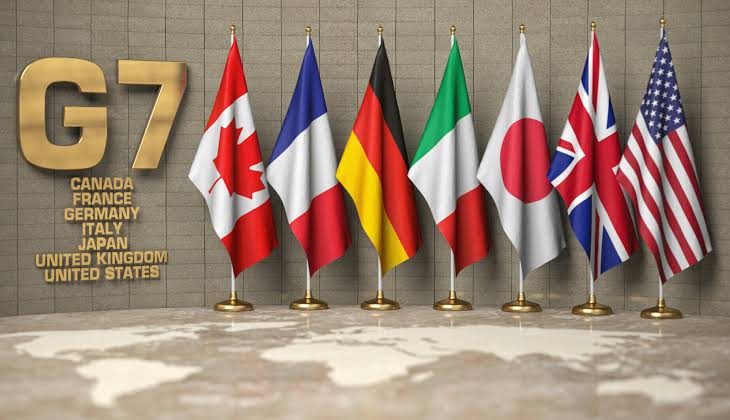
The G7 includes the United States, Britain, France, Germany, Italy, Japan and Canada, alongside the European Union’s representative. Their latest declaration signals growing international concern that China’s expanding maritime presence around Taiwan could have consequences far beyond the island itself.
According to the statement, China’s activities in the waters east of Taiwan threaten the principles of freedom of navigation and the security of international shipping routes. The ministers also reaffirmed their opposition to any unilateral attempt to change the existing situation through force, coercion or threats.
The developments have intensified concerns in Taipei, where officials believe China’s expanding coast guard patrols could be part of preparations for a possible maritime blockade. Such a scenario could involve overlapping military, paramilitary and civilian vessels, potentially restricting the movement of ships entering and leaving Taiwan.
China has increased its coast guard activity off Taiwan’s eastern coast since June, adding another dimension to an already tense relationship. Taiwan considers these waters strategically important because they could serve as critical supply routes connecting the island with international partners during a military crisis.
The security situation has also been complicated by Chinese military operations in the wider Western Pacific. Taiwan’s Defence Minister Wellington Koo recently reported that Chinese naval forces, including an aircraft carrier and other formations, were conducting area-denial exercises in the region.
For Beijing, Taiwan remains a core territorial issue. The Chinese government considers the self-governed island part of its territory and has repeatedly refused to rule out the use of force to achieve reunification, although it maintains that peaceful reunification remains its preferred option.
Taiwan, which operates under its own democratic government, rejects Beijing’s sovereignty claims and continues to strengthen its defence capabilities.
Following the G7 declaration, Taiwan welcomed the international support, describing peace and stability across the Taiwan Strait and the Indo-Pacific as essential to global security and prosperity. Taipei also pledged to deepen cooperation with like-minded international partners.
The stakes extend far beyond military calculations. The Taiwan Strait and surrounding waters are strategically important to international commerce, energy transportation and global supply chains. Any serious disruption could affect shipping operations, increase economic uncertainty and create wider consequences for international markets.
The possibility of a blockade or military confrontation would also test the diplomatic and security commitments of major powers, particularly the United States and its regional allies.
However, the G7 warning does not mean military confrontation is inevitable. Diplomacy, communication and restraint remain essential to preventing a dangerous escalation. China’s response to the declaration and its future actions around Taiwan will be closely watched by governments across the world.
What is unfolding is more than a regional dispute over maritime territory. It is a growing test of international diplomacy, the rules governing global waters and the ability of major powers to prevent competition from turning into conflict.
As tensions rise, the message from the G7 is unmistakable: the security of the Taiwan Strait is no longer viewed as an issue affecting only China and Taiwan. Its consequences could reach across the global economy and reshape the international balance of power.






+ There are no comments
Add yours