







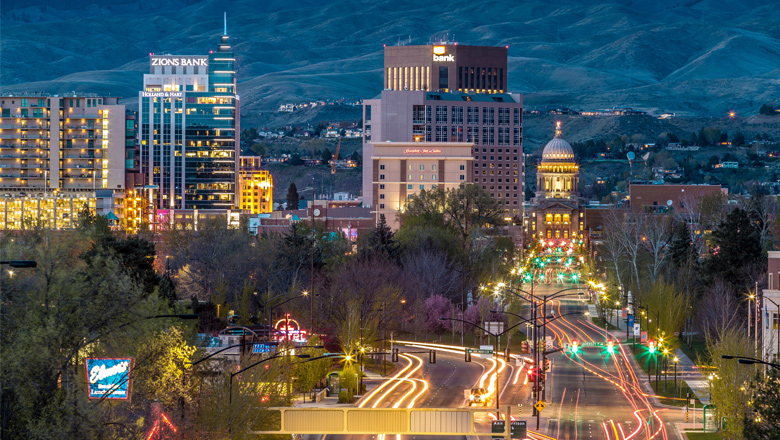
Once a quiet mountain escape for remote workers, Boise is experiencing a powerful rental-market revival as technology-driven migration and limited new housing construction send rents climbing by 8% in a single year.
Boise, Idaho, is rapidly transforming from an affordable alternative to America’s expensive coastal cities into one of the country’s hottest rental-property markets. After experiencing a pandemic-era housing boom, a sharp correction and a period of uncertainty, the city is now witnessing another extraordinary real estate shift, with rising rents and growing demand putting pressure on tenants and attracting renewed attention from property investors.
According to recent market figures reported by The Wall Street Journal, rental prices in Boise have increased approximately 8% this year, making the Idaho capital an increasingly attractive destination for landlords and real estate investors.
The latest surge marks a dramatic change for a city that became one of America’s most popular Zoomtowns in 2020. During the pandemic, thousands of remote workers left expensive metropolitan centres in search of more affordable housing, outdoor recreation and a better quality of life. Boise, surrounded by mountains, forests and recreational landscapes, quickly became a favourite destination.
However, the housing boom eventually lost momentum. Rising mortgage rates in 2022, combined with companies bringing employees back to physical offices, cooled demand and triggered a correction in Boise’s property market. Home prices moderated, and the city began adjusting to a new economic reality.
Now, a different force is driving the recovery: the expanding technology economy and the artificial intelligence boom.
The growing presence of technology-related businesses and employment opportunities is attracting new residents, increasing competition for rental properties and adding pressure to an already tightening housing market. At the same time, the slowdown in new rental construction has reduced the supply of available homes, creating a mismatch between the number of people looking for accommodation and the properties entering the market.
For landlords, the combination of stronger demand and limited supply is creating opportunities to increase rental income. Investors are increasingly watching Boise as a market with potential for continued growth, particularly as technology-driven migration reshapes employment and housing demand across the United States.
But the situation is more complicated for ordinary residents. Higher rents can make it increasingly difficult for young professionals, families and lower-income households to secure affordable accommodation. People who originally moved to Boise for its relatively inexpensive lifestyle may now find themselves facing a much more competitive rental market.
The city’s transformation also highlights a broader trend affecting American real estate. Housing demand is no longer driven exclusively by traditional financial centres such as New York, San Francisco and Los Angeles. Emerging technology hubs and smaller cities are increasingly competing for workers, businesses and investment.
Boise’s journey from pandemic-era relocation hotspot to a cooling housing market and now a rapidly strengthening rental destination illustrates how quickly economic forces can reshape a city’s property landscape.
As artificial intelligence investment accelerates and housing construction struggles to keep pace with demand, Boise is entering another defining chapter in its real estate story. The challenge ahead will be whether the city can accommodate its growing population without losing the affordability that originally made it such an attractive place to live.








+ There are no comments
Add yours