






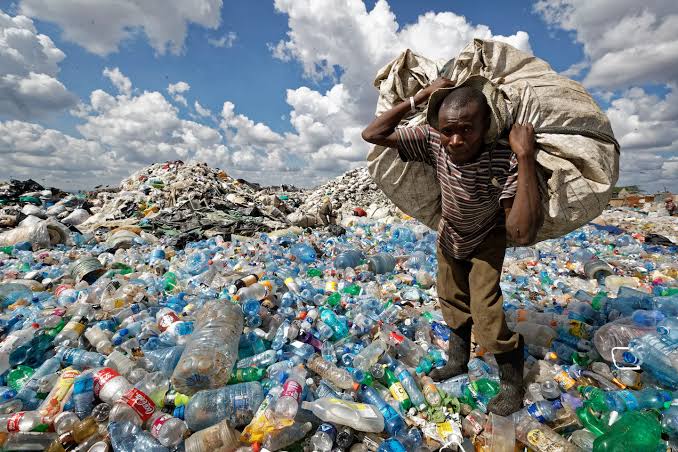
It is in the cup on your desk, the container holding your lunch, the clothes in your wardrobe and the toys scattered across a child’s bedroom. Plastic has become so deeply woven into modern life that avoiding it can feel almost impossible. Now, a new report is turning attention to a less visible problem: the thousands of chemicals used to make those everyday plastic products.
An analysis by the Environmental Justice Foundation has found that 92.8% of the plastic-associated chemicals it assessed were considered to present a high risk to human health. The findings, published on September 30 in a report titled Poison Plastics: How Chemicals in Everyday Plastics Are Harming Your Health, examine chemicals associated with products ranging from food packaging and household goods to clothing, children’s toys and hygiene and medical products.
The figure is striking because these are not obscure industrial materials encountered only in factories. Plastic-associated chemicals can be found in products people encounter throughout an ordinary day from food containers and takeaway packaging to infant-feeding products, toys, textiles and personal-care items.
According to the EJF analysis, many of the chemicals identified as high-risk have been associated in scientific research with serious health concerns, including cancer, fertility and reproductive problems, cardiovascular disease, developmental effects and disruption of hormonal systems. The organisation says children and developing babies can be particularly vulnerable to certain exposures.
But there is an important complication behind the headline number: scientists do not have enough information about many plastic chemicals to fully assess their risks. The EJF says plastics contain around 16,000 known chemicals, while roughly 10,000 lack hazard information. Its 92.8% figure applies specifically to chemicals for which the available evidence allowed the organisation to make a health-risk assessment.
The report also highlights a regulatory gap. EJF says 54.2% of the high-risk chemicals it identified were not regulated internationally or across the four regulatory systems it examined the European Union, Japan, South Korea and the US state of California.
The economic consequences could also be enormous. EJF estimates that just three plastic-associated chemicals have been linked to an estimated $1.5 trillion in global economic losses in a single year, taking into account premature deaths, chronic illness, cognitive effects and lost productivity.
The findings come amid growing scientific attention on the chemical complexity of plastics. A September 2026 analysis published in Environmental Science & Technology reviewed the broader PlastChem database of more than 16,000 known plastic chemicals and noted that thousands had been identified as chemicals of concern based on properties such as persistence, bioaccumulation, mobility or toxicity.
For consumers, perhaps the most unsettling aspect is how difficult it can be to know what is inside a plastic product. Many chemicals are invisible and may not appear on product labels, meaning shoppers cannot necessarily determine which substances were used simply by looking at the packaging.
That makes the issue bigger than an individual decision about whether to buy a plastic bottle or carry a reusable bag. EJF argues that responsibility for reducing exposure should also fall on manufacturers and governments, with stronger controls, greater transparency and safer product design.
Plastic has long been viewed primarily as a waste and environmental problem. This new research puts another question at the centre of the debate: what happens when the plastic we live with every day is not chemically safe by design?
The answer could shape not only the future of packaging and consumer goods, but also how societies think about everyday exposure to chemicals that most people never see yet may encounter every day.







+ There are no comments
Add yours