





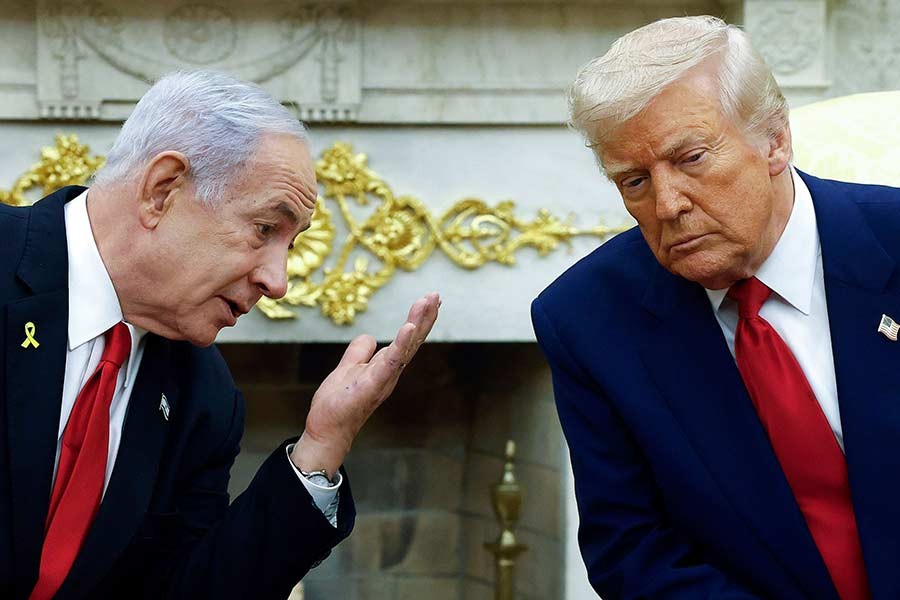
Israeli Prime Minister Benjamin Netanyahu has rejected a 15-point plan backed by US President Donald Trump aimed at ending the conflict in Gaza, saying Israeli forces will not withdraw until Hamas has been fully and genuinely disarmed.
Netanyahu announced the decision at a cabinet meeting on Sunday, making clear that Israel does not accept the proposed framework. He said the Israeli military would continue to prevent threats against Israeli troops and civilians and would not carry out a withdrawal from Gaza until Hamas had surrendered its weapons.
The rejection represents a significant obstacle to efforts to establish a longer-term ceasefire and create a political framework for Gaza. The plan, developed through Trump’s Board of Peace, reportedly focuses on the complete disarmament of Hamas and other armed groups, alongside an Israeli military withdrawal and a transition toward new Palestinian administration.
Hamas, however, has indicated that it remains willing to engage with the proposal. A Hamas official said the group was committed to the agreement and prepared to participate seriously in implementing the 15-point plan. The group has previously linked the surrender of its heavy weapons to an Israeli withdrawal and an end to military operations in Gaza.
The opposing positions expose one of the central challenges facing the diplomatic effort: Israel wants guarantees that Hamas will be completely disarmed before withdrawing its forces, while Hamas has tied disarmament to an Israeli military pullback and an end to what it describes as aggression.
The disagreement also places additional pressure on Washington as the Trump administration seeks to advance a framework for ending the conflict. Netanyahu’s public rejection marks an unusually direct disagreement with a US-backed initiative and could complicate efforts by American and regional mediators to bring the sides closer together.
The future of any ceasefire arrangement will depend heavily on whether negotiators can bridge the dispute over the sequence of disarmament and Israeli withdrawal. Without agreement on those issues, prospects for implementing the proposed plan remain uncertain.
For civilians in Gaza, continued disagreement between the parties adds further uncertainty to an already fragile situation. International mediators are expected to face renewed pressure to find a compromise that addresses Israel’s security demands while creating a workable path toward de-escalation and political stability in Gaza.






+ There are no comments
Add yours