







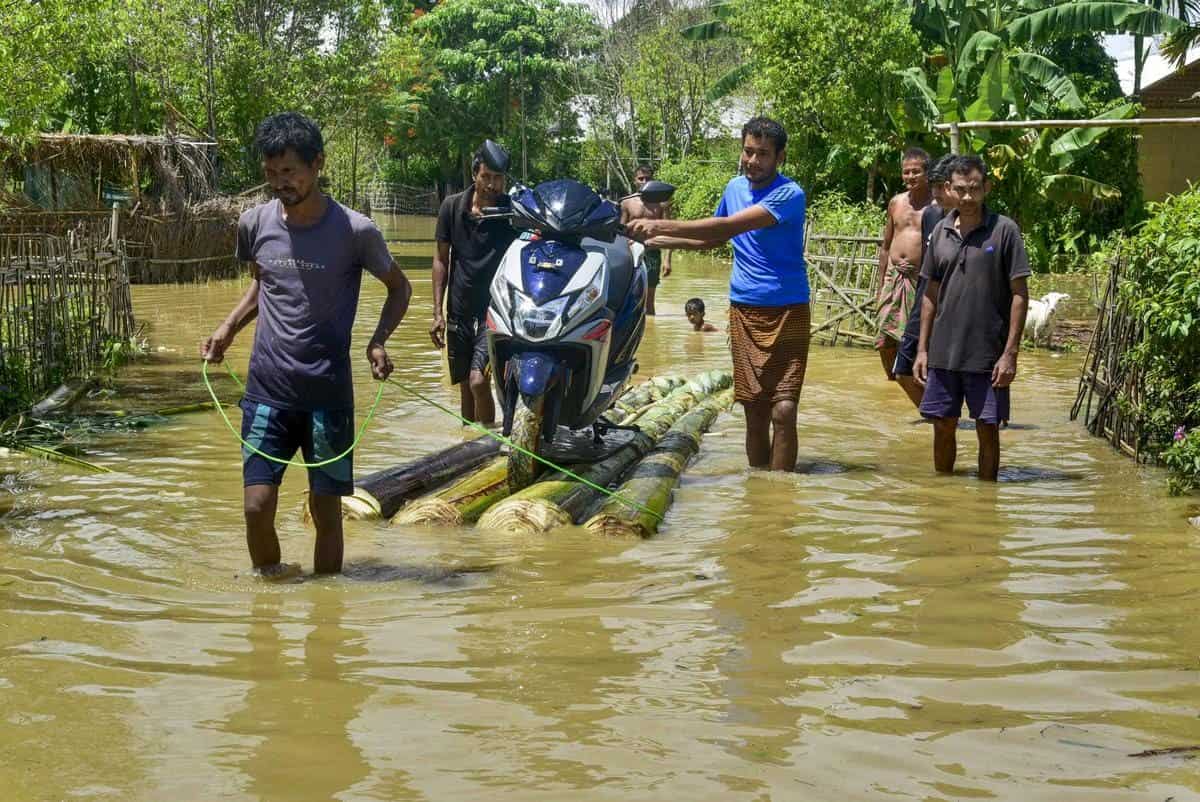
A devastating flood crisis has gripped India’s northeastern state of Assam, leaving hundreds of thousands of people in urgent need of assistance as rising waters continue to disrupt communities, destroy infrastructure, and threaten livelihoods. At least 68 people have died in the disaster, while around 600,000 residents have been affected across several districts, according to authorities.
The floods, triggered by intense monsoon rainfall and overflowing rivers, have submerged large areas of Assam, including villages, agricultural fields, highways, and public facilities. The Brahmaputra River, one of the world’s largest river systems, and its tributaries have breached danger levels in several locations, forcing residents to evacuate their homes and seek safety in temporary shelters.
Emergency response teams have been deployed across the affected regions as rescue operations continue. Personnel from India’s disaster management agencies, including the National Disaster Response Force and State Disaster Response Force, are using boats and other equipment to reach isolated communities cut off by floodwaters. Relief camps have been established to provide displaced families with food, clean drinking water, medical care, and essential supplies.
The humanitarian impact of the floods has been severe, with thousands of families losing homes, livestock, and sources of income. Farmers have suffered major agricultural losses as large areas of farmland remain underwater, raising concerns about food security and economic hardship in rural communities. Damage to roads, bridges, and communication networks has further complicated relief efforts and slowed access to remote areas.
Health authorities have warned of increasing risks from contaminated water and the spread of waterborne diseases as floodwaters remain stagnant in many locations. Medical teams are working in affected areas to provide emergency treatment and monitor potential outbreaks, while officials are urging residents to follow safety guidelines and avoid unsafe water sources.
The disaster has renewed concerns about the growing vulnerability of flood-prone regions to extreme weather events. Climate scientists have warned that rising temperatures and changing rainfall patterns could increase the frequency and intensity of severe flooding in many parts of the world, including South Asia.
Assam’s annual monsoon floods have long been a recurring challenge, but the scale of recent disasters has highlighted the need for stronger climate adaptation measures, improved flood management systems, and greater investment in disaster preparedness.
As rescue and relief operations continue, authorities remain focused on evacuating stranded residents and ensuring that essential supplies reach affected communities. For hundreds of thousands of people across Assam, the immediate challenge remains survival as they face one of the region’s most serious humanitarian crises in recent years.










+ There are no comments
Add yours