







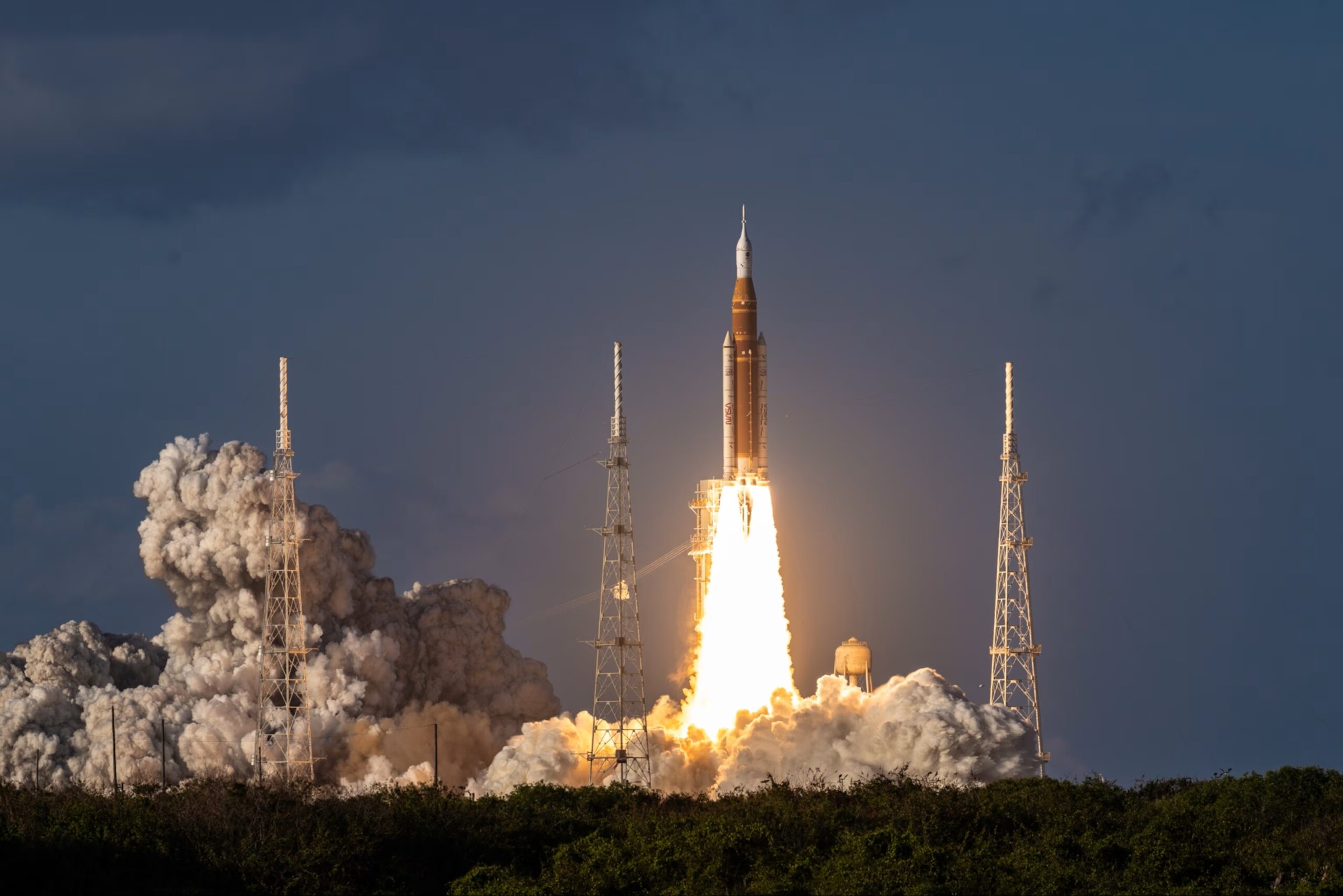
In a landmark moment for space exploration, NASA has successfully launched the Artemis II mission, sending astronauts on a journey around the Moon for the first time in more than half a century. The mission represents a major step forward in humanity’s renewed ambition to explore deep space and eventually establish a sustained presence beyond Earth.
The spacecraft lifted off to global anticipation, carrying a crew tasked with testing critical systems needed for future lunar landings. Unlike the previous Artemis I mission, which was uncrewed, Artemis II brings humans back into lunar orbit, signaling a new era of exploration that builds on the legacy of the Apollo missions.
The crew will travel aboard the Orion spacecraft, designed to support long-duration missions in deep space. During the journey, astronauts will conduct a range of tests, including life-support systems, navigation, and communication technologies. These evaluations are essential to ensure the safety and success of upcoming missions, particularly Artemis III, which aims to land astronauts on the lunar surface.
The Artemis program is not only about returning humans to the Moon but also about laying the groundwork for future missions to Mars. By developing advanced technologies and gaining experience in deep space operations, NASA and its international partners hope to unlock new possibilities for exploration and scientific discovery.
The successful launch has been met with excitement worldwide, as it demonstrates the progress made in space technology and international collaboration. Scientists, engineers, and space enthusiasts alike view Artemis II as a critical milestone that brings humanity closer to a long-term presence on the Moon.
As the mission continues, all eyes will remain on the crew as they orbit the Moon and return safely to Earth. Their journey symbolizes not just a technological achievement, but a shared human aspiration to explore the unknown and push the boundaries of what is possible.









+ There are no comments
Add yours