






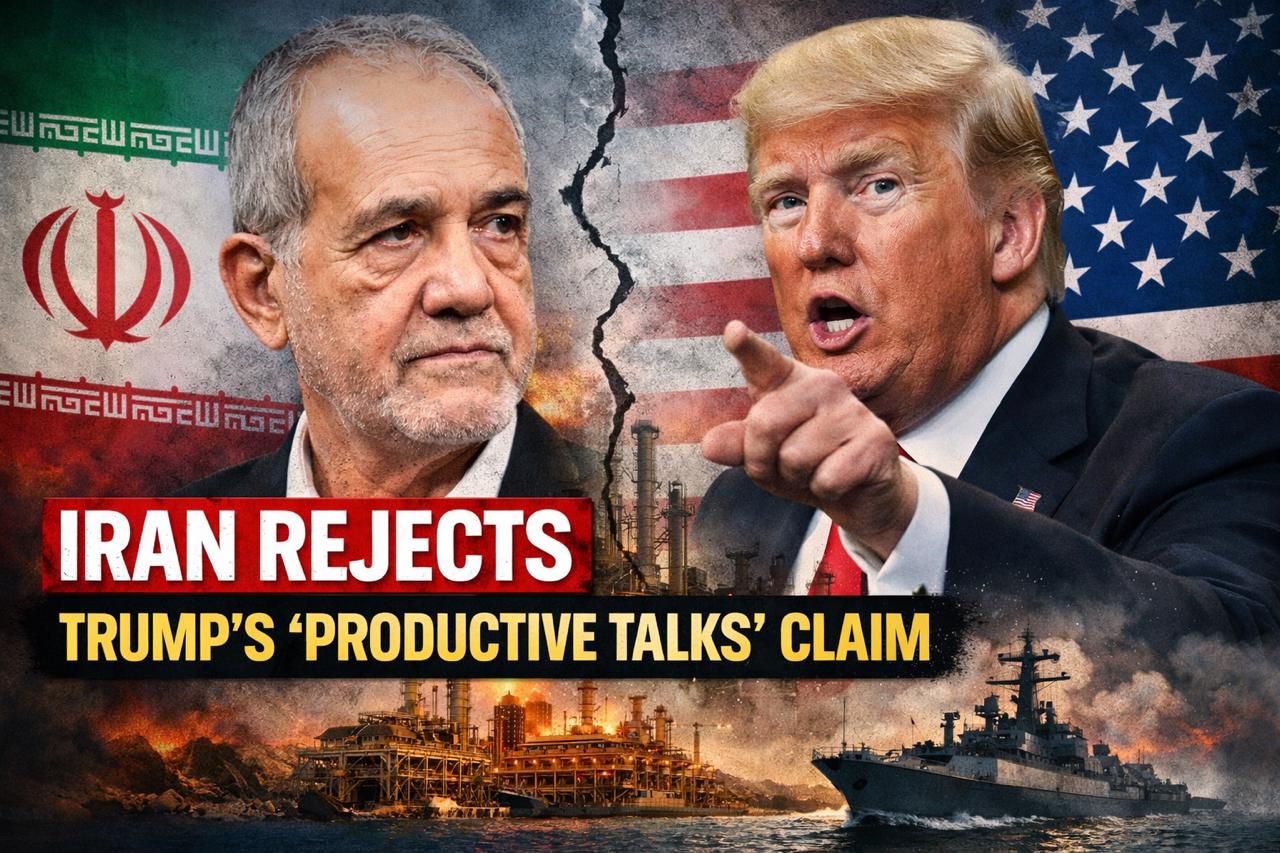
Iran has rejected claims by former U.S. President Donald Trump that Washington and Tehran recently held “productive” discussions, underscoring ongoing tensions and deep mistrust between the two countries.
Trump had suggested that diplomatic engagement was underway, describing the alleged talks as constructive and hinting at potential progress toward easing hostilities. His remarks raised expectations of a possible breakthrough, particularly at a time of heightened geopolitical uncertainty in the Middle East.
However, Iranian officials swiftly dismissed the claim. Authorities in Tehran stated that no direct or indirect negotiations with the United States had taken place, labeling the comments as unfounded. Officials reiterated that Iran’s position on talks remains unchanged, especially in the face of continued political and military pressure from Washington.
“Iran has not engaged in any discussions with the United States,” officials said, emphasizing that any suggestion otherwise does not reflect reality.
The starkly conflicting narratives highlight the fragile state of relations between the two longtime adversaries. While U.S. leaders have periodically expressed openness to dialogue, Iran has consistently maintained that meaningful negotiations require shifts in American policy, including the easing of sanctions and a reduction in hostilities.
Analysts note that while formal talks appear absent, informal or indirect communication channels—often facilitated by regional mediators—may still exist behind the scenes. However, such contacts are typically limited in scope and do not amount to structured negotiations.
The mixed messaging has contributed to uncertainty across diplomatic and economic spheres, with global observers watching closely for signs of de-escalation. Developments involving the two countries often have wider implications, particularly for regional stability and global energy markets.
For now, the gap between Washington’s claims and Tehran’s denials underscores the ongoing challenges facing any potential diplomatic progress, leaving the prospect of renewed engagement unclear.





+ There are no comments
Add yours