






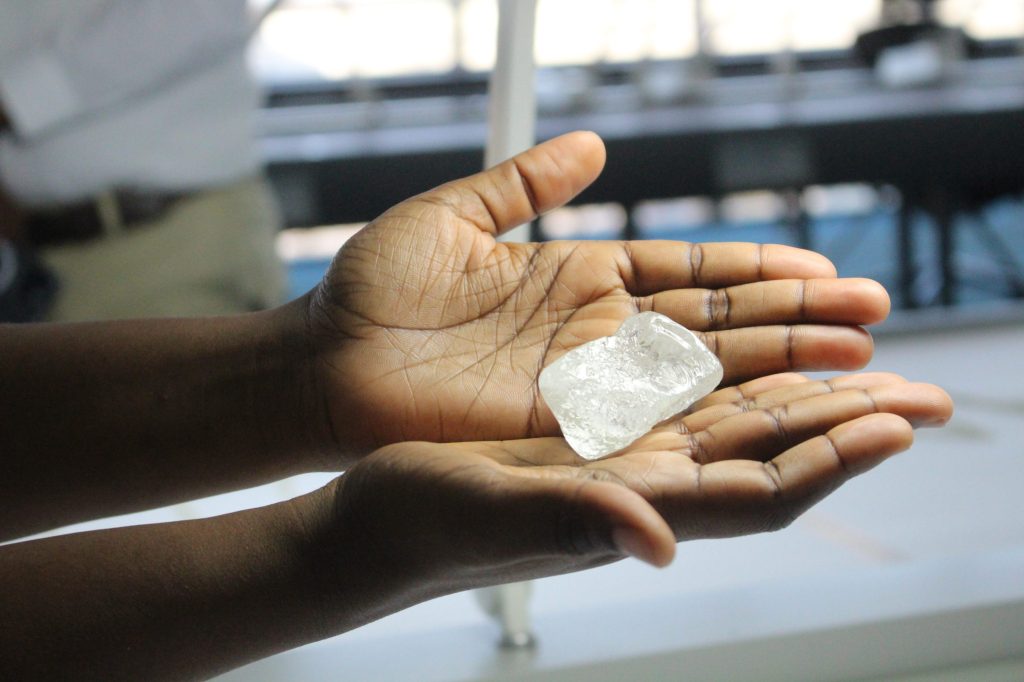
From Botswana and Angola to Sierra Leone and the Democratic Republic of Congo, the “natural diamond economy” wasn’t just an industry—it was a lifeline. It funded schools, built hospitals, and fueled employment for millions.
But the global diamond landscape is shifting. And the disruption isn’t coming from mines—it’s coming from labs.
As lab-grown diamonds explode in popularity across the U.S., India, China, and Europe, at least one African economy that was heavily dependent on natural stones is facing an economic tremor. Falling exports, crashing demand, and a shrinking workforce are signaling something bigger: the natural diamond era is losing shine, fast.
This is the inside story of how lab-grown diamonds are crushing an economy once built entirely on natural stones—and why the world may never look back.
⭐ The Rise of Lab-Grown Diamonds: A Perfect Storm
Lab-grown diamonds are chemically and visually identical to mined diamonds. The difference?
They cost 60–80% less
They involve no mining
They avoid ethical issues like conflict stones
They’re seen as sustainable and modern
As Gen Z and millennials increasingly choose lab-grown over mined, global jewelers have followed the trend. Major brands like Pandora and Swarovski now focus heavily on lab-created stones.
The result?
Natural diamond demand is collapsing at a speed no one expected.
⭐ Botswana: The African Miracle Now Feeling the Heat
Botswana—often called “the miracle built on diamonds”—is among the hardest hit.
For decades, natural diamonds contributed:
Over 70% of export earnings
30% of national GDP
One-third of government revenue
But in the last two years, international buyers have sharply reduced orders of natural stones, especially smaller sizes, because lab-grown alternatives are cheaper, cleaner, and conflict-free.
📉 What’s happening now?
Diamond exports from Botswana have dropped significantly, especially in 2024–25.
De Beers, which sources a huge share of its diamonds from Botswana, has cut production targets.
Global wholesale prices of natural diamonds have fallen by 30–40%, putting pressure on miners.
Thousands of local jobs tied to sorting, cutting, and mining are now at risk.
For a country where diamonds fund public services, education, and infrastructure, this is not just a business slowdown—it’s an economic warning.
⭐ Why Consumers Are Choosing Lab-Grown Over Mined
1. Affordability
A 1-carat lab diamond that costs $1,000–$1,200 often matches a mined diamond priced at $5,000–$7,000.
Why would modern buyers pay more?
2. Ethical Appeal
Many young consumers want to avoid conflict diamonds or environmental damage.
3. Transparency & Tech Appeal
Lab-grown diamonds come with the vibe of:
innovation
tech
sustainability
traceability
It fits perfectly into the buying behavior of Gen Z consumers worldwide.
⭐ The Domino Effect on African Economies
It’s not just Botswana.
Across Africa, nations that rely on natural diamonds—like Angola, Namibia, Lesotho, and Sierra Leone—are witnessing parallel challenges:
🔻 Revenue losses
Governments face declining tax earnings as exports fall.
🔻 Shrinking employment
Mining communities that have worked in diamonds for generations now see fewer jobs and lower incomes.
🔻 Falling global valuation
Natural diamonds are being criticized as “overpriced,” “outdated,” or “unsustainable” by many international buyers.
🔻 Dependence risk
Economies overly dependent on diamonds now realize how vulnerable they are to technological disruption.
Just like how mobile phones disrupted landline companies and streaming crushed DVDs, lab-grown diamonds are reshaping a century-old African industry.
⭐ Why This Shift Is Unstoppable
Even major natural diamond companies admit the change is irreversible. De Beers has slashed its prices. Jewelers are switching rapidly. Consumers are embracing lab-grown stones not as a compromise—but as a smarter choice.
And most importantly:
Technology always wins.
Once people realize they can get the same diamond at a fraction of the price, the old model collapses.
This is exactly what Africa’s diamond economies are facing today.
⭐ Can Africa Save Its Diamond Industry?
Experts suggest two possible strategies:
✔ 1. Diversify the economy
Botswana is already investing in tourism, education, and renewable energy to reduce its dependence on diamonds.
✔ 2. Move up the value chain
Instead of exporting rough stones, African nations could focus on:
cutting and polishing
diamond certification
branded jewelry
luxury tourism connected to mines
✔ 3. Explore lab-grown production
Some African entrepreneurs are beginning to propose setting up local diamond-growing facilities to stay competitive.
While it won’t fully replace the natural diamond legacy, it can open new opportunities.
⭐ The Bigger Picture: A Global Industry in Transition
The diamond story is repeating the same arc seen in many industries:
Electric vehicles pressuring oil nations
Solar energy disrupting coal and gas
AI replacing clerical jobs
Streaming killing DVDs
Now, lab-grown diamonds are rewriting the future of luxury jewelry.
For African economies built on natural stones, it’s a painful transformation.
But for consumers, jewelers, and the planet, it’s a shift toward affordability, ethics, and innovation.
Conclusion: A Turning Point in Diamond History
Lab-grown diamonds aren’t just another trend—they are the new global standard.
And as their popularity rises, African nations that built their prosperity on natural stones are facing their biggest economic test yet.
The world is witnessing a profound transformation—one where the sparkle of diamonds remains the same, but the origin, the market, and the future look very different.













+ There are no comments
Add yours