






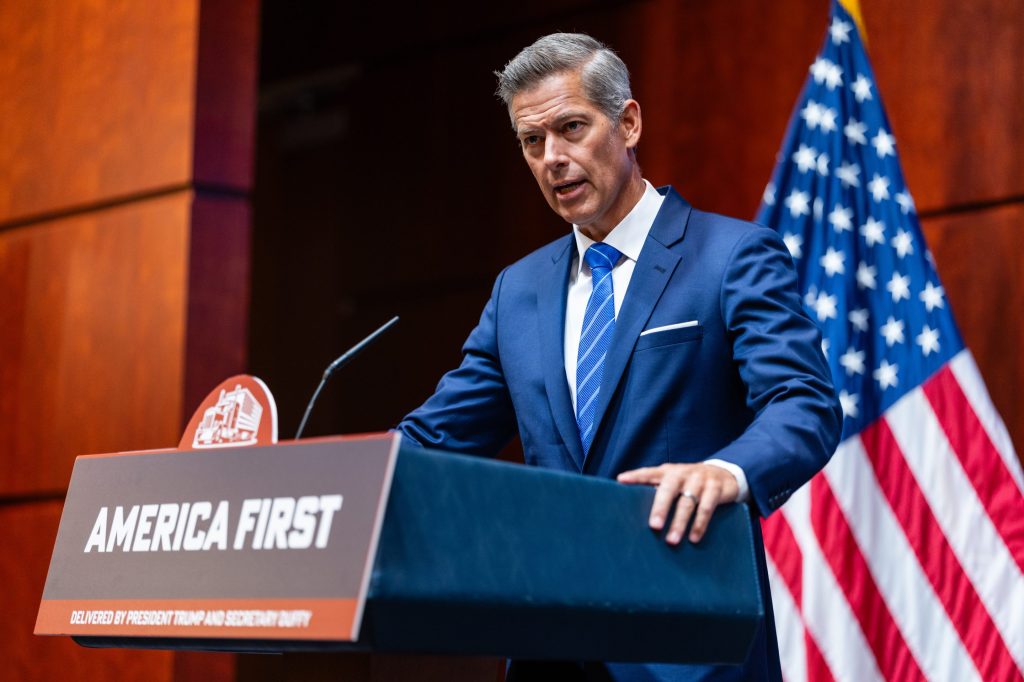
As the federal government continues sorting through the aftermath of the historic shutdown, a new controversy has emerged inside the Federal Aviation Administration (FAA). According to internal documents and union statements, only 776 FAA employees are set to receive the $10,000 special bonus authorized under former President Donald Trump — a payout originally intended to recognize the essential workers who kept the nation’s aviation system functioning during the prolonged shutdown.
But unions argue the bonus distribution is deeply incomplete, claiming that thousands of employees who worked through the shutdown were excluded, despite facing similar pressures, financial strain, and operational risks.
This growing dispute has ignited frustration across the agency, raising questions about fairness, transparency, and the criteria used to determine who qualifies for the high-profile bonus.
A Bonus Intended to Reward Shutdown Service — But Only a Fraction Qualify
The FAA confirmed that just 776 employees will receive the $10,000 one-time payment. These workers fall into specific high-need categories, primarily in roles viewed as mission-critical by agency leadership.
During the shutdown, these employees were either:
Required to report in person,
Responsible for air traffic safety and continuity,
Working without pay in essential operations,
Or performing functions considered indispensable to national security or public safety.
FAA officials defended the narrow eligibility, stating that the bonus was earmarked for “select personnel whose continued service directly ensured operational stability during the shutdown.”
But that explanation has done little to calm internal tensions.
Unions Push Back: “Thousands Worked. Thousands Deserve Recognition.”
Union leaders representing air traffic controllers, technical specialists, aviation safety inspectors, and support staff are blasting the decision as arbitrary and disrespectful.
According to several union statements:
1. Many excluded employees also worked through the shutdown
Thousands of aviation safety inspectors, engineers, IT operators, and administrative specialists also reported to duty without pay — yet were excluded from the payout.
2. The criteria were never clearly communicated
Staff claim they received no information on eligibility, even though many performed essential duties that kept the aviation network running.
3. Morale inside the agency has dropped
Workers say it feels like their sacrifices were ignored, creating division in an already overstretched workforce.
4. Safety roles appear inconsistently represented
Some employees performing similar jobs received the bonus while others did not.
Unions are now calling for a full review and demanding that the FAA expand eligibility to ensure fairness and restore confidence among staff.
Why the Bonus Matters So Much
The 35-day government shutdown left federal employees in extremely difficult financial and emotional conditions. Many missed paychecks, took out emergency loans, fell behind on bills, or struggled to care for their families.
For workers who endured this hardship, the $10,000 bonus is more than a monetary reward — it’s a symbol of acknowledgment.
For those left out, the decision feels like a painful reminder of how overlooked essential workers can be, especially in complex agencies like the FAA where support roles are as crucial as front-line positions.
The FAA’s Defense: “Limited Budget and Restricted Guidance”
FAA leadership maintains they’re bound by specific federal guidelines tied to the bonus authorization. They argue:
The bonus fund was limited.
Only certain “critical occupation series” qualify.
Shutdown work performed in non-critical roles, though valuable, was not classified under the eligible categories.
Officials insist they are following federal law and cannot distribute the bonus beyond the defined scope without additional congressional approval.
But unions counter that the FAA interpreted the rules too narrowly, choosing not to advocate for broader inclusion.
Political Dimension: Was the Bonus Uneven From the Start?
Critics say Trump’s shutdown bonus plan was ambiguous from the beginning. It lacked:
A universal eligibility definition
Uniform federal guidelines
Clear standards for what qualifies as “essential shutdown service”
This left individual agencies — including the FAA — to determine eligibility on their own, resulting in major discrepancies from one department to another.
The FAA now finds itself at the center of the debate over fairness and transparency in federal workforce compensation.
What Happens Next? Pressure Builds for Policy Change
Unions are preparing formal challenges and urging lawmakers to investigate the FAA’s criteria. They want:
A reassessment of eligibility
Expansion of the bonus list
Transparent publication of selection criteria
Potential supplemental funding for additional employees
Some lawmakers have voiced early support, arguing that no essential worker who kept the country’s skies safe during a shutdown should be forgotten.
Whether Congress steps in—or the FAA changes course—remains to be seen.
Bottom Line
The FAA’s decision to award Trump’s $10,000 bonus to just 776 employees has sparked major backlash, with unions insisting that thousands of shutdown workers were unfairly excluded from recognition.
The dispute highlights long-standing issues within federal agencies: opaque criteria, inconsistent recognition policies, and the lingering impact of the shutdown on workforce morale.
As pressure mounts, the FAA may soon face renewed scrutiny over how it values — and rewards — its essential workforce.













+ There are no comments
Add yours