







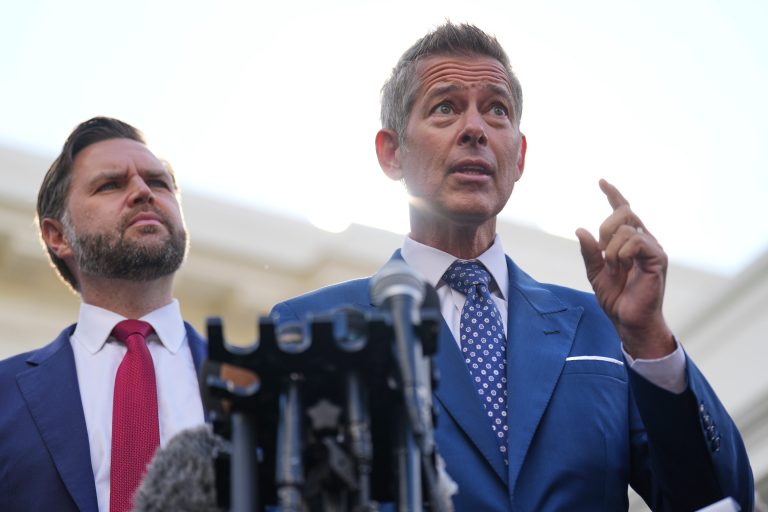
As America’s aviation system struggles under growing pressure, the U.S. Transportation Secretary has issued a stark warning: without urgent action and stable federal operations, the country could face “mass chaos, mass flight delays, and mass cancellations.” His statement highlights the fragile state of the national airspace system and the rising challenges that could disrupt millions of travelers in the near future.
The warning comes at a critical moment, with airlines, airports, and federal agencies stretched thin by staffing shortages, aging infrastructure, technological limitations, and political instability such as government shutdowns.
A System at Its Breaking Point
In recent months, the U.S. aviation network has faced intense strain. According to transportation officials, the issue is not just one factor—it is the perfect storm of:
- Understaffed air traffic control centers
- Old radar, communication, and navigation systems
- Record-breaking passenger demand
- Lingering effects of pandemic-era workforce gaps
- Shutdown threats impacting federal employees
The Transportation Secretary emphasized that even one destabilizing event—like a prolonged shutdown—can push the system from “slow” to “catastrophic.”
Why the Warning Is So Severe
The warning is not hypothetical. The Secretary described several vulnerabilities that could trigger nationwide chaos if not addressed immediately.
✅ 1. Air Traffic Controller Shortages
Many ATC facilities are operating with staffing levels under 70%, forcing controllers to take on extra shifts, longer hours, and higher workload intensity. This increases the risk of delays and safety concerns.
✅ 2. Outdated FAA Technology
The FAA’s systems are decades old. Experts say that without modernization, the system is prone to outages and technical failures—like the one that grounded thousands of flights nationwide in early 2023.
✅ 3. Surge in Passenger Traffic
Travel demand has rebounded beyond pre-pandemic levels. More people in the skies mean more pressure on an already overloaded system.
✅ 4. Shutdowns and Political Instability
The Secretary stressed that government shutdowns threaten critical staffing, training pipelines, and system maintenance. During shutdowns, many FAA employees are unpaid, unavailable, or unable to fulfill essential tasks.
What ‘Mass Chaos’ Could Look Like
If the system reaches a breaking point, officials warn that travelers may face:
- Nationwide flight delays lasting hours or days
- Rapid wave of flight cancellations
- Crowded airports with long lines and overwhelmed staff
- Congested runways and limited takeoff slots
- Passenger rebooking backlogs lasting weeks
For airlines, this could result in huge financial losses, while passengers face missed events, disrupted holidays, and unpredictable travel schedules.
Industry Leaders Back the Warning
Airline CEOs, aviation unions, and travel analysts say the Secretary’s warning is both accurate and overdue.
Industry concerns include:
- Safety margins shrinking due to high workload
- Burnout among air traffic controllers
- Rising operational costs for airlines
- Passenger frustration increasing year after year
Experts argue that unless federal funding and staffing are stabilized, “every travel season could turn into a meltdown.”
Government Shutdowns: The Most Immediate Threat
The Secretary’s strongest warning centered on shutdowns—describing them as “a direct attack on aviation stability.”
Shutdowns disrupt:
- Hiring and training of new controllers
- Equipment upgrades and system repairs
- Airport security operations
- FAA inspections and certifications
Even a short shutdown can cause weeks of residual delays, because the aviation system depends on tightly timed coordination.
Solutions Being Discussed
To prevent the predicted chaos, the Transportation Department is pushing several initiatives:
✅ Accelerated hiring and training of air traffic controllers
A long-term plan to rebuild staffing levels.
✅ Modernizing FAA technology
Upgrading radar, navigation, and communication systems to NextGen standards.
✅ Increasing funding to stabilize critical aviation functions
Ensuring shutdowns and political disputes cannot halt essential operations.
✅ Enhancing safety and efficiency programs
Including risk assessment, fatigue monitoring, and new training protocols.
A Warning Travelers Cannot Ignore
With the holiday season approaching and summer 2026 projected to be one of the busiest in history, the Secretary’s warning serves as a message to policymakers and the public: the system is running on thin margins, and without action, chaos is inevitable.
Until structural fixes are implemented, passengers may need to prepare for:
- Unpredictable delays
- Last-minute cancellations
- Extended layovers
- Increased airport congestion
Conclusion
The Transportation Secretary’s blunt message—“mass chaos, mass flight delays, and mass cancellations”—reflects the critical challenges facing America’s aviation system. With staffing shortages, old technology, and shutdown risks converging, the U.S. airspace is more fragile than ever. Whether or not the worst-case scenario becomes reality depends on swift reforms, stable funding, and long-term investment.










+ There are no comments
Add yours