






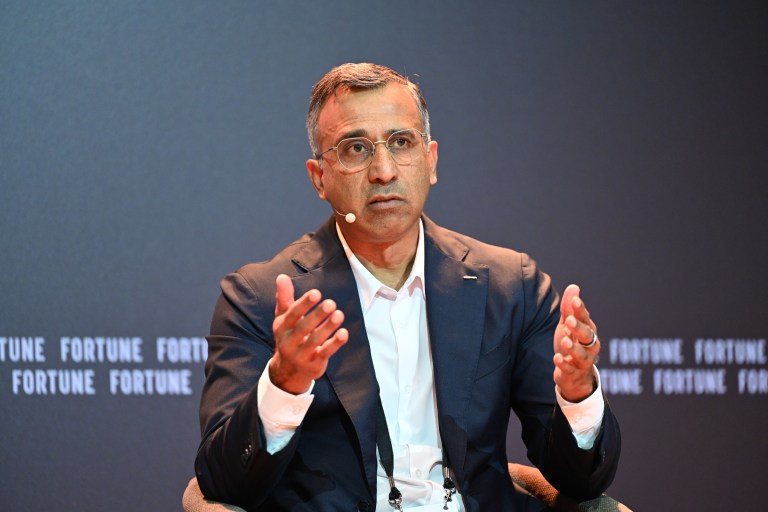
Artificial intelligence (AI) is undoubtedly the most transformative technology of the decade — but according to many industry leaders, organizations are falling into a dangerous trap: trying to do everything with AI at once. In a recent statement, a leading IT CEO cautioned that many companies are spreading themselves too thin by experimenting with too many AI applications instead of focusing deeply on a few impactful areas. His advice is simple yet strategic — “Pick one or two domains and go end to end.”
The AI Gold Rush: A Double-Edged Sword
In the race to stay relevant, corporations across sectors — from finance and healthcare to retail and manufacturing — are investing heavily in artificial intelligence. From automating operations to personalizing customer experiences, AI promises efficiency, insight, and growth. However, this rapid adoption has created a chaotic “AI gold rush” where many companies are chasing multiple use cases simultaneously without a clear roadmap.
The CEO explained that while the enthusiasm for AI is encouraging, the lack of focus is leading to wasted resources, unscalable solutions, and fragmented data ecosystems. “AI is powerful only when implemented with precision. You can’t transform your business if your efforts are scattered across ten pilot projects that never reach production,” he noted.
Why Focus Matters in AI Adoption
The challenge for most businesses lies not in access to technology but in execution and integration. AI thrives on data — structured, consistent, and contextual. When companies try to deploy too many AI models across unrelated areas, they often end up with data silos and inconsistent outputs.
For example, a retail company experimenting with AI in customer analytics, inventory prediction, chatbot support, and logistics optimization all at once may see slower progress in each area. In contrast, a company that chooses to focus solely on customer analytics and personalization can refine its data pipelines, train more accurate models, and deliver measurable value faster.
This “end-to-end” approach — where one domain is thoroughly optimized before expanding — ensures that teams gain deeper expertise, models become more accurate, and ROI is tangible.
Lessons from Industry Leaders
Successful AI-driven enterprises like Amazon, Google, and Netflix didn’t become AI powerhouses overnight. They began by perfecting AI in specific domains — recommendation engines, search optimization, or ad targeting — and expanded only after achieving excellence in those areas.
The IT CEO emphasized that this principle applies equally to smaller companies. “You don’t need a massive AI lab to succeed. You need a sharp focus, the right data strategy, and the patience to go deep before going wide,” he said.
By mastering one or two use cases, companies can build a strong internal AI foundation, train their teams effectively, and generate proven results that justify scaling.
The Cost of Doing Too Much
AI implementation is not just about algorithms — it involves infrastructure, governance, training, and ethical oversight. When organizations take on too many AI projects, they face:
Budget Overruns: Multiple pilots often mean overlapping costs and redundant tools.
Talent Burnout: Data scientists and developers struggle to juggle priorities across fragmented projects.
Poor Data Utilization: Without focus, data becomes inconsistent, leading to unreliable model predictions.
Delayed ROI: Businesses rarely see meaningful results when they spread their AI investment too thin.
Building an AI Strategy That Works
For AI adoption to be sustainable and profitable, businesses need a strategic, phased approach:
1. Identify High-Impact Domains: Focus on areas where AI can deliver measurable outcomes — such as sales forecasting, customer insights, or supply chain optimization.
2. Start Small, Scale Fast: Begin with one or two projects, refine them, and scale once you’ve achieved success.
3. Strengthen Data Foundations: Invest in clean, unified data before model development.
4. Integrate Human Expertise: AI works best when paired with human judgment.
5. Measure and Adapt: Continuously monitor outcomes, learn, and evolve the model’s application.
The Road Ahead: Deep, Not Wide
As the global AI market continues to expand, the winners will not be those who chase every new trend — but those who master a few domains deeply. Companies that streamline their focus, integrate AI end-to-end, and commit to excellence will unlock the real transformative power of artificial intelligence.
In the CEO’s words, “The future of AI isn’t about doing everything — it’s about doing the right things extremely well.”















+ There are no comments
Add yours