






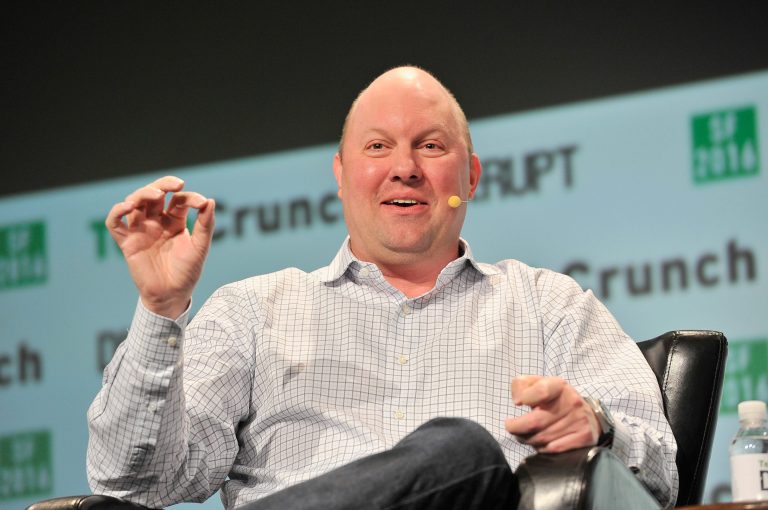
Billionaire venture capitalist Marc Andreessen, one of Silicon Valley’s most influential investors and co-founder of Andreessen Horowitz, is pushing back against one of the most common fears surrounding artificial intelligence — that it will destroy jobs and impoverish society. In his view, that belief is a complete fallacy.
Andreessen, who has backed companies like Meta, Coinbase, and OpenAI competitors, argues that while AI will absolutely change the nature of work, it won’t lead to the economic apocalypse some predict. Instead, he says, if AI truly replaced all human labor — which he doubts — the result wouldn’t be mass poverty but mass abundance.
“If AI were to destroy every job, which it won’t, then prices for everything would collapse,” Andreessen said recently. “We’d have unlimited goods, services, and entertainment for free. That’s not poverty — that’s prosperity.”
AI and the ‘fallacy of job destruction’
The debate over AI’s impact on employment has intensified in 2025 as automation tools continue to sweep across industries from finance to media. Goldman Sachs estimates that up to 300 million jobs worldwide could be affected by generative AI. But Andreessen insists that such fears ignore basic economic logic — and history.
“Every major technological breakthrough — from the steam engine to the internet — has caused panic about jobs,” he said. “And yet, over time, each one created more work, not less.”
He explains that technology historically boosts productivity, lowers costs, and creates entirely new categories of employment that didn’t exist before. “AI is no different,” Andreessen argues. “It’s the next step in a 250-year trend of technology making human life better.”
Why Andreessen says even ‘total automation’ isn’t bad
The billionaire investor is known for his contrarian takes — and this one is no exception. He paints a picture of what would happen if AI somehow did replace every job. In that world, machines would produce nearly everything, making goods and services so cheap that people wouldn’t need traditional jobs to survive.
“If machines can do everything for us, we’d live in a world of abundance,” he said. “It’s not a world where everyone is poor — it’s a world where everything is free.”
In other words, Andreessen believes fears about job loss misunderstand the relationship between labor, productivity, and prices. When technology makes production cheaper, consumers benefit through lower prices — freeing up resources for new kinds of demand, creativity, and entrepreneurship.
‘AI is the ultimate productivity tool’
Andreessen has long been one of the loudest voices championing AI as the next major growth engine. His firm has invested heavily in AI startups, betting that the technology will boost everything from medicine to manufacturing.
He calls AI the “ultimate productivity tool” — a technology that amplifies human capability rather than replacing it outright.
“AI is like a superpower for knowledge workers,” he said. “It helps you do your job better, faster, and more creatively. The winners will be those who learn how to use it, not fear it.”
He also points out that many tasks humans perform today didn’t even exist 30 years ago — from app design to social media management. As AI eliminates old tasks, he believes new roles and industries will inevitably emerge, just as they have with every past technological revolution.
Challenging the doomsday narrative
Andreessen’s optimism stands in stark contrast to the wave of concern voiced by academics, policymakers, and even AI pioneers. Tech leaders like Elon Musk and Geoffrey Hinton have warned about AI’s potential to destabilize economies and outpace human control.
But Andreessen argues that catastrophic narratives about AI are rooted in fear, not facts. In a recent essay, he criticized what he called “AI doomers” for promoting paranoia instead of innovation.
“We’ve seen this movie before,” he said. “Luddites feared machines, critics feared computers, and now people fear AI. The pattern is always the same — fear first, progress later.”
A future shaped by abundance, not scarcity
Andreessen envisions an AI-driven world where productivity soars, costs plummet, and creativity explodes. Instead of displacing humanity, AI could enable people to focus on higher-order problems — art, science, innovation, and personal growth.
“The goal isn’t to stop AI — it’s to use it to expand what humans can do,” he said. “This technology can make life cheaper, better, and more fulfilling if we let it.”
For Andreessen, the real threat isn’t AI itself — it’s fear of change. By embracing AI instead of resisting it, he believes society can enter a new era of prosperity where abundance, not scarcity, defines the human experience.














+ There are no comments
Add yours