







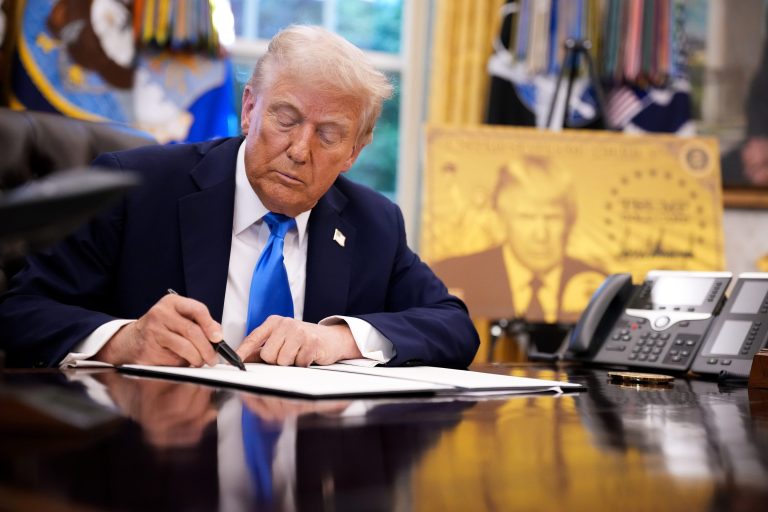
When Donald Trump announced a proposed $100,000 visa fee for highly skilled foreign workers — part of his plan to “protect American jobs” — it sent a ripple of concern across the U.S. tech industry. The policy, aimed at foreign professionals seeking work through H-1B and other high-skilled talent visas, has sparked debate over whether it strengthens national interests or undercuts America’s global competitiveness.
According to immigration experts, economists, and corporate leaders, the move could cripple innovation pipelines for some of the nation’s biggest and most influential Fortune 500 companies — especially in technology, consulting, and manufacturing, where foreign talent plays a crucial role in research, product development, and engineering.
The $100,000 Question
Under the proposed rule, any company seeking to sponsor a foreign worker for a high-skilled position would have to pay a $100,000 fee per visa. The administration’s stated goal is to discourage what it calls “outsourcing abuse” — large corporations using foreign workers to replace Americans or suppress wages.
But for the companies actually driving innovation in AI, semiconductors, and advanced manufacturing, the fee functions more like a barrier to talent mobility than a safeguard.
“The message this sends is that the U.S. is no longer welcoming the world’s best and brightest,” says one Silicon Valley immigration lawyer. “For startups, it’s catastrophic; for Fortune 500s, it’s a new cost burden that slows down R&D and expansion.”
Why the Tech Industry Is the Epicenter
Tech companies are among the largest consumers of H-1B visas — a category reserved for workers in specialized roles such as software development, data science, engineering, and biotechnology. In 2024 alone, nearly 70% of H-1B applications were from the tech sector.
These visas are essential to maintaining the innovation engine of firms like Google, Apple, Amazon, Meta, and Microsoft. Foreign-born engineers make up a substantial percentage of their technical staff. For example:
Google relies heavily on international AI researchers and software engineers, many of whom began on H-1B visas.
Microsoft has one of the largest sponsored workforces under H-1B, with employees in machine learning, cybersecurity, and product management roles.
Amazon uses H-1B hires to fill technical positions in AWS (Amazon Web Services) and logistics automation.
Meta depends on global data scientists and algorithm experts for its AI infrastructure and advertising platforms.
Apple employs foreign engineers in design and silicon engineering, particularly in its chip development division.
With the new fee, companies hiring hundreds or thousands of such workers could face multi-million-dollar additional costs per year, forcing some to cut back or shift operations abroad.
Fortune 500 Companies Most Affected
While the impact will ripple across multiple sectors, a handful of Fortune 500 giants are positioned to feel the brunt of the visa fee policy.
1. Amazon (Rank 2 on Fortune 500)
The e-commerce and cloud giant hires thousands of engineers each year on H-1B visas for AWS, logistics, and automation. The new fee could cost Amazon tens of millions annually, potentially slowing its U.S. hiring momentum and pushing more roles overseas.
2. Alphabet (Google’s parent, Rank 8)
With research teams spanning AI, quantum computing, and self-driving technologies, Alphabet depends on global talent. A $100,000 visa charge per researcher would not only raise costs but also make international hiring less attractive — a direct blow to innovation speed.
3. Microsoft (Rank 13)
Microsoft has long been one of the biggest sponsors of foreign tech talent. A six-figure visa fee could lead the company to prioritize remote international hubs over U.S. offices, reversing decades of domestic job creation in high-tech corridors.
4. Meta (Rank 30)
Meta’s Reality Labs division relies heavily on engineers from abroad for its AR/VR and AI systems. Analysts say the policy could derail timelines for its metaverse products, as specialized expertise becomes harder — and pricier — to bring stateside.
5. Intel (Rank 65)
Intel’s chip design and manufacturing plants in Oregon and Arizona have already struggled with talent shortages. The proposed fee could make it even harder to attract semiconductor engineers and process specialists from Asia and Europe.
6. NVIDIA (Rank 56)
The world’s leading AI chipmaker employs global teams across AI architecture and GPU development. Analysts predict the rule could slow NVIDIA’s U.S. R&D expansion and prompt a push for more international research hubs.
7. Accenture (Rank 260, based in Ireland but major U.S. presence)
The consulting and tech services firm uses thousands of skilled H-1B professionals for client projects in the U.S. The new visa structure could slash its workforce flexibility and increase project costs.
A Talent Drain in the Making
The policy’s biggest unintended consequence, experts warn, may be the offshoring of innovation.
If hiring top international engineers in the U.S. becomes cost-prohibitive, companies will simply move the work — and the jobs — abroad. Tech firms could accelerate expansion in Canada, Ireland, Singapore, or India, where immigration systems remain friendlier to talent mobility.
“America’s strength has always been its ability to attract the world’s smartest people,” says an economist at a Washington think tank. “Charging $100,000 to bring in talent doesn’t protect U.S. jobs — it relocates them.”
Startups are even more vulnerable. Unlike giants such as Google or Microsoft that can absorb costs, smaller tech firms and founders depend on global hiring to fill specialized gaps. For them, the new rule could freeze growth entirely.
Ripple Effects Across the Ecosystem
The proposed fee could also affect:
Universities and research labs that rely on foreign scholars for joint innovation programs.
STEM graduates from U.S. universities, many of whom transition to work visas to stay in the country.
Venture capital funding, as investors become wary of startups that depend on international technical teams.
Regional economies, especially in Silicon Valley, Austin, and Seattle, which have grown on the back of diverse global workforces.
The result, experts caution, could be a reversal of decades of progress in America’s status as the global magnet for tech talent.
The Global Competitiveness Dilemma
Ironically, at a time when countries like Canada, the U.K., and Australia are streamlining immigration for skilled professionals, the U.S. is signaling restriction.
If the $100,000 fee goes into effect, America’s talent advantage could erode, reducing innovation capacity just as AI, clean tech, and advanced manufacturing enter critical growth phases.
“It’s like taxing creativity,” says a senior HR executive at a Fortune 100 tech company. “We’re not protecting jobs — we’re slowing down the very industries that create them.”
The Bottom Line
Trump’s proposed visa fee has reignited a long-running debate: can protectionist policies coexist with a global economy built on knowledge and collaboration?
For now, the consensus among industry leaders is clear — the $100,000 fee would make the U.S. less attractive for global talent, inflate costs for Fortune 500 firms, and potentially drive innovation offshore.
If enacted, this single policy could reshape the geography of the global tech industry — not by keeping foreign workers out, but by pushing American innovation abroad.













+ There are no comments
Add yours