






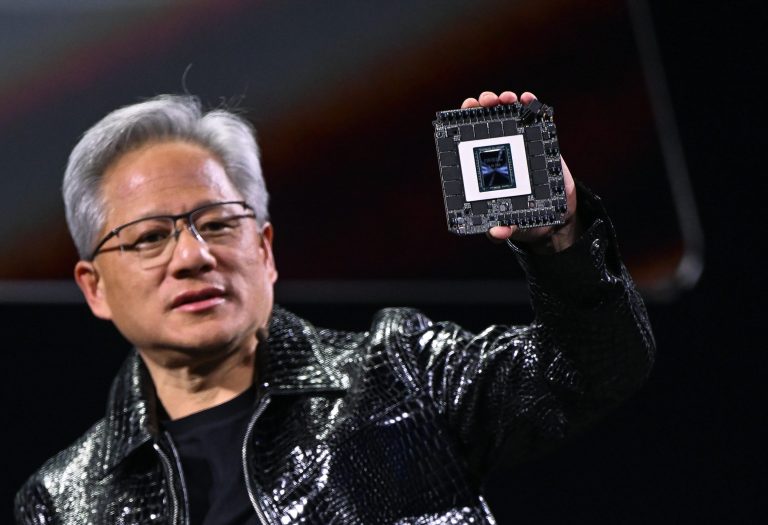
Nvidia, the world’s most valuable semiconductor company and the undisputed leader in artificial intelligence chips, has revealed a staggering detail in its latest earnings report: just two mystery customers accounted for nearly 40% of the company’s quarterly revenue.
This revelation has sent shockwaves through Wall Street, the tech industry, and AI policy circles. While Nvidia continues to dominate the market with its high-performance GPUs powering everything from ChatGPT to self-driving cars, the concentration of revenue raises major questions about dependency, risk, and the future of the global AI supply chain.
Nvidia’s Explosive Growth
Over the past year, Nvidia has become the face of the AI revolution. Its H100 and A100 GPUs are the backbone of advanced AI systems, used in large language models, data centers, and scientific computing. The company’s revenue has soared quarter after quarter, with demand consistently outstripping supply.
But the revelation that almost 40% of sales came from only two customers highlights the uneven nature of this growth. Investors and analysts are now asking: Who are these customers? And what does their dominance mean for Nvidia’s long-term stability?
Who Are the Mystery Customers?
Nvidia did not disclose the names, but industry insiders have speculated. Likely candidates include Microsoft, Amazon, Google, and Meta — all of which are racing to expand their AI infrastructure.
Microsoft: With its multi-billion-dollar partnership with OpenAI, Microsoft has been buying up Nvidia chips at an unprecedented pace to power Azure’s AI services.
Amazon Web Services (AWS): As the largest cloud provider, AWS is investing heavily in GPUs for customers building generative AI tools.
Google Cloud: Google’s Gemini AI models require massive computing power, much of which depends on Nvidia GPUs.
Meta (Facebook): Meta is building one of the world’s largest AI supercomputers, also fueled by Nvidia chips.
Analysts believe two of these giants likely account for the bulk of Nvidia’s sales, though the company remains tight-lipped.
Why It Matters
On the surface, having huge clients might look like a strength. After all, these are some of the most cash-rich companies in the world. But there are risks:
Revenue Concentration: If one of these customers reduces spending or pivots to alternative chips, Nvidia could see a sudden drop in earnings.
Competition Risk: Many of these same companies are developing their own AI chips — Google with TPUs, Amazon with Trainium, and Microsoft reportedly exploring custom designs.
Geopolitical Sensitivity: With U.S. export restrictions to China limiting a major market, Nvidia’s reliance on American tech giants becomes even more pronounced.
Wall Street’s Reaction
Investors have largely cheered Nvidia’s blowout results, but the 40% figure has introduced caution. Analysts warn that such dependency could create volatility in future quarters.
One market strategist put it bluntly: “When nearly half your revenue depends on two buyers, you’re not just selling chips — you’re selling stability. The moment they slow down, so will you.”
Despite these concerns, Nvidia’s stock remains at record highs, with many believing the AI gold rush will continue to fuel demand regardless of short-term risks.
The Bigger Picture: AI’s Arms Race
The revelation also underscores just how concentrated the AI race has become. A handful of tech giants are buying up the world’s most advanced chips, leaving startups and smaller companies struggling to secure the computing power they need.
This imbalance has raised alarms in Washington and other global capitals. Policymakers worry that too much AI power concentrated in the hands of a few firms could stifle competition, limit innovation, and even pose national security risks.
What’s Next for Nvidia?
Going forward, Nvidia faces both opportunity and pressure:
Opportunity: Demand for AI computing shows no signs of slowing. Nvidia could keep riding the wave, with sales growing quarter after quarter.
Pressure: To reduce risk, Nvidia may need to diversify its customer base, expand into new industries, or accelerate its move into software and services.
The company is also racing to stay ahead of competition from AMD and custom chips developed by its own largest buyers. Whether it can maintain its dominance will determine if Nvidia remains the trillion-dollar giant that defines the AI era.
Final Thoughts
Nvidia’s disclosure that two mystery customers drove nearly 40% of its quarterly revenue is both a testament to its unmatched market position and a warning sign of future vulnerabilities. While the AI boom has propelled Nvidia into the stratosphere, its dependence on a few buyers highlights the fragility beneath the surface.
As the AI arms race intensifies, the world will be watching closely — not just to see who those customers are, but also whether Nvidia can balance explosive growth with long-term resilience.














+ There are no comments
Add yours