






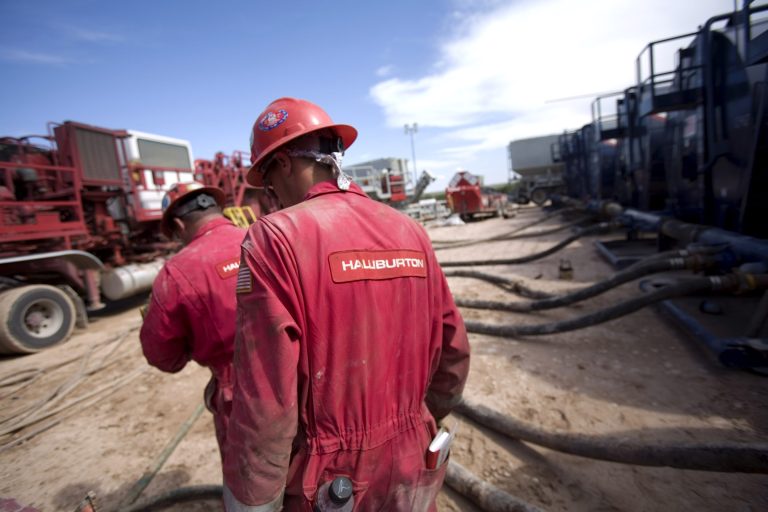
In a sobering outlook for the global energy sector, Halliburton CEO Jeff Miller has warned that oil and gas markets are experiencing softer-than-expected conditions and that the industry is likely to remain muted throughout 2025. The remarks, made during Halliburton’s latest quarterly earnings call, reflect a growing concern among energy executives that the post-pandemic rebound in oil demand has peaked, and geopolitical and economic headwinds are reshaping the outlook for fossil fuels.
🛢️ Slower Demand, Oversupply, and Cautious Operators Driving Weakness
Speaking directly to investors and analysts, Miller explained that while Halliburton remains financially stable, the macro environment for oilfield services and energy investments is far less bullish than expected.
“The oil and gas market is softer than we anticipated,” Miller said. “Customer spending remains cautious, and we now believe these trends will persist through the end of 2025.”
Key reasons cited by Halliburton for the market softness include:
Flattening global oil demand, particularly in China and parts of Europe
Rising supply from non-OPEC producers, especially the U.S. shale sector
Volatile crude oil prices creating uncertainty for exploration and production (E&P) companies
Investor pressure on oil majors to prioritize dividends over aggressive drilling
📉 Halliburton Earnings Beat Expectations—But Future Guidance Spooks Investors
Despite the bleak forecast, Halliburton beat Wall Street estimates for Q2 2025, reporting:
Revenue of $5.9 billion (up 3% YoY)
Net income of $645 million
EPS of $0.73 (versus $0.70 expected)
But the stock fell nearly 5% in early trading following the announcement, as investors reacted to the revised full-year guidance and Miller’s cautious tone.
“We’re adapting to this reality by staying disciplined on costs, maximizing margin, and focusing on technologies that deliver efficiency for our clients,” Miller said.
🌍 Regional Breakdown: North America Weak, Middle East Stronger
The report highlights a regional divergence in oilfield activity:
In North America, particularly the Permian Basin, customer budgets are tightening, and rig counts have been flat to down in recent months.
In contrast, Middle Eastern markets—especially Saudi Arabia, UAE, and Qatar—continue to show steady demand for oilfield services, although growth is slower than in 2023-2024.
Latin America and Africa remain volatile due to political uncertainty and project delays.
🔄 Shifting Strategies in the Energy Transition Era
Miller also acknowledged that the long-term energy transition is influencing short-term investment decisions. While fossil fuels still dominate energy supply, growing interest in clean energy, carbon capture, and alternative fuels is causing many companies to reassess their portfolios.
“We are realistic about the direction of the industry. Halliburton will continue to evolve to support customers across both conventional and emerging energy platforms,” Miller added.
📦 Supply Chain Pressures and Cost Concerns Still Linger
The company also noted continued supply chain disruptions, especially for specialized equipment and materials used in drilling and well completion. While inflation has cooled, cost pressures remain, and these are being felt across the oilfield services ecosystem.
Halliburton is responding by:
Consolidating operations where feasible
Investing in AI-powered drilling tech to improve efficiency
Reducing CapEx and streamlining procurement
🏭 Industry Outlook: What’s Next for Oil and Gas in 2025?
With crude oil prices hovering around $75 per barrel, many producers are adopting a “wait and watch” approach. Analysts say 2025 will be a year of low growth, high scrutiny, and a continued shift from volume to value.
Key Industry Forecasts:
Global demand growth expected to be below 1% in 2025
OPEC+ output cuts may continue to stabilize prices
U.S. shale output will grow modestly but won’t repeat past booms
Capital spending by E&P companies will stay flat or decline
🔍 Expert Commentary
Amy Myers Jaffe, energy policy expert at NYU, said:
“What we’re seeing is a reset in expectations. Investors want profits, not production growth at all costs. And energy companies are adapting—some faster than others.”
Morgan Stanley analyst John Freeman added:
“Halliburton’s outlook reflects broader concerns that the supercycle is over. The new normal is slower, more disciplined, and more diversified.”
📊 Halliburton’s Position in a Soft Market
Even amid these challenges, Halliburton remains one of the strongest players in the oilfield services sector, with a robust balance sheet and a focus on digital innovation, well construction, and international growth. The company is expected to weather the downturn better than smaller, more leveraged competitors.
🧭 Conclusion: Navigating the Storm
The message from Halliburton’s CEO is clear: 2025 won’t be a boom year for oil and gas. While the company is executing well and delivering shareholder value, the market realities are changing—and the entire energy sector must adapt.
For investors, workers, and policymakers, the softened outlook is a reminder that fossil fuel markets are no longer predictable, and energy strategies must evolve accordingly.














+ There are no comments
Add yours