






Home to just 11 residents, the spectacular Bavona Valley preserves hundreds of extraordinary stone shelters carved into enormous boulders, offering travellers a rare journey into Switzerland’s forgotten mountain history.
Deep within the rugged mountains of southern Switzerland lies a destination that seems untouched by the modern world. Far from crowded ski resorts, luxury hotels and busy tourist streets, the remote Bavona Valley hides an extraordinary architectural secret: hundreds of ancient stone shelters known as splüi, built beneath enormous natural boulders and scattered across one of the most dramatic landscapes in the Swiss Alps.
With only around 11 permanent residents, this isolated valley offers an unusual experience for adventurous travellers seeking something beyond traditional European tourism. Its landscape is dominated by towering mountains, enormous granite rocks, narrow paths, waterfalls and traditional stone settlements. Yet its greatest attraction may be the remarkable shelters that reveal how generations of mountain communities survived in an environment where nature could be both beautiful and dangerous.
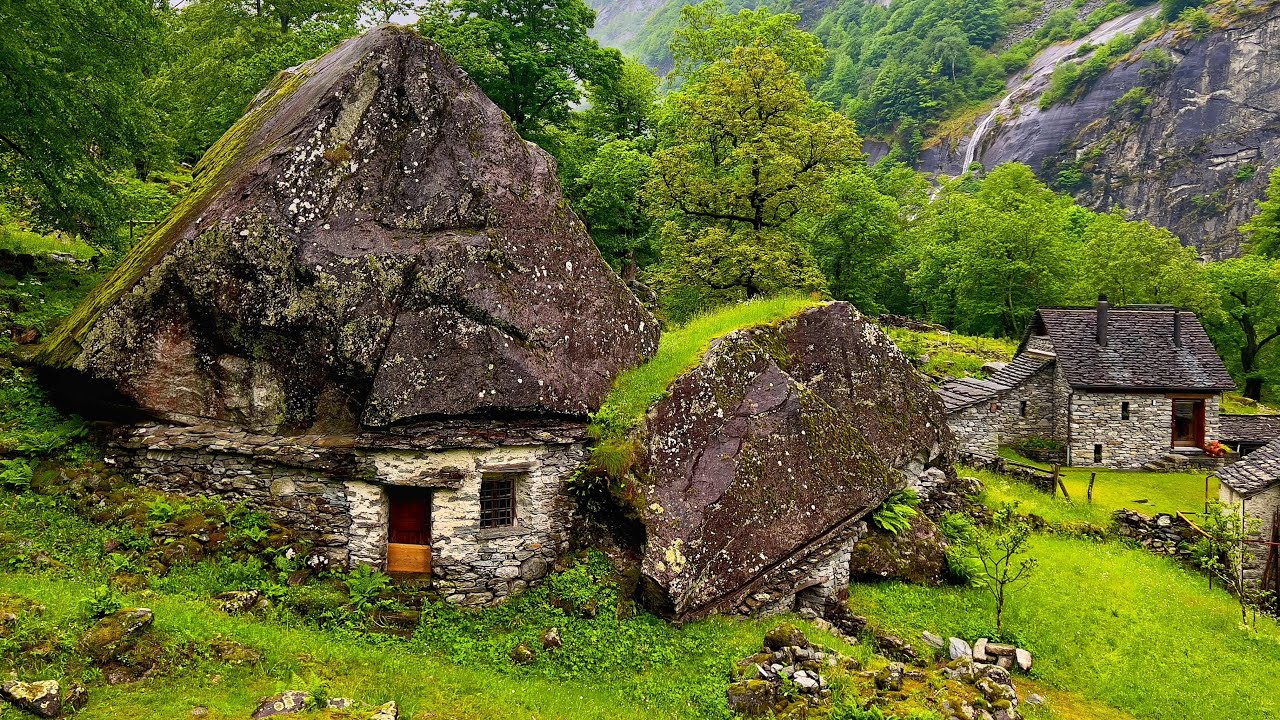
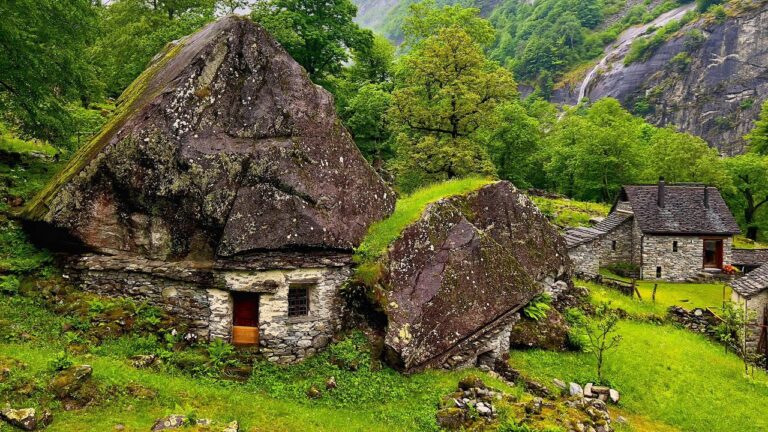
The ancient splüi were created by transforming naturally fallen boulders into practical shelters. Rather than constructing buildings from the ground up, local inhabitants used the enormous rocks as ready-made roofs and protective structures. They added wooden doors, dry-stone walls and other simple features, turning natural formations into storage spaces, animal shelters and places of refuge.
Across the wider Maggia Valley region, approximately 405 examples of this unusual rock architecture have been recorded. Some surviving structures date back to the Middle Ages, making them an important part of the region’s cultural and architectural heritage.
What makes these shelters particularly fascinating is their connection to everyday survival. The Bavona Valley’s steep terrain and unpredictable mountain weather made ordinary construction difficult. Heavy rainfall, sudden storms and cold temperatures created constant challenges for people living in the area. The splüi offered protection using materials and formations that were already part of the natural landscape.
Walking through the valley feels like stepping into another century. Massive granite boulders appear between traditional stone houses, while narrow mountain paths lead visitors towards hidden shelters that are often partially covered by moss and vegetation. Some structures are almost invisible until travellers approach closely enough to recognise a wooden door or a carefully arranged stone wall.
Inside, the atmosphere is remarkably different from the open Alpine landscape. The shelters reveal dark interiors, rough rock ceilings and traces of their former use. Some were once used to keep animals protected, while others served as storage spaces for essential supplies. Their simple design demonstrates the resourcefulness of communities that had to adapt to the demanding conditions of mountain life.
Beyond the unusual architecture, Bavona Valley offers an unforgettable natural setting. Its dramatic mountains, traditional settlements, green forests and rushing streams create a landscape that feels increasingly rare in a world dominated by modern infrastructure. The valley’s traditional hamlets also preserve the character of rural Switzerland, where stone buildings and centuries-old ways of life remain closely connected to the surrounding environment.
For adventure travellers, exploring the area can involve walking along historic trails, discovering secluded settlements, photographing enormous rock formations and learning about the region’s traditional mountain lifestyle. However, the valley’s rugged terrain requires preparation. Visitors should wear suitable hiking footwear, check weather conditions and avoid exploring exposed mountain paths during storms.
The best experience comes from slowing down and appreciating the valley’s remarkable details rather than treating it as a quick sightseeing stop. Guided exploration can help visitors understand the history of the shelters, their original purposes and the people who depended on them for generations.
As international travellers increasingly search for authentic destinations and experiences away from mass tourism, Bavona Valley offers a compelling example of how cultural heritage and natural landscapes can create a unique tourism attraction. Its ancient splüi are more than unusual stone structures; they represent centuries of human ingenuity, resilience and adaptation.
Switzerland may be famous for its luxury resorts, mountain railways and postcard-perfect villages, but the Bavona Valley reveals a quieter and more mysterious side of the country. Hidden beneath enormous stones and surrounded by dramatic Alpine wilderness, these forgotten shelters tell a powerful story of survival.
For travellers willing to venture beyond the familiar tourist routes, this remote valley offers something extraordinary: an opportunity to discover a world where nature itself became architecture and history remains carved into the stones.









+ There are no comments
Add yours