







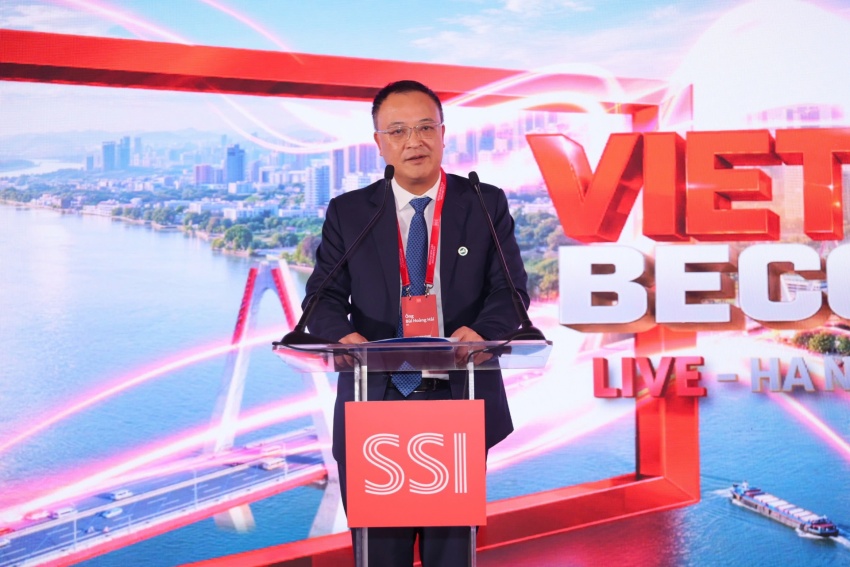
Vietnam has taken a major step onto the global investment stage, with its stocks officially entering FTSE Russell’s emerging-market indexes on Monday, opening the prospect of billions of dollars in new international capital flowing into the country.
The long-awaited upgrade moves Vietnam from frontier-market status into the secondary emerging-market category, placing its stock market alongside major emerging economies including China and India. FTSE Russell estimates the change could redirect as much as $6 billion into Vietnamese equities as global funds adjust their portfolios to reflect the new classification.
The milestone follows years of reforms aimed at making Vietnam’s financial markets more accessible to international investors. The country has been on FTSE Russell’s watchlist since 2018, as authorities worked to improve market infrastructure and address barriers that had limited foreign participation.
Vietnam’s stock market responded positively at the opening of trading on Monday, with the benchmark index initially rising 0.54%, led by banking shares, before giving back some of those gains. The immediate market reaction, however, is only one part of the significance of the upgrade. The larger impact could come as international funds gradually increase their exposure to Vietnamese assets.
Foreign investors had already begun returning to Vietnamese equities ahead of the reclassification. Overseas investors bought a net 2.7 trillion dong, or roughly $104 million, of shares on the Ho Chi Minh Stock Exchange during the week of September 14–18. They nevertheless remain net sellers for the year, highlighting that the upgrade does not automatically guarantee a sustained reversal of foreign capital flows.
The transition will take place gradually rather than through a single wave of investment. FTSE Russell’s inclusion process will unfold in stages through 2027, giving global investors time to adjust their holdings while Vietnam continues efforts to strengthen its capital-market infrastructure.
The move also raises expectations for Vietnam’s broader ambitions. The country is seeking to deepen its integration into global financial markets and eventually pursue further recognition from other major index providers.
For Vietnam, Monday’s change is therefore more than an adjustment to an international index. It represents the financial-market payoff from years of reform—and a new opportunity to compete for global investment at a time when international capital is increasingly seeking new markets and supply-chain hubs across Asia.
The upgrade will not eliminate the structural challenges facing Vietnam’s market, including the depth of trading and the continued need to attract long-term foreign investors. But with billions of dollars potentially in play, Vietnam has entered a new phase in its push to become a more significant destination for global capital.








+ There are no comments
Add yours