







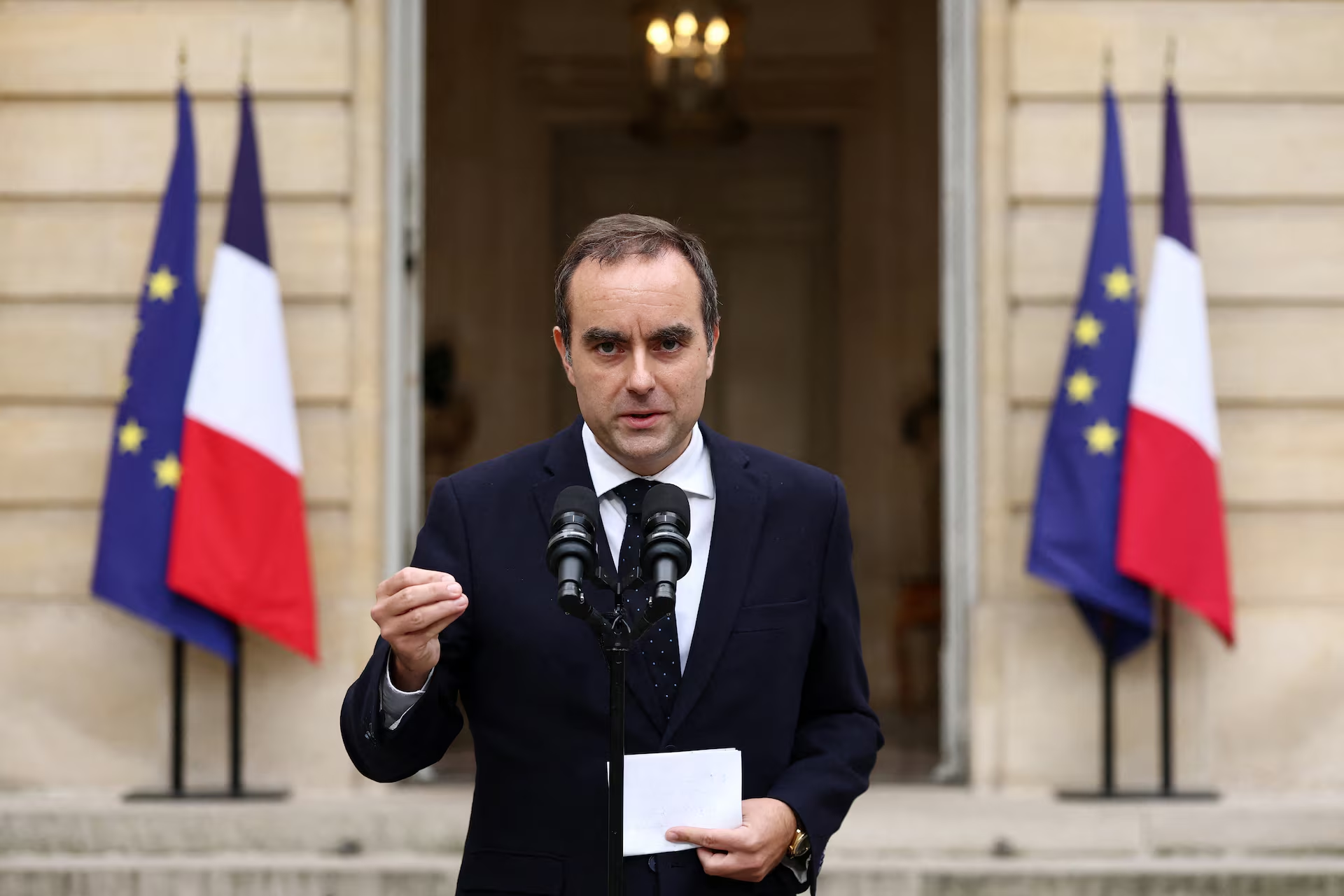
France is heading into a politically and financially delicate period as its mounting public debt collides with preparations for the 2027 presidential election. Prime Minister Sébastien Lecornu’s minority government faces the difficult task of reducing the budget deficit while confronting opposition parties that have little incentive to support unpopular spending cuts ahead of the vote.
France’s public debt has risen to around €3.5 trillion, while borrowing costs have increased and investors are becoming increasingly concerned about the country’s ability to stabilize its finances. The debt burden is particularly troubling because weak economic growth makes it harder for the government to reduce the deficit without imposing significant tax increases or spending reductions. The OECD has warned that deeper spending cuts and renewed pension reform will be needed to prevent debt from continuing to rise.
The crisis is unfolding against a backdrop of intense political fragmentation. Since the 2024 snap parliamentary election produced a hung parliament, successive governments have struggled to secure stable majorities. Lecornu’s administration must now prepare a 2027 budget that meets financial demands while avoiding measures that could trigger opposition protests, a no-confidence vote or further political instability. The government is expected to submit its budget bill to parliament by October 6.
The approaching presidential election is making the situation even more complicated. Political parties on both the right and left are campaigning on promises that could increase public spending, while centrist candidates are emphasizing fiscal discipline. Marine Le Pen’s return as an eligible presidential contender has further strengthened the far-right National Rally’s position, while the French left remains divided among several competing forces.
Financial markets are closely watching the political struggle. French government bond yields have shown increased volatility, with the gap between French and German borrowing costs widening. Investors fear that prolonged political uncertainty could make it harder and more expensive for France to refinance its enormous debt.
The central challenge for France is therefore not simply economic but political: any government that attempts serious fiscal reform risks angering voters, while delaying action could make the debt problem more expensive to solve. As the 2027 election approaches, France faces a difficult choice between immediate political popularity and long-term financial stability.








+ There are no comments
Add yours